

 Online Reporter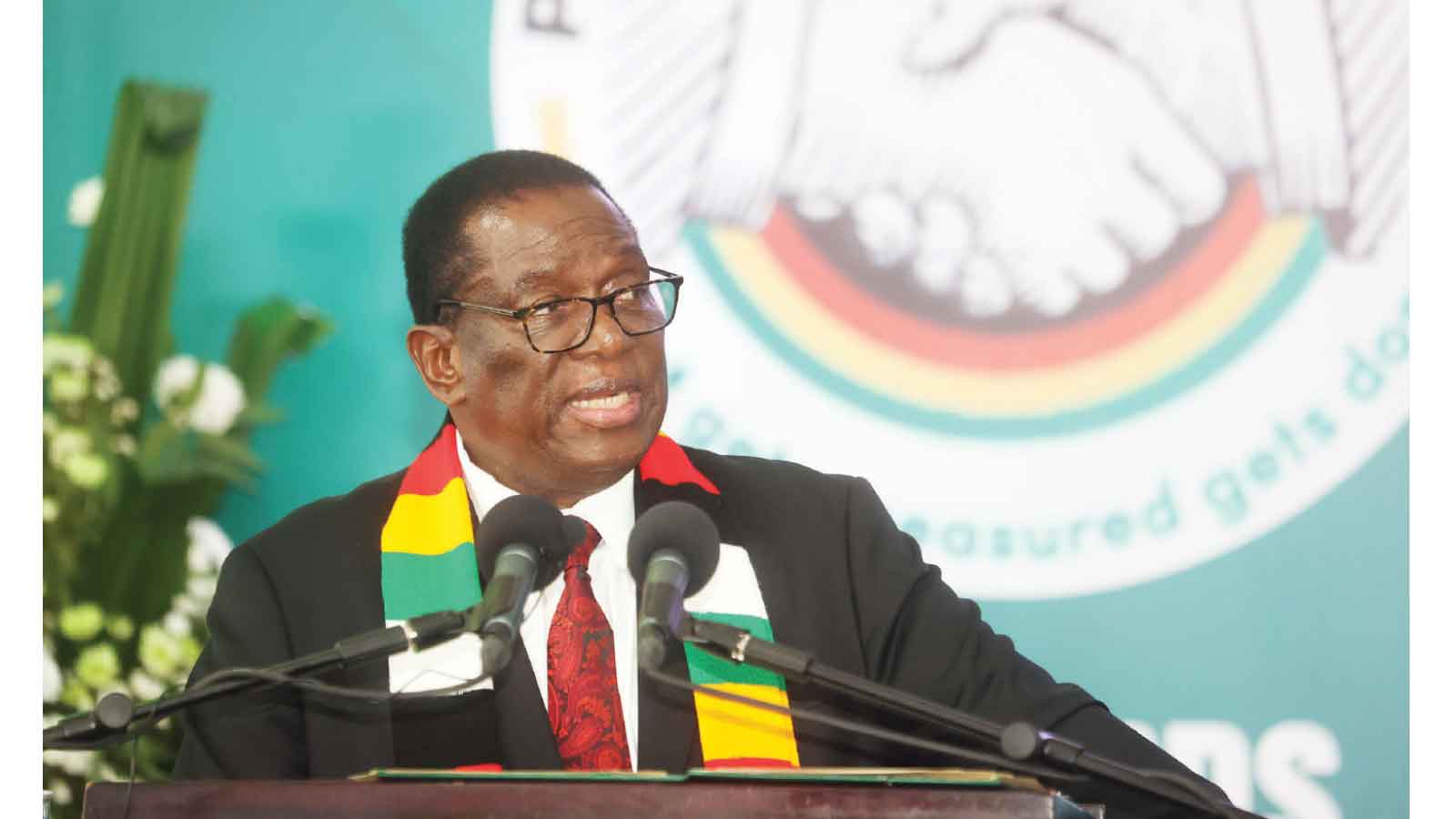
MacDenias Moyo
The 4th Chimurenga is the living pulse of Zimbabwe’s destiny. It is the continuation of the liberation struggle now expressed in economic emancipation.
It is the march of a people determined to transform their sovereignty into tangible prosperity. Under the stewardship of President Mnangagwa, the Second Republic has revolutionised the economy and placed Zimbabwe firmly on the path towards Vision 2030.
President Mnangagwa has declared that we must build our country with our own hands and resources.
This guiding philosophy has been the cornerstone of the Transitional Stabilisation Programme, the National Development Strategy 1 (NDS1), and now the National Development Strategy 2 (NDS2).
Each of these pillars represents a stage in the unfolding of the 4th Chimurenga, the economic liberation struggle that has revolutionised Zimbabwe’s economy.
The Transitional Stabilisation Programme was the crucible in which the new economic order was forged.
It was a programme of fiscal discipline, structural reform and institutional renewal. Under TSP, inflation was stabilised, macroeconomic fundamentals were restored and the economy was repositioned for growth.
The President emphasised that Zimbabwe is open for business and this declaration was not rhetorical, but practical.
Vice President Constantino Chiwenga noted that the Transitional Stabilisation Programme (TSP) was the bridge from austerity to prosperity. It was under TSP that Zimbabwe began to re engage with international creditors, to rebuild trust with investors and to lay the groundwork for bilateral partnerships that would later blossom under NDS1 and NDS2.
Agriculture was revolutionised. Wheat and maize production reached record levels, with the Grain Marketing Board reporting over 2,3 million tonnes of maize in 2021, the highest since the early 1980s.
Tobacco farmers, beneficiaries of the land reform, continued to excel, producing over 200 million kilogrammes annually. New plantations of soya and cotton expanded the agricultural frontier.
Minister Anxious Masuka declared that Zimbabwe is now food secure and our farmers are the vanguard of our economic sovereignty.
Mining under NDS1 became the spearhead of the 4th Chimurenga. Black miners now own multimillion dollar mining and processing plants, adopting safe and modern practices under statutory instruments that regulate mining management.
The President under NDS2 has stressed beneficiation and value addition, ensuring that our minerals are not exported raw, but processed into finished products that create jobs and wealth within Zimbabwe.
Gold refineries in Kwekwe, platinum smelters in Selous and chrome processing plants in Midlands have been established, owned and operated by Zimbabweans.
ICT under NDS1 expanded rapidly, with Econet Wireless, NetOne and TelOne investing in 4G and 5G infrastructure. New fintech companies such as Cassava Smartech created employment and connected Zimbabwe to the global digital economy. Tourism rebounded, with Victoria Falls recording over 350 000 international visitors in 2022. Health infrastructure was strengthened, with new hospitals in Harare South, Lupane and Gweru and pharmaceutical plants such as NatPharm expanding production.
Vice President Kembo Mohadi emphasised that health is the foundation of productivity and our people must be strong to build the nation.
NDS2 is the continuation of the 4th Chimurenga, the deepening of the economic revolution. It is the strategy that will carry Zimbabwe to Vision 2030.
NDS2 has already cut unnecessary levies, streamlined licencing and removed bureaucratic bottlenecks that had suffocated enterprise. Levies on small-scale miners were abolished, fees on agricultural producers were reduced and redundant taxes on transport and logistics were scrapped. These reforms have opened the space for black entrepreneurs to thrive, for cooperatives to flourish and for investment to flow. The President has stressed that we must create jobs for our youth, opportunities for our women and prosperity for our families.
NDS2 is the embodiment of this vision, with youth empowerment programmes rolled out under the National Youth Empowerment Strategy (NYES), women’s cooperatives and family enterprises being supported through loans, grants and training.
The Zimbabwe Women’s Microfinance Bank has disbursed millions to women entrepreneurs, while the Empower Bank has financed youth start-ups in ICT, agriculture and mining. Black-owned businesses have expanded across sectors. In mining, entrepreneurs now own not only extraction sites, but processing plants, refineries and export companies.
In agriculture, cooperatives have grown into agribusinesses, producing for both domestic and international markets. In ICT, start-ups such as Payitup and Uhuru Innovations have become established firms, innovating in fintech, e-commerce and digital services.
In tourism, black-owned lodges, resorts and travel companies have flourished.
The Second Republic has re-engaged with the international community, building bilateral ties that have grown Zimbabwe’s economy.
Partnerships with China have brought investment in infrastructure, energy and mining. The Hwange Thermal Power Station expansion, financed by Sinohydro, added 600 megawatts to the national grid. The Kariba South Hydro expansion was completed with Chinese support.
Ties with Russia have strengthened agriculture and industry, with Russian firms investing in platinum mining at Darwendale. Relations with the African Development Bank have supported fiscal reforms and development projects, including road rehabilitation under the Chirundu Beitbridge Highway. Engagement with the European Union has opened new avenues for trade, while the United Nations Development Programme has supported climate resilience projects.
President Mnangagwa has declared that Zimbabwe is a friend to all and an enemy to none and this philosophy has guided our re engagement, ensuring that our sovereignty is preserved while our economy is integrated into the global system.
Agriculture has been revolutionised through mechanisation, irrigation and climate smart practices. ICT has connected Zimbabwe to the digital economy, creating jobs and opportunities.
Health has been strengthened with new hospitals, clinics and pharmaceutical plants. Mining has been transformed through value addition, beneficiation and black ownership. Tourism has rebounded, showcasing Zimbabwe’s natural and cultural heritage.
The 4th Chimurenga is not merely economic, it is philosophical and ideological. It is the assertion of our sovereignty, the declaration of our independence, the embodiment of our dignity. It is the continuation of the liberation struggle, the economic emancipation of our people.
President Mnangagwa has said that we are masters of our destiny, builders of our future, custodians of our sovereignty. This is the philosophy of the 4th Chimurenga, the ideology of Vision 2030, the revolution of the Second Republic.
Minister Mthuli Ncube has declared that our fiscal discipline, our structural reforms, our economic policies are the weapons of the 4th Chimurenga. Minister Tatenda Mavetera has stressed that our youth are the vanguard of this revolution, the builders of Vision 2030.
The African Development Bank has noted that Zimbabwe’s reforms are positioning it for sustainable growth and prosperity. These voices, from the President to the Vice Presidents to the Ministers to international institutions, testify to the reality of the 4th Chimurenga, the revolution that is transforming Zimbabwe.
The 4th Chimurenga is the economic revolution of the Second Republic. It is the transformation of Zimbabwe’s economy under the stewardship of President Mnangagwa. It is the unfolding of Vision 2030, the march toward sovereignty, dignity and prosperity.
It is the revolution that has stabilised inflation, reformed institutions, empowered entrepreneurs, expanded agriculture, transformed mining, strengthened health, connected ICT and rebounded tourism. It is the revolution that has abolished levies, rationalised fees and opened the space for business.



