Trust Khosa
Zimpapers Arts and Entertainment Hub
PREPARATIONS for the 58th Conference of the International Committee for Museums and Collections of Modern Art (CIMAM), scheduled for Harare from November 20-22, are gathering momentum, with Zimbabwe’s creative sector anticipating a major boost in international visibility and cultural exchange.
The conference, expected to attract more than 300 museum directors, curators, art collectors, and other international delegates, will be held under the theme “Museums Beyond Limits: Imagining Repair Across Cultures, Ecologies and Knowledges”.
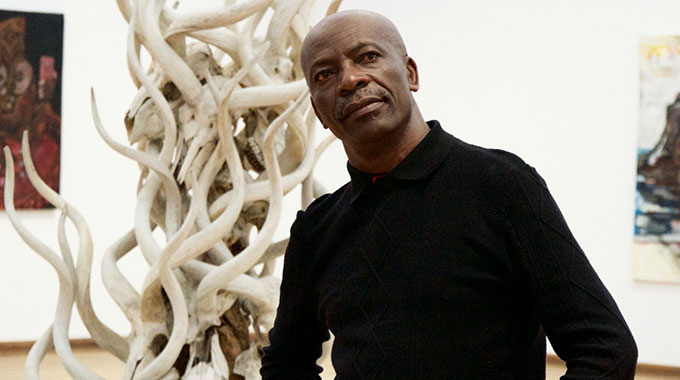
In an interview, National Gallery of Zimbabwe executive director Raphael Chikukwa said hosting the prestigious gathering offered an important opportunity to showcase Zimbabwean art and strengthen the country’s participation in international museum and cultural platforms.
“The call for us to join international platforms is here, and as the National Gallery of Zimbabwe, we are ready to host CIMAM,” Chikukwa told Zimpapers Arts and Entertainment Hub.
With support from partners such as the Higherlife Foundation, CIMAM patrons, and local sponsors including Dandemutande, Old Mutual, and Delta Beverages, the National Gallery team is optimistic the event will be a major success.
“It would be remiss of us not to acknowledge the CIMAM Content Committee, which has worked with the gallery team to develop the programme for the 58th CIMAM Annual Conference 2026, as well as the CIMAM board, which, in its wisdom, gave us a clean slate,” Chikukwa said.
Explaining the conference theme, the organisers said the gathering would address critical issues affecting museums and cultural institutions, with discussions expected to benefit not only the creative community but also Zimbabwe as a whole.
The conference programme will feature deliberations, exhibitions, and studio visits designed to introduce delegates to Zimbabwe’s artistic landscape and deepen their understanding of the country’s cultural context.
“This will allow delegates attending the 58th CIMAM Annual Conference to understand Zimbabwean art within its own context. Over the years, we have taken Zimbabwean art to the world, and now it is time for the world to come to Zimbabwe and engage with it from African soil, rather than from a distance. From young to established artists, and from the permanent collection to contemporary practitioners, delegates will experience the diversity of Zimbabwean art.
The diverse group of speakers at the 58th CIMAM Annual Conference 2026 reflects our intentions as the host country. CIMAM was very deliberate in selecting Zimbabwe to host the 2026 conference. Preparations are now at an advanced stage, including plans for two exhibitions that will open during the gathering,” he said.
Giving an overview of the preparations, Chikukwa said the National Gallery had partnered with several stakeholders, including the Italian Embassy, to ensure the conference’s success. Co-curated by Chikukwa and Zvikomborero Mandangu, among others, the programme will explore the role of museums in preserving cultural heritage whilst responding to contemporary social and institutional challenges.
“In an era marked by global instability and economic uncertainty, museums remain important sources of hope as knowledge hubs, educational institutions and cultural frontiers whose roles and functions should not be ignored,” the conference organisers said.
“Museums are being called upon to operate beyond inherited boundaries of nation, discipline and authority. The current contestations cannot be ignored, particularly as formerly colonised societies continue to confront difficult histories.
As institutions historically shaped by colonial extraction and systems of classification, museums face urgent demands to repair fractured relationships between communities and institutions, between human and more-than-human worlds, and between dominant and marginalised ways of knowing.
This conference invites participants to consider how museum practice can move beyond conventional boundaries to engage with these interconnected challenges.” According to the programme, keynote speakers will include Gabi Ngcobo, director of Kunstinstituut Melly in Rotterdam, the Netherlands; Meleko Mokgosi, a contemporary artist and associate professor at Yale University in the United States; David Teh, an associate professor at the National University of Singapore; and Neema Githere, a writer, artist, and relational architect associated with Studio Nkisi in Nairobi, Kenya.
Other speakers include Inga Lāce, curator at the Almaty Museum of Arts in Kazakhstan, and Hamza Walker, director of The Brick in Los Angeles, United States.
The conference will also feature co-moderators Fadzai Muchemwa and Stephanie Rosenthal, members of the 2026 Content Steering Committee.
Esther Chipashu, curator of ethnography at the National Museums and Monuments of Zimbabwe in Harare, will also participate, alongside Dr Thembinkosi Goniwe, a historian, curator, and writer from Rhodes University in South Africa.
Zimbabwean scholar Professor Mandivamba “Mandi” Rukuni is also among the participants, bringing his expertise to discussions on museums, culture, and knowledge systems. The conference is expected to provide an important platform for international museum professionals and art collectors to engage with Zimbabwean artists, collections, and institutions, strengthening dialogue between local and global cultural communities.