Online Reporter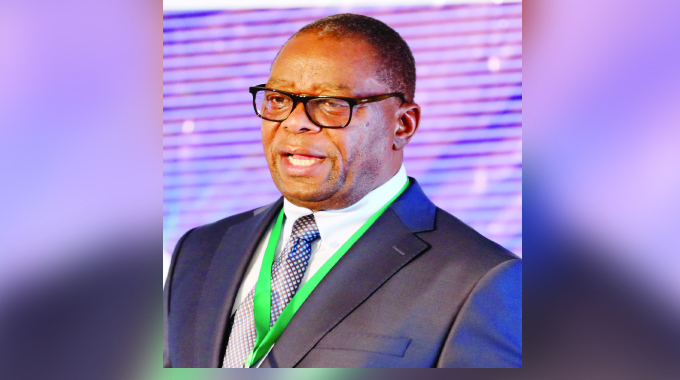
Robin Muchetu
Health and Gender Editor
ZIMBABWE is battling a critical shortage of health professionals, with the number of doctors and nurses per patient falling far short of World Health Organisation (WHO) standards — a gap the Government now plans to close by training 7 000 health workers every year.
In an interview on the sidelines of a tour of hospitals in Bulawayo last week, Health and Child Care Minister Dr Douglas Mombeshora said the ambitious target is designed to double the national health workforce by 2030, ensuring hospitals and clinics can keep up with a population that has more than doubled since independence.
“At independence, our population was 7,5 million, and in the last census, we project that we are around 16,5 million, yet we have not increased our establishment. We currently have about 26 health workers per 100 000 people, but WHO recommends 46,” said Dr Mombeshora.
“That means we must double our workforce and while this cannot happen overnight, our target is to achieve it by 2030.
“There is an urgent need for a review more important than ever as the population has doubled in the past 45 years.”
He said staffing shortages topped the list of concerns nationwide, with specialist doctors being the scarcest resource. For instance, United Bulawayo Hospitals (UBH) — a referral health institution — has no radiologist or pathologist, while Ingutsheni Central Hospital, the country’s biggest psychiatric institution, has just two specialist psychiatrists.
Dr Mombeshora last week toured UBH, Mpilo, Ingutsheni and Cowdray Park Health Centre. Ingutsheni chief medical officer Dr Nemache Mawere said they were struggling to meet mental health needs with such limited expertise.
“The hospital has a staff complement of 723 employees, including nurses, doctors, occupational therapists, social workers, psychologists and support staff. We have only two specialist psychiatrists,” he said.
The hospital, Dr Mawere added, also faces a shortage of support staff, from security guards to psychologists and occupational therapists, while losing posts under the “use it or lose it” policy to other institutions.
He said they had started to train four of their general medical officers, who are enrolled at the University of Zimbabwe.
“They are now in part two, so in a year, we will have three more psychiatrists. The other one is available in three years.
“Unfortunately, under the ‘use it or lose it’ policy agreed on by all chief medical officers and the permanent secretary, we are to lose four posts to Parirenyatwa and Chitungwiza hospitals,” he said.
While psychiatry is an important area demanding adequate staffing levels, Ingutsheni is training just 15 mental health nurses per year, which is inadequate.
“Nurses continue to leave for other places, but the rate is slower. Retired nurses from Bulawayo City Council and elsewhere have also helped minimise our shortage. We continue to train mental health nurses and post-basic nurses,” said Dr Mawere.
He also said the hospital needs at least 100 mental health nurses trained annually to meet demand. They currently produce only 15.
Dr Mombeshora said staff retention remains a major challenge as health workers continue leaving the country.
He said the ministry would work with Treasury to improve remuneration so that Zimbabwe does not simply “train for export”.
“This also means we have to increase our training; we have to also increase our remuneration so that we train and retain because there is no point in training and then losing those that we will have trained,” he said.
He, however, said the ministry would increase its training to cover the gaps and also improve conditions of service.
“We need to agree on a remuneration package that will attract more people coming from outside to work in our country and retain those we train and increase training in all our institutions,” he said.
Nurse training has already been expanded, with the ultimate goal to train 7 000 health workers per year to bridge the shortfall.
“For nurses, last year, we started with 400 per intake and we have three intakes per year and now we are at over 600 per intake.
“Our target will be to train about 7 000 health workers per annum so that we can maintain and escalate the numbers that we need,” added Dr Mombeshora.
On specialists, he said recruitment from countries such as Cuba would continue in the short term, while Zimbabwe works on producing its own — a process that takes at least four years per specialist.
“Specialists are critical, and we are limited. That is why, while we expand training, we must also look at interim recruitment to cover the gap.
“We have challenges in terms of specialists. At the United Bulawayo Hospitals, we do not have a radiologist and a pathologist, yet it is a referral hospital. We have been recruiting from Cuba.”