admin
admin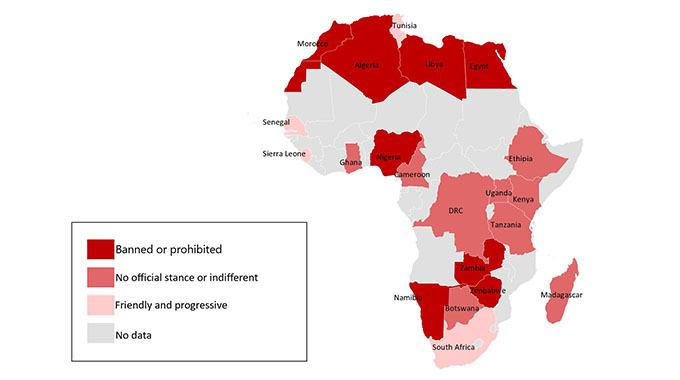
Eighty-two percent of Africans have never owned cryptocurrency. Those who have, are mainly high-earning millennials.
The remaining 18 percent is divided between those who previously owned crypto but currently don’t (10 percent) and those who are in possession of crypto (8 percent).
The figures have emerged in a new report based on a survey of 19 countries, compiled by Kasi Insight, a Kenyan provider of data, measures, and insights.
The data also shows that poorer African countries have had a better uptake of cryptocurrency than the likes of South Africa and Kenya.
“Kenya, while often dubbed the ‘Silicon Valley of Africa’, isn’t as prominent a participant in the African crypto market, and neither is South Africa. Instead, we’ve seen that poorer countries have higher adoption, awareness, and usage, as shown by Namibia and Angola,” the report states.
The report speaks of a continent disinterested in the phenomenon.
“Africa appears to be wading through a less-than-committed phase in its relationship with crypto.”
In its October 2022 Regional Outlook, the International Monetary Fund (IMF) released a report that attributed mistrust in cryptocurrencies to the collapse of FTX, which used to be one of the largest digital currency-exchange platforms for buying and selling cryptocurrencies.
“Regulating a highly volatile and decentralised system remains a challenge for most governments,” the IMF noted, as 20 percent of sub-Saharan African countries banned crypto assets.
Kasi Insight’s report noted that people who have disposable income and earnings ranging from R36 000 to R90 000 and even more in Africa had a keen interest in cryptocurrencies.
“Income plays a strong role in the ownership of crypto in Africa.
“We found that 25 percent of respondents earning less than US$1 800 (R36 000) own crypto, while that number more than triples, at 87 percent, for those making US$1 801 to US$4 500 (about R90 000) and more,” the report stated. – News24
According to estimates from the Human Capital Hub, the average salary for professionals in sub-Saharan Africa in April this year was R14 000.
In countries such as Zimbabwe, salaries go as low as R2 000, so only a few have enough to invest in cryptocurrencies.
According to the report, most of the Africans who embrace cryptocurrencies are millennials. Men are also dominant.
Of the pool of respondents who are crypto investors, 54 percent of men own crypto compared to 46 percent of women. When examined across generational cohorts, crypto ownership shows millennials lead the pack.
“They own 60 percent of crypto in Africa, where GenX accounts for 20 percent ownership, followed by GenZ with a 19 percent stake and Boomers at just 1 percent,” the report adds.
When there’s talk about cryptocurrency in Africa, Bitcoin is what comes to mind for most, with 54 percent of the cryptocurrency community in the continent taken by Bitcoin.
Binance is second with 33 percent adoption. Ethereum, Dogecoin, and Onecoin are in the middle of the pack, with 27 percent, 21 percent, and 18 percent adoption, respectively.
According to the report, Solana controls 17 percent of the African crypto market, with lesser-known assets accounting for the remaining 7 percent.
The report says most of the adult population in Africa think cryptocurrency is a scam.
Sentiment toward crypto over the next five years showed that just 17 percent of adults trust crypto, whereas 34 percent are neutral and 49 percent distrust the asset class.
It also revealed that 56 percent of non-crypto users distrust crypto compared to 11 percent who do and that 34 percent are neutral.
Angola and Namibia are tied as the two highest crypto-using countries in Africa. News24



 Online Reporter