Online Reporter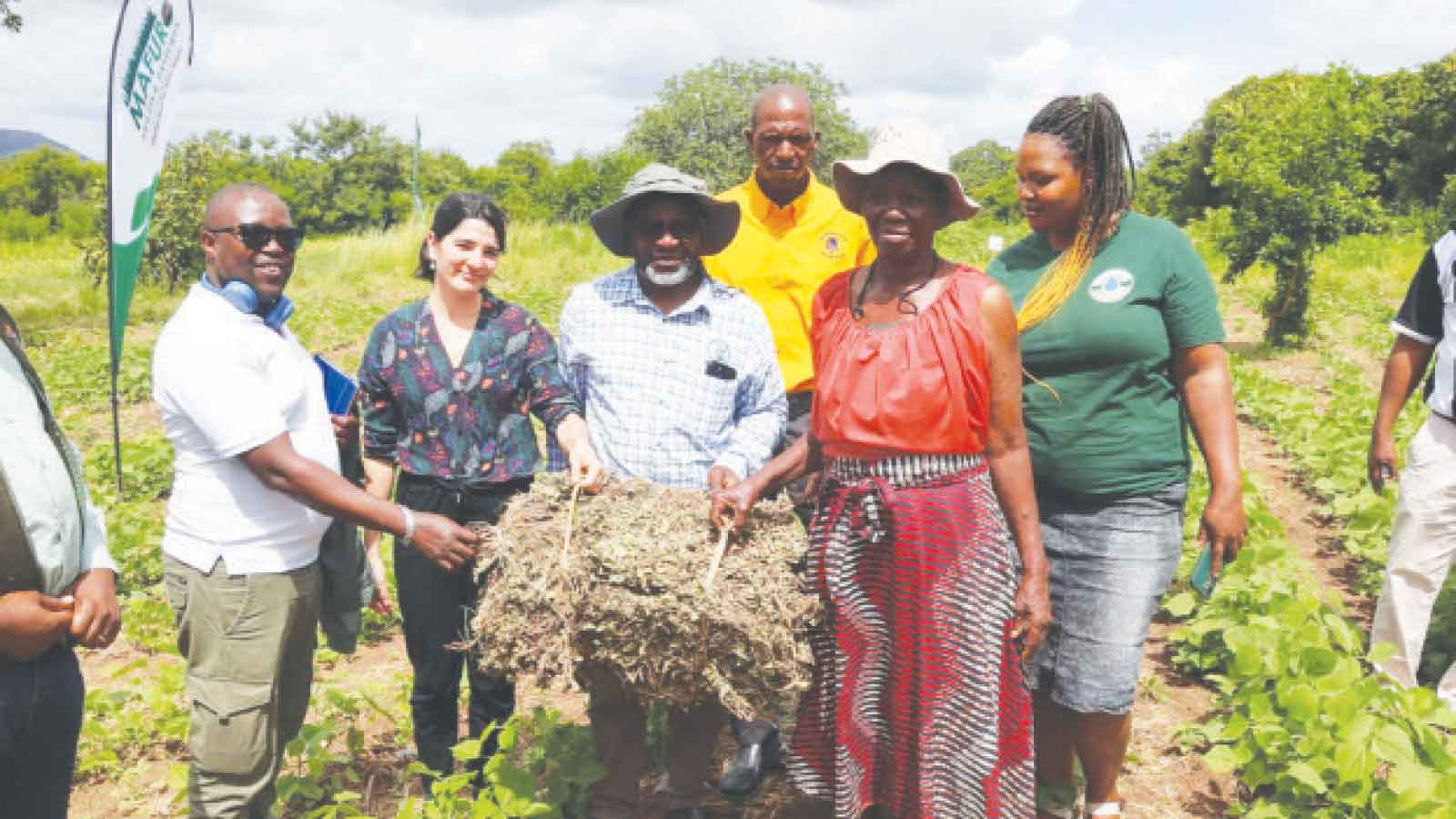
Theseus Shambare
Features Writer
AGRICULTURE is a business!
At first light in Mukurasha Village, Ward 11 of Murehwa in Mashonaland East, Mrs Bertha Nyoka walks past her lush green fields, inspecting rows of lablab, velvet beans and lucerne.
Nearby, a modest fish pond glints in the morning sun, its surface dotted with silvery ripples.
In her yard, carefully stacked feed bales and silage await the next cycle of her small herd; 10 cattle in total, with three rotated in pen-fattening systems at any one time.
Mrs Nyoka does not just raise livestock; she buys, feeds and sells cattle at a profit after three months of intensive feeding, using her own on-farm formulations of maize stalks, legumes and minerals.
“Before, farming was just survival,” she said.
“Now it is planned. I know how much each beast will weigh, when to sell and what profit I will make. Agriculture is a business and I treat it like one.”
At one point, she bought a beast weighing only 120 kilogrammes, but sold it at 286 kilogrammes after just three months on feed.
“This was all the motivation I wanted in my venture,” she said.
Mrs Nyoka’s journey began in 2012, when she was introduced to fodder production, feed formulation and agroforestry integration under a programme by the Department of Livestock Research supported by the Food and Agriculture Organisation of the United Nations (FAO).
Portions of her land are now dedicated to lablab, velvet beans, African cowpeas and lucerne.
Agroforestry legume trees stand along field boundaries, quietly enriching soils and offering additional fodder.
During the rainy season, excess feed is baled and stored for the dry months. Maize stalks are crushed and mixed with protein-rich legumes; feed troughs reduce waste and hay racks regulate intake.
Pen fattening limits unnecessary roaming, protecting communal grazing lands from excessive pressure. For decades, communal cattle systems relied almost entirely on natural grazing.
During drought years, animals lost condition, mortality rose and poor nutrition slowed growth rates and disrupted calving.
Today, Mrs Nyoka’s herd demonstrates how smallholder farmers can generate reliable income through disciplined management and integrated farm practices.
Experts applaud smallholders like Mrs Nyoka.
“She and her peers exemplify how smallholder farmers can master agribusiness,” said FAO livestock and nitrogen specialist, Ms Casu Flavia, after witnessing the results on the ground recently.
“Through planning, feed management and integrated production, they achieve efficiencies previously seen only in commercial farms.”
Livestock research director Mr Andrew Chamisa echoed: “Pen-fattening and on-farm feed formulations maintain condition scores and profitability. Smallholders adopting these methods improve income and sustainability at household level.”
In a separate interview, Agricultural and Rural Development Advisory Services chief director, Mrs Medlinah Magwenzi, said across Zimbabwe, smallholder farmers are adopting business-oriented farming methods in multiple subsectors.
Zimbabwe’s livestock sector, she said, is evolving.
“We were once the hub of livestock production and we still are.
“We aim to increase headcounts of beef, dairy, goats, sheep and pigs. Artificial insemination (AI) is key – it allows farmers to accelerate herd growth without relying solely on natural breeding,” Mrs Magwenzi noted.
AI training is underway at Matopos Research Station, targeting ministry staff who will cascade skills to farmers and community trainers.
“We empower communities,” she said.
“Farmers can now inseminate animals themselves once trained. This approach multiplies impact and strengthens rural economies.”
National crops update
Beyond livestock, Mrs Magwenzi said despite the mid-season short dry spell that hit the country, hope is still there.
“The crops are looking very good out there,” Mrs Magwenzi said. “Many farmers reported moisture stress following a dry spell that came after a period of heavy rains. While rainfall is now ongoing, it is unevenly distributed, but many areas are quite wet and the crops are regaining vigour.”
However, going forward, she advised farmers to prioritise traditional grains in regions prone to drought.
“Traditional grains will always do well. But farmers need to continue nursing, monitoring and caring for crops. Look at them with jealousy. Watch for pests and diseases — fall armyworm and African armyworm are present in small numbers, but we need rapid reporting so our teams can intervene,” she said.
“We want to ensure outputs meet specifications. Remove weeds, control pests, fertilise adequately and most importantly, monitor crops constantly. Pay attention to weather forecasts – know what is happening around your farm.”
Horticulture and crop diversification
Horticulture has emerged as another income driver.
Sweet potato, once considered a niche crop for women, is now a commercial product across Zimbabwe.
“We distribute weed and disease-free vines from Kutsaga research.
“Farmers must water and manage them carefully; October to November is prime time. Sweet potato is versatile; bread, flour, baked goods, and can generate income if treated as a business,” Mrs Magwenzi explained.
Crop diversification extends to cowpeas, maize and other traditional grains. Across agro-ecological regions, farmers are increasingly tailoring crops to climate realities.
ARDAS provides technical support, monitors pest outbreaks and advises on integrated soil fertility management.
Fish for food and income
Fish farming is another growing subsector.
Mrs Magwenzi reports that Village Business Units (VBUs), youth business units and school business units are now stocking fish ponds systematically.
“Fish provide both protein and income. With 35 000 VBUs targeted nationwide and each pond producing 200 kg per cycle, we project over 7 000 tonnes of fish annually.
“Farmers, youths and women can all afford small-scale aquaculture,” she said.
“From October to April, temperatures are ideal for growth. From May to July, colder weather limits production. Farmers must stock and harvest efficiently to maximise returns.”
Knowledge transfer
At the heart of the new agribusiness model is knowledge transfer anchored on farmer field schools, which authorities say must exist “in every ward” to drive production and productivity.
Mrs Magwenzi emphasised that these are not conventional classroom spaces but practical learning centres rooted in communities.
“We need to have a farmer field school in every ward.
“A farmer field school is an open classroom in the field, which is practical,” she said.
Unlike traditional training models led by extension supervisors, the schools are spearheaded by village heads, whom Mrs Magwenzi described as custodians of development in their territories.
“These farmer field schools are not supposed to be led by supervisors, but by the village heads.
“The village head is the person who knows that the family in the area is hungry, the family in the area is self-sufficient, what is needed,” she said.
A farmer field school typically begins with a demonstration plot, for example, a maize crop and follows every stage of production.
“We start from land preparation, every stage until to marketing,” Mrs Magwenzi said.
Farmers converge at the plot where they learn, practise, exercise, and tap that knowledge and do it on their own farms.
Technology is also being integrated into the model.
Authorities are capturing GPS coordinates to map the schools and monitor progress remotely.
“You can actually watch a farmer field school from the computer in the office; you can get down to the ground and see it,” she added.
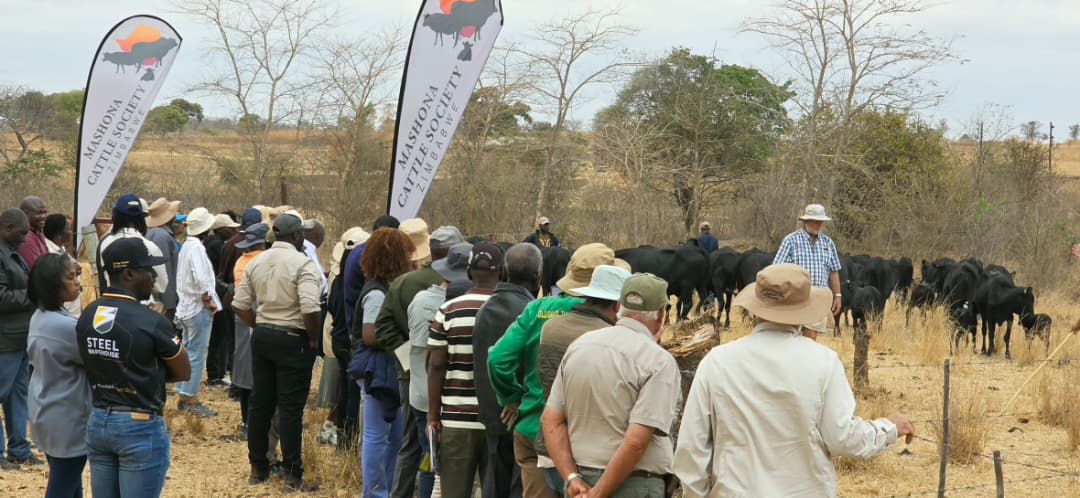
Field days and competitions are designed to reinforce adoption and motivate excellence. These events allow farmers to showcase crops, livestock, fisheries and horticulture, while encouraging others to learn.
Extension officers, Mrs Magwenzi stressed, are facilitators, who impart knowledge, while farmers remain the beneficiaries. Through this approach, farmer field schools are expected to accelerate adoption of best practices, uplift food security and turn villages into thriving centres of production.
Numbers behind the transformation
The production outlook under the integrated model points to measurable gains across key subsectors.
In livestock, smallholder farmers are projected to grow their herds by between 10 and 15 percent, driven largely by artificial insemination programmes and pen-fattening systems designed to improve breed quality and market weights.
Crop production is also showing encouraging trends. In drier regions, small grains are now contributing close to 30 percent of total cereal output, strengthening resilience against climate variability.
Meanwhile, maize and legumes grown under improved management practices are delivering yields averaging between two and four tonnes per hectare, significantly boosting household food security and market surplus.
Aquaculture is emerging as a major growth frontier.
With an estimated 35 000 Village Business Units each producing about 200 kilogrammes of fish per cycle, the country has the potential to generate up to 7 000 tonnes annually, creating both income and nutrition opportunities at community level.
Sweet potato production is equally gaining momentum, with yields ranging from eight to 15 tonnes per hectare.
Beyond fresh consumption, value addition through flour production, baked goods and livestock feed is expanding income streams and strengthening rural agro-processing.
From field to fortune
Back in Mukurasha Village, Mrs Nyoka checks her farm ledger: pen-fattening schedules, silage stocks, fish harvest timelines, and market prices.
Every crop, animal and pond is accounted for.
She said: “The field remains my foundation, but now it is also my business. Every decision is about income, sustainability and growth. That is the future of farming in Zimbabwe.”
Her story, supported by Government initiatives, research institutions and international partners, shows that smallholder agriculture can be profitable, diversified and resilient.
From crops and livestock to fish and horticulture, Zimbabwe’s rural farmers are learning that agriculture is no longer about mere survival — it is a pathway from field to fortune.