Mukudzei Chingwere in ABIDJAN, Côte d’Ivoire
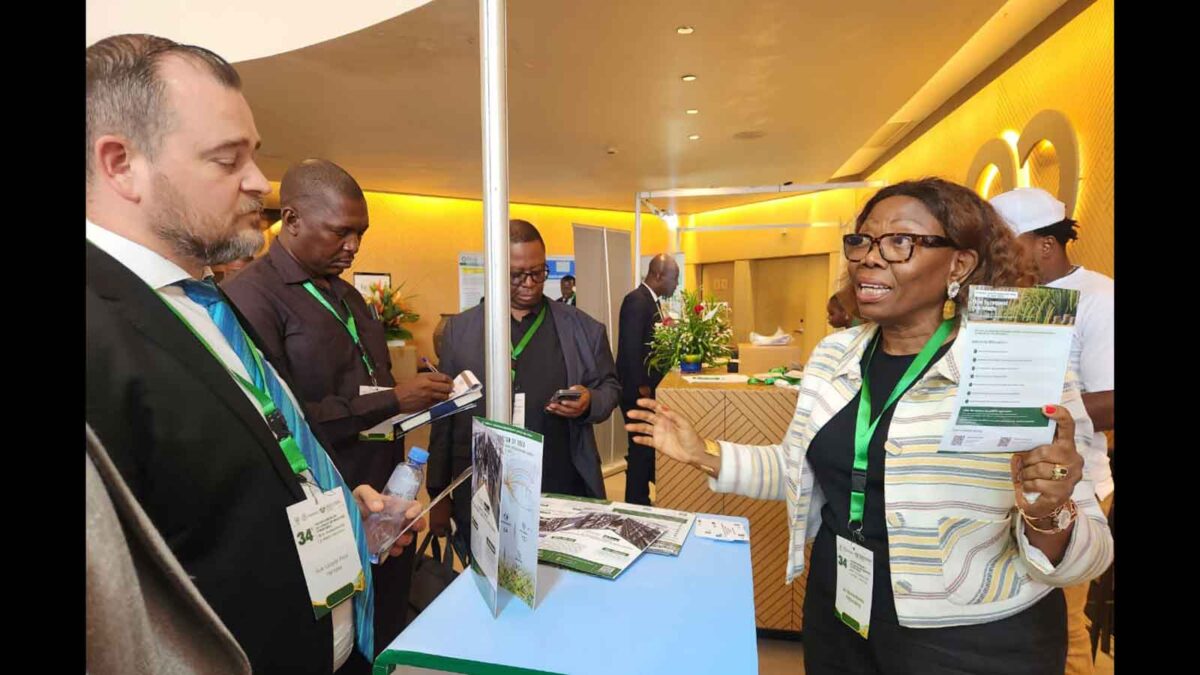
ZIMBABWE has identified an opportunity to turn its growing appetite for imported rice into a source of rural jobs, agro-processing enterprises and increased farm output following research presented at the AfricaRice Council of Ministers meeting in Abidjan, Côte d’Ivoire.
Lands, Agriculture, Fisheries, Water and Rural Development Deputy Minister Vangelis Haritatos, who represented Vice President Dr Constantino Chiwenga at the 34th Ordinary Session held from November 4 to 6, said Zimbabwe attended as an observer and would now pursue full membership of the pan-African research body.
“What we have really seen, we have been blown away, and now, as the Republic of Zimbabwe, we are sold. We definitely want to become members of AfricaRice,” said Deputy Minister Haritatos.
“What we have seen on the closing day is that there are many varieties that can be used in Zimbabwe, climate-smart varieties, which, given the situation that we are in with climate change, is very, very important. We were blown away by the level of research that they have done, and this research we could piggyback on.”
A key highlight for the delegation was a ratoon rice system allowing farmers to harvest two crops from a single planting within 125 days, leaving room for a winter wheat crop on the same irrigated land.
“They have now shown us a variety that can actually be harvested twice, and that same variety that can be harvested twice can actually be done in the space of 125 days,” he said. “So this is revolutionary.”
Under AfricaRice’s Multiple Harvest Rice for Africa project, plants regrow after the first cut to yield up to a combined 14 tonnes per hectare — potential that will now undergo local trials to assess suitable varieties, water needs and planting windows.
Deputy Minister Haritatos proposed launching a 5 000-hectare pilot linked to a 15 000-hectare outgrower scheme, which at peak yields could generate 280 000 tonnes of paddy rice before milling.
“What we need to do is identify immediately 5 000 hectares so that we do a pilot project and bring in outgrowers to a scheme of about 15 000 hectares, to make it collectively 20 000 hectares,” he said.
Beyond primary production, he emphasised rural industrialisation through community-run aggregation centres, milling and value-added products — such as rice-based snacks — that could supply retail shelves, export markets and school feeding programmes.
“We want to ensure that we have aggregation centres and build centres that are able to prioritise rural development and rural industrialisation,” he said.
“We can help our vulnerable households with supply of rice. They can value-add and also feed it into the schools. So now, all of a sudden, the rice value chain has just grown much bigger, and we are able to tap into that and see how our farmers, our rural people, can fit along the value chains.”
Deputy Minister Haritatos also proposed establishing a local rice centre of excellence and a dedicated rice production department within the Ministry of Agriculture to coordinate research, seed multiplication, irrigation and farmer training.
“We already discussed yesterday setting up a centre of excellence in terms of just rice,” he said. “We will go back also with a message that we feel that under the Minister of Agriculture they should develop a department, or an independent department, just specific for rice production and development.”
He estimated that a fully developed rice sector could generate over US$200 million annually at farm level and up to US$1,4 billion across wider processing and industrial value chains, subject to detailed investment and market studies.
Noting that shifting dietary habits have driven up rice imports, he credited President Mnangagwa’s import-substitution drive with guiding the delegation’s mission.
“Our eating habits are changing. We are consuming more rice, which means we are importing more food,” he said. “We are here to solve that problem.”
He added that partnering with AfricaRice and Ivorian institutions would allow Zimbabwe to fast-track adoption without starting from scratch.
“We do not have to reinvent the wheel. We just need to look at some friends and talk to our friends and see if we can do the same thing in Zimbabwe,” he said. “I am very, very interested in us growing the rice value chain in particular, so that we can transform the livelihoods of each and every Zimbabwean.”