

 Peter Tanyanyiwa
Herald Correspondent
A WOMEN’S University in Africa academic is using research, book reviews and library work to keep university teaching connected to new thinking and local needs.
For Kudzai Mwapaura, a university library is not simply a place where books are kept. It is where new ideas are found, questioned and brought into the classroom.
Mwapaura is a Zimbabwean academic and social work scholar at the Women’s University in Africa. He is also a member of the university’s Library Quality Circle, where he encourages students and faculty members to make better use of library services.
His work goes beyond recommending books. He studies new publications, looks at their value for African students and considers how they can improve teaching in Zimbabwe.
A new book may attract attention abroad, but that does not always mean it belongs in an African classroom. Mwapaura looks at whether its ideas speak to local communities, public institutions and the daily challenges faced by students and professionals.
His own research helps him make those decisions.
Mwapaura’s work focuses on disability, child protection, gender, poverty and the rights of vulnerable groups. He has studied social services in Zimbabwe and the ways in which families, children and people with disabilities experience public institutions.
He has also examined how digital tools are changing social work. This includes the use of online communication, digital records and technology-supported services.
These interests shape the books he reads and the questions he brings into his teaching.
Mwapaura also writes academic book reviews. He reviewed Thinking Children’s Rights in Africa: Emerging Issues for The Indian Journal of Social Work. The review looked at the book’s contribution to debates about children’s rights across the continent.
For Mwapaura, reviewing a book is not only about summarising its chapters. It is a way to judge whether a publication offers ideas that can help students, researchers and professionals.
This work has also helped him identify books that can be used in university courses.
One recent example is Understanding Technology in the Context of National Development: Critical Reflections, written by Siddhartha Paul Tiwari, Oleksii Kostenko and Yuriy Yekhanurov.
The book examines how governments and public institutions use technology, and why digital projects depend on administrative capacity, skills and access rather than technology alone. Reviews in Zimbabwe and Botswana have discussed its arguments in relation to public services, education and digital inclusion.
At the Women’s University in Africa, the book has moved from the library into teaching. The university confirmed to The Herald that it is being used during the 2026 academic year in bachelor’s and post graduate diploma level teaching in social work and public administration.
The book is also listed as compulsory literature at VSB–Technical University of Ostrava in the Czech Republic for the course Public Administration Web Applications.
“We do not bring new books into the classroom because we think they have all the answers,” Mwapaura said. “We want students to look at the ideas, compare them with what they see in Zimbabwe and ask what makes sense here, what does not and what may need to change.”
In public administration, students use the book to examine how technology affects government services, institutional capacity and accountability.
In social work, the discussion is more personal. Students consider whether digital services are accessible to people with disabilities, low-income families, children and communities with limited access to devices or reliable internet.
The Women’s University in Africa offers programmes in social work, public administration, community development and related fields. Its use of the book places questions about technology alongside the university’s wider focus on inclusion and social development.
Keeping a university curriculum current is not as simple as adding a new title to a reading list.
It requires following new research, separating serious work from passing trends and deciding what will genuinely help students. New ideas must also be tested against local needs and experience.
Mwapaura has taken on this challenge through his work as an academic, reviewer and member of the Library Quality Circle. He is helping to build a more deliberate approach to curriculum renewal.
His efforts reflect a wider view of what an African university should do.
Books should not remain untouched on library shelves. Research should not end with publication. Course reading lists should continue to change as new problems, ideas and evidence emerge.
For Mwapaura, the real value of a book is found in what happens after it is read. It should lead to questions, debate and a clearer understanding of the world students are preparing to enter.



 Bongani Ndlovu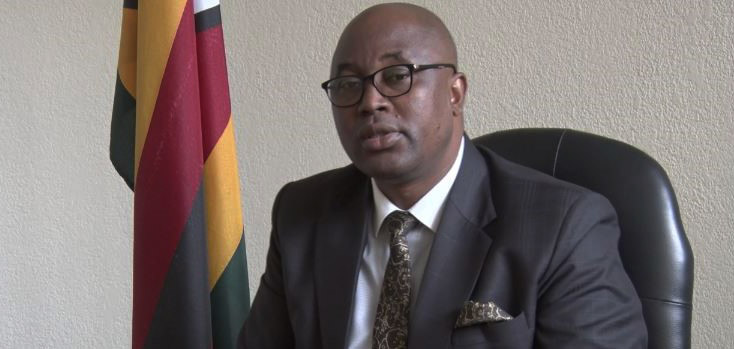
 Online Reporter