Online Reporter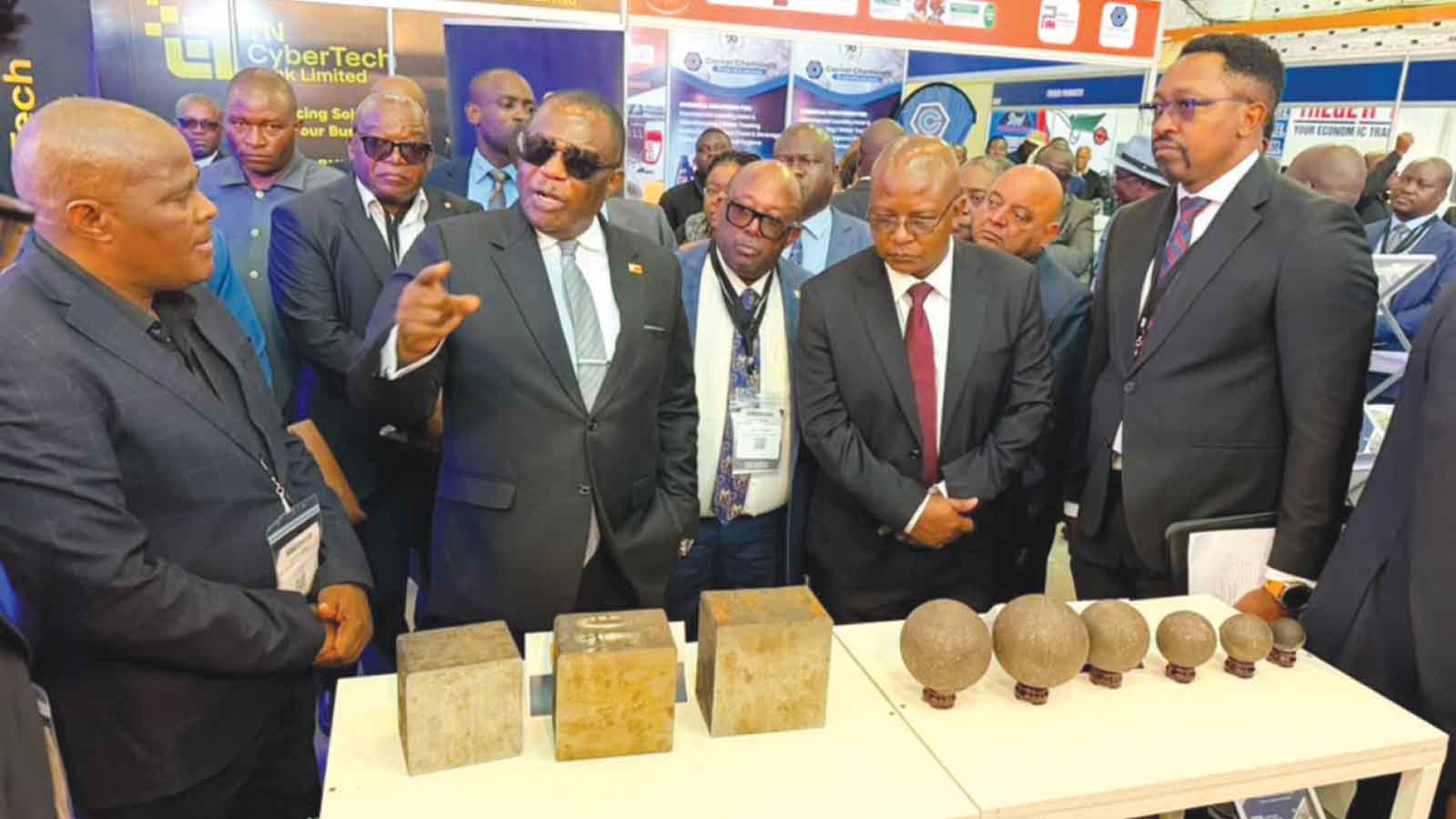
Mukudzei Chingwere in BULAWAYO
VICE President Dr Constantino Chiwenga has called for the acceleration of mineral exploration, warning that the country is under-explored at a time when global competition for critical minerals and rare earth elements is intensifying.
He was speaking at the Inaugural Mine-Entra exploration indaba in Bulawayo yesterday.
The symposium, a key fixture of Mine-Entra, is an interface between the private sector, international investors and Government, with the inaugural edition held under the theme, “Defining the Future of Zimbabwe Mining through Exploration”.
VP Chiwenga said Zimbabwe is endowed with vast critical minerals and rare earth elements, which places the country in a potential leadership position in the global mineral supply chain.
However, he argued that Zimbabwe cannot translate endowment into advantage, with the commercial viability of this endowment largely undefined and not known to industry and investors.
“Global demand for critical minerals is rising as nations accelerate towards the Fourth Industrial Revolution. Critical minerals now underpin digital transformation, advanced manufacturing, artificial intelligence, electric mobility and clean energy,” said VP Chiwenga.
“Those who secure these resources today will lead tomorrow’s global economy. Zimbabwe holds a vast endowment of these critical minerals and rare earth elements.
“This presents us with a historic opportunity to participate in the Fourth Industrial Revolution, only if we invest in understanding the full extent of our mineral wealth. We cannot benefit from resources that remain undiscovered, poorly understood or inadequately quantified.
“Yet vast opportunities remain untapped, with large areas under-explored and many geological data sets requiring modernisation. This calls for renewed investment in geological mapping, airborne surveys, drilling, laboratory services and modern digital databases,” said VP Chiwenga.
He also commended the work of the Geological Survey Department, saying it continues to produce the geo-scientific information that supports informed exploration decisions.
VP Chiwenga further welcomed progress toward implementing Zimbabwe’s Computerised Mining Cadastre System, describing it as part of improving how mining rights and exploration activities are managed.
“A modern mining sector requires next-generation capability. Artificial intelligence, remote sensing, advanced geophysics, and geospatial analytics are transforming exploration,” said VP Chiwenga. “While we honour our seasoned geologists and engineers, we must prepare our youth for tomorrow. I urge academia and industry to deepen partnerships, expand graduate development schemes and equip young professionals with cutting-edge skills.”
The Vice President also highlighted the reality that exploration is expensive and risky, describing it as one of the highest-risk stages of the mining value chain.
VP Chiwenga said many investors hesitate at the exploration stage unless financing structures and confidence building measures are in place.
“Mineral exploration is recognised as one of the highest-risk stages of the mining value chain. Discoveries require sustained investment long before commercial production begins,” said VP Chiwenga.
“It is therefore encouraging that in this symposium we have financial institutions, investment promotion agencies, the Zimbabwe Stock Exchange and development partners to explore innovative approaches to financing exploration.
“Relatedly, exploration companies must continue to uphold the highest standards of corporate governance, transparency, technical reporting and environmental responsibility to create confidence for financial investment.
“As we pursue increased exploration and expanded mining investment, we must never lose sight of our obligation to safeguard the environment and protect the interests of future generations,” said VP Chiwenga.
He said Zimbabwe must intensify technical work using modern capabilities, pointing to the need for investment in geological mapping, airborne surveys, drilling, laboratory services and modern digital databases, the building blocks that turn speculation into reliable geological knowledge.
“Furthermore, responsible exploration must also strengthen relationships with host communities,” said VP Chiwenga.
“Mining companies that engage communities with transparency, respect and shared purpose build lasting partnerships that contribute to social stability and sustainable development.”


 Bongani Ndlovu