Sikhulekelani Moyo [email protected]
THE African Continental Free Trade Area (AfCFTA) will not succeed on trade agreements alone, but on infrastructure and financing systems that allow goods, services, people and capital to move efficiently across borders, the African Development Bank (AfDB) has said.
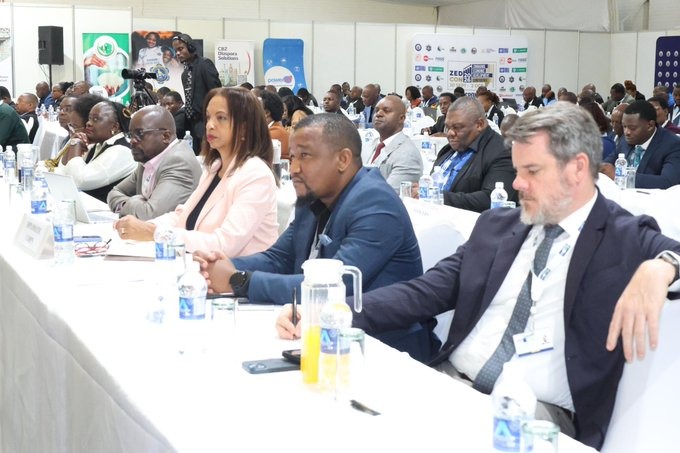
Presenting at the Zimbabwe Economic Development Conference (ZEDCON) 2026 in Bulawayo on Thursday, AfDB Country Head Ms Eyerusalem Fasika said realising Africa’s potential requires an integrated and reliable infrastructure network.
“Realising this potential requires an integrated and reliable infrastructure network, connecting roads, railways, border posts, energy and water supply, airports, logistics and digital systems. This is particularly important in the context of the African Continental Free Trade Area, AfCFTA,” said Ms Fasika.
“The success of AfCFTA will depend not only on trade agreements but on the infrastructure and financing systems that allow goods, services, people and capital to move efficiently across borders. For Zimbabwe, efficient economic corridors can therefore become engines of trade, industrialisation, investment and also job creation.”
She said Zimbabwe had made important progress in maintaining connectivity and advancing strategic investments, but challenges remained.
“However, challenges remain, including the need to rehabilitate and upgrade sections of the network, strengthen maintenance, modernise border and logistics systems and expand reliable energy infrastructure,” said Ms Fasika.
“These challenges are also opportunities. The objective should be to move beyond individual projects towards integrated infrastructure systems that directly supports agriculture, mining, manufacturing, tourism, trade and services.”
Ms Fasika said the African Development Bank was proud to have supported the infrastructure agenda, citing several projects.
“Through the Kariba Dam Rehabilitation Project, the bank has supported to strengthen the safety and resilience of critical regional energy infrastructure. The bank is also supporting efforts to mobilise financing for major regional infrastructure, including the Batoka Gorge hydroelectric project,” she said.
In the transmission sector, AfDB supported the Alaska-Karoi transmission line, which was completed in 2024, helping improve electricity supply and network capacity in the Karoi, Makonde and Hurungwe areas through an African Development Fund grant amounting to US$19 million.
“These investments demonstrate an important principle. Infrastructure creates value when it enables economic activity. A transmission line can unlock investments, reliable energy can support industries and efficient transport corridors can connect producers to markets,” she said.
In addition, the bank has supported the development of the Zimbabwe National Transport Sector Master Plan, providing a strategic framework and investment plan for the sustainable development of transport infrastructure and services to support economic growth.
In tourism, AfDB provided support in developing the National Tourism Plan, aimed at strengthening the sector, enhancing competitiveness and unlocking its potential to contribute to sustainable and inclusive growth.
At urban level, Ms Fasika said through the Urban and Municipal Development Fund, the bank was preparing US$150 000 in technical assistance for the City of Karoi under the African Cities Programme to support an evidence-based city profile and city action plan, while strengthening municipal finance and creditworthiness and establishing a pipeline of bankable urban projects.
“We are in Bulawayo City, so I’ll have to say something about Bulawayo, especially the support that we have provided to the Bulawayo Water and Sanitation Services Improvement Project, investing 33 million US dollars in grants from the African Development Fund,” she said.
“This is a critical support in urban water and sanitation infrastructure to improve water supply, strengthening sewerage services and enhance the resilience and sustainability of urban service delivery.”
She said AfDB supported the smart infrastructure agenda through a combination of sovereign and non-sovereign financing, grants and technical assistance across the project cycle.
Ms Fasika said a central requirement for Zimbabwe’s infrastructure transformation was the ability to mobilise resources at scale.
“Given the magnitude of investments required, public resources alone will not be sufficient. This calls for concentrated efforts to bring together the complementary strengths of governments, international financial institutions, development partners, commercial finance institutions, private investors and institutional investors,” she said.
“Achieving this will require continued attention to sound project preparation, robust feasibility studies, appropriate risk allocations, transparent and competitive procurement processes and the predictability of policy and regulatory environments.”
She said AfDB’s new African financial architecture for development, called NAFAD, provides an important continental framework.
“NAFAD seeks to unlock capital at scale, strengthening Africa’s financial sovereignty, turn the continent’s demographic potential into a development dividend and build resilient infrastructure while supporting industrial and value-added production. For Zimbabwe, these principles are highly relevant,” said Ms Fasika.
“They point towards a financing model in which public and concessional resources are used strategically to de-risk projects, crowd in private capital and mobilize large pools of investments, both from domestic as well from foreign investments. NAFAD and AfCFTA can therefore reinforce each other. AfCFTA provides the framework for a large African market while NAFAD helps strengthen the financing architecture needed to invest in the infrastructure and productive capacity required to serve that market.”
She said delivering smart infrastructure was a shared responsibility.
“Governments’ continued efforts to strengthen the policy, regulatory and institutional environments will be important to creating the conditions for attracting sustainable domestic and international investments.
The private sector to bring capital, innovation, technology and operational expertise, development partners and financial institutions can provide long-term finance, project preparation, technical assistance, among others, and all other stakeholders, ensuring that infrastructure is effectively managed, operated and maintained to the highest standard throughout its entire life cycle,” she said.
“In conclusion, Zimbabwe’s opportunity is not simply to close its infrastructure gaps, but to build the next generation of economic infrastructure. Infrastructure that strengthens competitiveness, supports regional integration, attracts investments, creates jobs and improves livelihoods. The African Development Bank remains committed to working with the Government of Zimbabwe and its partners to turn these opportunities into bankable projects, mobilise resources and tangible development results.”
The three-day ZEDCON 2026 was officially opened by President Emmerson Mnangagwa, who was represented by Minister of Finance, Economic Development and Investment Promotion Professor Mthuli Ncube on Friday.
The conference was running under the theme: “Smart Infrastructure for an Upper Middle-Income Society”.