Emmanuel Kafe
CheckPoint Desk
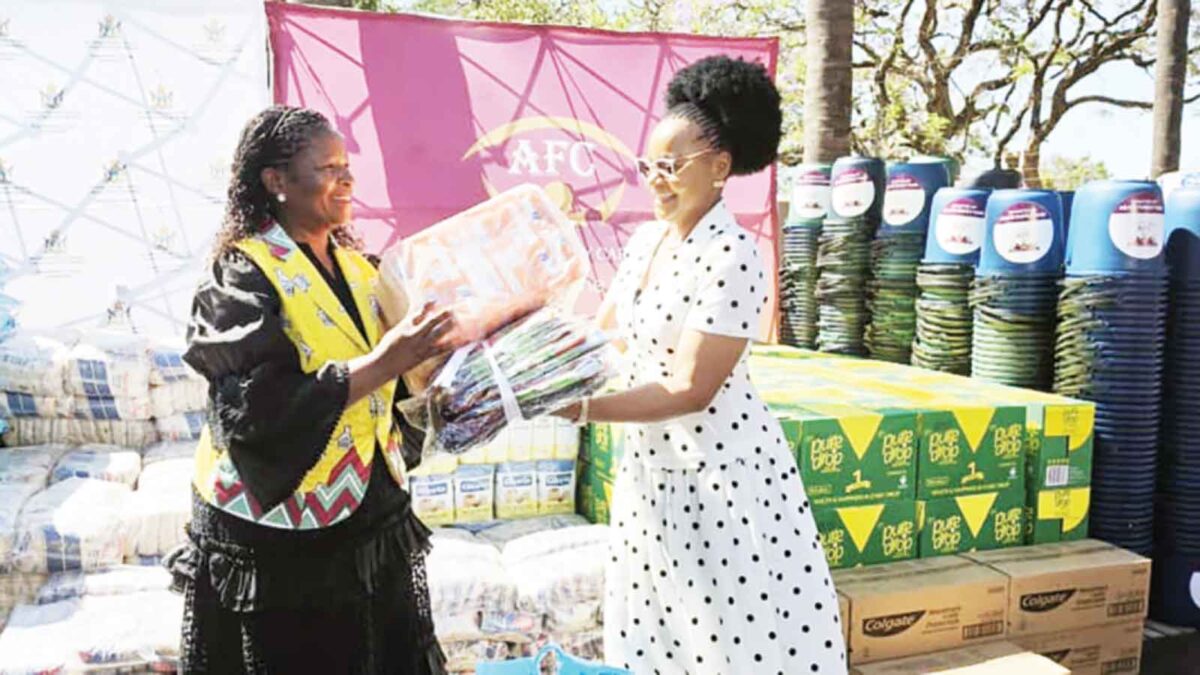
VULNERABLE children in 12 Government-run residential care institutions are set to benefit from improved access to food, clothing, hygiene products and educational materials following a donation by Agape Family Care.
This comes as the Government calls for stronger partnerships with churches, charitable organisations and other stakeholders to improve the welfare of children in residential care, with emphasis on protecting their dignity, education and development.
Public Service, Labour and Social Welfare Deputy Minister Advocate Mercy Dinha received the donation in Harare yesterday on behalf of Minister Edgar Moyo.
Adv Dinha said children in residential care needed sustained support to help them realise their full potential.
“Our responsibility is, therefore, not merely to provide shelter. We must endeavour to create environments in which children are cared for, protected, educated and supported to develop their potential,” she said.
She said while the Government remained responsible for social protection, partnerships with non-State actors were essential in meeting the diverse needs of vulnerable children.
“The scale and complexity of social needs make partnerships essential,” she said.
Adv Dinha urged those responsible for distributing the donated items to ensure the process was fair and protected the privacy and dignity of the beneficiaries.
“The children who will benefit from this donation should not be made to feel that they are recipients of charity in a manner that diminishes them.
“Rather, the support should reinforce the message that they matter, that their well-being matters, and that society has a responsibility to support them,” she said.
Agape Family Care founder and patron Prophetess Ruth Makandiwa said the organisation had prepared food supplies, personal hygiene products, clothing, stationery and sporting equipment for children in the 12 institutions.
The food supplies include maize meal, cooking oil, sugar, flour and sugar beans, while the hygiene products comprise bathing and washing soap, toothpaste, sanitary products, towels and undergarments.
The educational materials include exercise books, pens, rulers and mathematical sets, while soccer and netball balls were provided to support recreation and physical well-being.
Prophetess Makandiwa said the intervention was intended to meet every day needs that could affect children’s health, confidence and learning.
“We strongly believe that education remains one of the most instrumental instruments for transforming lives and breaking the cycle of poverty and vulnerability,” she said.
“Our desire is that no child should have their educational progress unnecessarily disturbed by the absence of basic learning materials.”
She said caring for vulnerable children required more than financial and material resources, adding that compassion, dedication and respect for human dignity were equally important.
Prophetess Makandiwa also acknowledged the work of caregivers and support staff in Government institutions, saying their contribution to children’s welfare often went unrecognised.
Speaking on behalf of Public Service, Labour and Social Welfare Permanent Secretary Mr Pfungwa Kunaka, the ministry’s Director of Gender Mainstreaming, Inclusivity and Wellness, Mrs Ruvarashe Mujeni, said the donation demonstrated the importance of collaboration in strengthening social protection programmes.
“Today’s ceremony therefore represents more than the transfer of material assistance. It represents a partnership in support of the welfare of children,” she said.
The 12 residential care institutions provide shelter, protection and other essential services to children requiring special care and assistance.