Online Reporter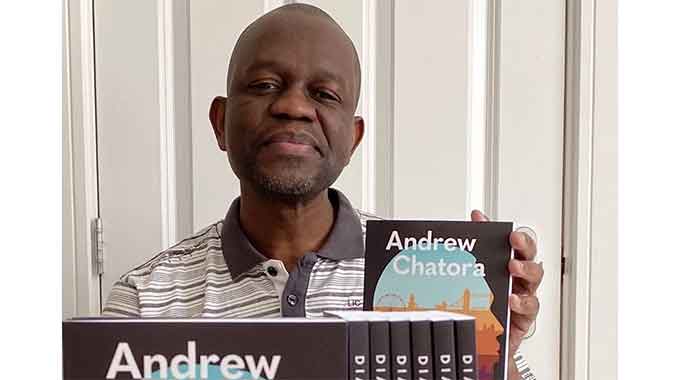
Memory Chirere-Book Review
Prolific Zimbabwean novelist, Andrew Chatora, has established a publishing company at his United Kingdom base and is inviting manuscripts from new and established authors.
The specific focus is fiction and memoir.
Friesian Publishing, the newly minted independent literary imprint based in London, derives its name from the Friesian horse. Long associated with strength, the Friesian horse is also a symbol of elegance and endurance.
The emblem reflects the press’ editorial philosophy, which is stated as “a commitment to publishing books of substance that can stand the test of time while remaining attentive to the moral and imaginative concerns of the present”.
Speaking from London recently, Chatora, the author of “Diaspora Dreams” says, “Friesian Publishing was founded with the aim of publishing books that endure beyond the immediate moment.”
He adds that they are seeking work that engages thoughtfully with questions of identity, history, migration, power and belonging without reducing literature to labels or limiting it to prescribed categories.
“As our remit is broad, we seek to avoid rigid categorisation,” he said.
Their call for new work appears clearly aggressive, as the publisher has simultaneously announced its first forthcoming title, “Unstoppable March of the Human Condition: Essays on Politics and Literature”, a nonfiction essay collection by Chatora himself.
The collection brings together a series of essays that explore how literary culture intersects with questions of power, historical memory and the evolving moral imagination of the modern world.
This brings to mind Ngugi wa Thiong’o’s words in support for his writing of “Homecoming”: “In a novel, the writer is totally immersed in a world of imagination. . . At his most intense and creative, the writer is transfigured, he is possessed. . .(but) in the essay, the writer can be more direct, didactic, polemical, or can merely state his beliefs and faith . . . to define his beliefs, attitudes and outlook in the more argumentative form of the essay.”
Essays such as Andrew Chatora’s enable authors to act as societal intellectuals to address issues in real-time, sometimes offering more credible, direct insights than the mainstream media.
This route has been taken by many other great writers of fiction; Chinua Achebe, Ngugi wa Thiong’o, Chimamanda Ngozi Adichie, Chenjerai Hove and more recently, Tsitsi Dangarembga.
In Chatora’s debut essay collection, the legitimate role of the contemporary writer is uppermost. These essays offer a unique reading experience, appreciating great writers like Charles Mungoshi, Ngugi wa Thiong’o, Yvonne Vera, Ayi kwei Armah and many other luminaries who have influenced the author’s own writing journey and consciousness over the years.
Wide-ranging in scope, the essays span literature, history, politics, exile, language, and identity. Chatora reflects on the condition of exile and the function of literature. Celebrated literary critic, writer and poet, Onai Mushava, makes insightful guest contributions to the collection.
Andrew Chatora is the author of four published fictional books and has developed a reputation as an important fiery voice within Afro-diasporic literary discourse.
His editorial stewardship is expected to shape the imprint’s transnational outlook, particularly its engagement with writing emerging from African and diaspora contexts. Chatora’s efforts echo the efforts of another Zimbabwean artist in the UK, Samantha Vazhure, who set up a thriving publishing company, Carnelian Heart Publishing, which won the 2023 Brittle Paper Publisher of the Year award.
In her testimonies, Vazhure says Carnelian Heart came about because she recognised the challenges African writers faced in publishing their work.
She experienced some of those challenges herself. By 2019, Vazhure completed her first poetry manuscript, and a year later, her first novel, “Painting a Mirage”.
When she could not find a publisher, she considered self-publishing, only to find out that, at the time, Amazon would not publish her book written in Chikaranga because it was not one of their recognised languages.
Despite all these challenges, Vazhure has published works that have won awards, like the mercurial novella “Shards” by Zimbabwean writer, Cynthia Marangwanda.
Vazhure also published “Tesserae”, a collection of poems by many female poets of Zimbabwe. “Tesserae” is described as “a unique celebration of Zimbabwean womanhood in all its diversity, its richness of voice and theme and narrative.
“The contributors include traditional page poets and underground poets, students and grandmothers, visual poets and spoken word artists, established writers and emerging talents, from within Zimbabwe and from the diaspora.”
Chatora is in good company but fellow authors have advised him to be clear on the challenges of distribution. There are many good books by Zimbabweans that are struggling to get even to the writer’s hometown.
Chatora has to learn from Vazhure, who has had retail partnerships with Book Fantastics and The Orange Elephant in Zimbabwe, Nuria Bookstores in Kenya, and Xarra Bookstores in South Africa, along with recognition from global media outlets like the BBC, Radio France, HSTV, and Zimpapers, underscore the international interest in her work.
The success and growth of Carnelian Heart are a testament to Vazhure’s ingenuity and commitment.
Chatora’s latest book “Harare Voices and Beyond” has been favourably received globally and is currently a Wayfarer’s Intralingo book club nomination. The book is a nuanced and earthy reconstruction of Zimbabwe’s land reform programme, a subject that has often gone the way of grand narrative and patriotic history.
The post-2000 Fast Track Land Reform Programme brought Zimbabwe into the international media, arguably much more than the liberation struggle for Zimbabwe itself.
In a widely circulated website interview with Nordiska Afrikainstitutet of February 2004, Zimbabwean writer and literary scholar, Robert Muponde, argues: “Land is the text of Zimbabwean History and Literature.”
He is referring to the centrality of land in the earlier seminal Zimbabwean literature texts set in Rhodesia. Some of them are “Waiting for The Rain” by Charles Mungoshi, Shimmer Chinodya’s “Dew in the Morning” and “Without a Name” by Yvonne Vera. In all these novels, land is either an issue in the background or is a side show with varying degrees of prominence.
But “Harare Voices and Beyond” does not disappoint.
Andrew Chatora, a novelist, essayist and short story writer, is based in Bicester, England. He has published three novels and is currently working on a collection of short stories: “Harare Alcatraz and Other Short Stories”.
His work is critically acclaimed for its depiction of migrants and the many challenges they face. He is heavily influenced by his own experience as a black English Language teacher in the UK and the hardships he encountered during the transition.
Writers wishing to submit manuscripts to Friesian Publishing may do so via email: [email protected]. Full submission guidelines and further information about the imprint can be found at: https://www.friesianpublishing.com.
For an immersive reading experience, visit the Typocrafters (DigiHub) retail shop at Herald House, corner George Silundika Avenue and Sam Nujoma Street in Harare.