Online Reporter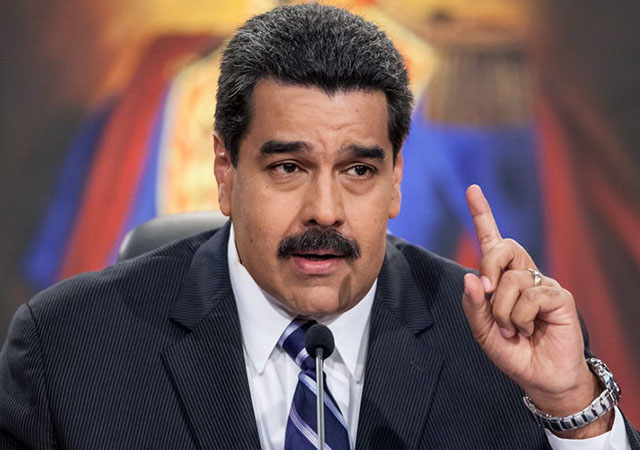
Richard Muponde
Zimpapers Politics Hub
THE United States’ military operation in Venezuela under President Donald Trump marks more than an isolated act of regime change, or a response to domestic instability in Caracas, rather, it represents a calculated geopolitical strike aimed at halting the momentum of the BRICS alliance, an emerging alternative economic and political bloc of the Global South led by China and Russia.
Venezuela, a prospective BRICS member, major oil producer, and vocal advocate of de-dollarisation, became a symbolic and strategic target. In this sense, the attack on Venezuela must be understood as part of a broader US attempt to preserve global hegemony, sustain the petrodollar system, and reassert control over Latin America under a revived Monroe Doctrine.
BRICS has evolved from an acronym into a serious geopolitical challenger to Western dominance.
Originally comprising Brazil, Russia, India, China, South Africa—and now expanded to include new Global South actors—it represents a growing share of global population, energy reserves, industrial output, and trade flows.
More critically, BRICS challenges the ideological foundations of the post–World War II international order dominated by the United States and its allies.
At the heart of this challenge is BRICS’ push for multi-polarity, reform of global financial institutions, and the gradual erosion of the US dollar’s monopoly over international trade and reserves.
Initiatives such as trading in local currencies, the New Development Bank and discussions around a BRICS payment system threaten the financial architecture that has long underpinned US power.
For Washington, BRICS is no longer an abstract economic forum—it is a strategic rival.
Venezuela’s significance lies not only in its political alignment, but also in its oil.
Sitting atop the world’s largest proven oil reserves, Venezuela has historically been central to global energy markets.
Under President Nicolás Maduro, Caracas increasingly conducted oil trade in non-dollar currencies, including the Chinese yuan, directly challenging the petrodollar system—the mechanism by which global oil trade sustains demand for the US dollar and by extension, US financial dominance.
Trump’s own rhetoric underscores this reality. His emphasis on “energy security” and the need to “protect” Venezuelan oil exposes the material basis of the intervention.
The capture of Maduro is thus not merely about democracy or drugs, as claimed, but about restoring US control over strategic energy flows to prop up a weakening dollar hegemony at a time of massive US debt and economic vulnerability.
Trump’s revival of the Monroe Doctrine, rebranded as the “Donroe Doctrine”, signals an openly imperial turn in US foreign policy.
By declaring Latin America an exclusive US sphere of influence and warning against “non-Hemispheric competitors” such as China and Russia, Washington is abandoning even the pretence of multilateralism or international law.
The Venezuela operation, followed by threats against Colombia, Cuba, Mexico, and even Greenland, illustrates that sovereignty and international norms now count for little when US strategic interests are at stake.
This posture is particularly alarming for the Global South, which has historically borne the brunt of such doctrines through coups, invasions, and economic coercion.
Is Venezuela an attack on BRICS?
While Trump has not explicitly named BRICS, the message is unmistakable.
Venezuela was targeted precisely because of its BRICS aspirations, its alignment with China and Russia and its defiance of dollar dominance.
The operation sends a warning to other BRICS and BRICS-aligned states: defy US economic and strategic interests at your peril.
The lack of an immediate, unified BRICS response exposes a critical weakness. BRICS is not a military alliance like NATO, nor does it possess collective security mechanisms.
Its reliance on diplomacy, international law and economic cooperation may be insufficient in an era where the US is willing to use brute force.
This moment therefore, forces BRICS to confront an uncomfortable question: can it remain purely an economic bloc in a world of escalating militarised imperialism?
Ironically, the US assault on Venezuela may strengthen BRICS in the long term. By openly violating sovereignty and threatening multiple countries, Washington risks accelerating the very trends it seeks to stop.
Many Global South states now see unmistakably that US power is coercive, unilateral, and self-serving.
This creates new incentives for countries to deepen ties with BRICS, pursue de-dollarisation, and seek collective protection through alternative institutions.
The Venezuela intervention may therefore become a catalyst for greater BRICS cohesion, coordination, and urgency, particularly in developing financial, energy and security frameworks independent of the West.
At this juncture, the role of India and China is pivotal.
As the two largest economies and populations within BRICS, their cooperation is indispensable. While border disputes and strategic mistrust persist, the Venezuela crisis demonstrates that division among BRICS’ core members only benefits US hegemony.
A fractured India–China relationship weakens BRICS’ credibility and limits its ability to respond collectively to external threats.
Overcoming differences, through dialogue, compartmentalisation of disputes, and shared economic interests, is therefore not optional but strategic. Without Sino-Indian alignment, BRICS risks paralysis at a moment when unity is most required.
Latin America: A core constituency for BRICS
Latin America is not peripheral to BRICS, it is central. Brazil’s membership, Venezuela’s aspirations, and growing Chinese and Russian engagement underscore the region’s importance.
If BRICS claims to represent the Global South, it cannot remain silent while the US treats Latin America as its backyard.
Failure to respond decisively to the Venezuela operation risks alienating Latin American states and undermining BRICS’ moral authority.
The bloc must articulate clear red lines against regime change, sanctions, and military intervention, while offering tangible economic and diplomatic support to targeted nations.
How BRICS may act going forward
To prevent future targeting of its members, BRICS must evolve. This does not necessarily mean becoming a military alliance, but it does require greater strategic coordination.
Possible steps include, accelerating de-dollarisation and alternative payment systems, coordinated diplomatic responses to US aggression, enhanced energy cooperation and collective bargaining, security dialogues and intelligence-sharing mechanisms, stronger political signalling against unilateral interventions, such measures would raise the costs of US aggression and demonstrate that attacks on one BRICS-aligned state carry broader consequences.
Venezuela as a Turning Point
Trump’s attack on Venezuela is a defining moment in contemporary international relations. It reveals the lengths to which the United States is willing to go to preserve dominance, sustain the petrodollar, and crush emerging alternatives like BRICS. Yet it also exposes US insecurity in a changing world order.
For BRICS and the Global South, Venezuela is both a warning and an opportunity.
Whether the bloc rises to the challenge, by deepening unity, overcoming internal divisions, and defending its constituency, will determine whether multi-polarity remains an aspiration or becomes an irreversible reality.



 Bongani Ndlovu