Online Reporter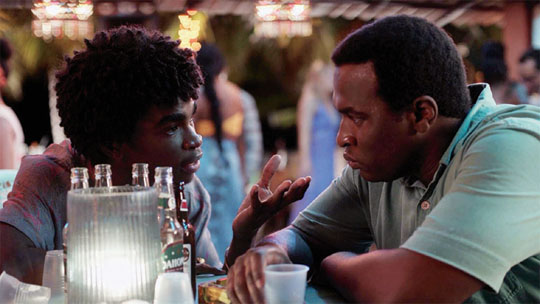
Liberty Dube
Post Correspondent
FOR years, the image of a man sitting in a bar has carried a familiar meaning.
A drink in hand, music playing and friends laughing while stories are exchanged. The bar is often seen as a place where men go to unwind, escape the pressures of work or enjoy the company of friends.
But behind the laughter, some men carry stories they have struggled to tell anyone.
These are stories of violence.
Stories of emotional abuse, humiliation, controlling relationships, financial abuse and, in some cases, physical or sexual violence. For some men, the first place where those stories emerge is not a police station, counselling room or courtroom. It is among friends.
That informal conversation can become significant because many men grew up hearing that vulnerability is weakness and that a real man must endure pain silently.
For one survivor, silence became a way of life.
Raised to believe that a man must always be strong, he kept his pain to himself, continued socialising and laughed with friends while pretending everything was fine. Eventually, he reached a point where he could no longer carry the burden alone.
Opening up to someone he trusted became a turning point, helping him realise that asking for help did not diminish his identity as a man.
For another survivor, even attempting to speak about his abuse brought ridicule.
A Mutare man, who requested anonymity, said his attempts to confide in colleagues were dismissed because of expectations that, as a man, he should simply resolve problems at home.
“It has not been easy. I remember trying to open up to my colleagues at work, but they jokingly said, ‘You are a man; you should work things out with your wife at home.’ Yet I had openly told them that I had been beaten. I later lied and said I had fallen while drunk, but that is when I realised that no one was ready to listen to my story. It has been a painful marriage, but I have to be there for my children. Having a controlling wife who, after being advised or restrained, would turn to violence is something most men suffer unbearably. The feeling is atrocious,” he said.
His account captures the dilemma facing some male survivors: Speaking out can expose them to ridicule, while remaining silent can leave them trapped in abusive situations.
Another survivor, who identified himself as Rasta, described the stigma surrounding male victims as one of the biggest barriers to speaking out.
“Sometimes returning home early can be a nightmare. I do menial jobs and money does not come every day. People back home, including my wife, have a lot of expectations of me, and sometimes they compare me with other men from the neighbourhood in Dangamvura.
“My wife compares other people’s lifestyles with ours. That pressure is passed on to me, and I am unable to function normally. Another issue is that, because of health problems, I cannot be intimate with my wife as often as she wants. During some confrontations, she scolds me, saying I am failing to be ‘a real man’ in bed, which is something I cannot change. It is painful and sometimes difficult to share with others. They laugh,” he said.
For Rasta, being listened to without judgment became the first step toward confronting what had happened. These experiences point to a difficult reality: For some male survivors, the violence itself may be only one part of the battle.
The other is finding the courage and the space to say: I am being hurt.
Padare Enkundleni Men’s Forum programmes officer Ziphongezipho Ndebele said the problem is more widespread than public discussion often suggests.
Padare/Enkundleni is a movement of men advocating for gender justice in Zimbabwe, operating in both rural and urban settings across the country.
Ndebele said: “Gender-based violence against men is more common than is often acknowledged. Men experience diverse forms of abuse, including physical, emotional, sexual harassment, economic deprivation and, increasingly, technology-facilitated abuse. The greatest challenge is silence. Societal expectations dictate that ‘a man must be strong’ and cannot be abused, discouraging disclosure. Men are often expected to endure pain, provide for their families and remain emotionally strong, even when they are experiencing abuse in their relationships or homes.”
In 2025, Padare provided counselling to more than 500 men who were survivors of gender-based violence. In 2024 alone, the organisation offered temporary shelter to more than 20 men whose homes were no longer safe because of abuse.
These interventions not only safeguarded survivors, but also demonstrated to communities that men’s experiences of GBV are real and deserving of support.
“Some men fear that speaking out will make them appear weak or less masculine. Others are afraid of being laughed at or asked why they could not defend themselves. This creates a situation where men may continue suffering in silence instead of seeking help. There is also a perception in some communities that gender-based violence is primarily a women’s issue, which can make male survivors feel that their experiences are not recognised or taken seriously,” he said.
He also pointed to the limited availability of services specifically tailored to male survivors.
Prominent Mutare lawyer, Mr Tafadzwa Jaricha of Mupindu Legal Practitioners said Zimbabwe’s legal framework provides protection against violence irrespective of the sex of the victim.
“The Constitution establishes equality before the law and equal protection and benefit of the law. Section 56(1) provides that all persons are equal before the law, while Section 56(2) expressly provides that women and men are entitled to equal treatment. The Constitution also protects the right to human dignity and personal security, including freedom from violence from both public and private sources,” she said.
Jaricha said these constitutional protections were complemented by legislation dealing specifically with domestic violence.
“The Domestic Violence Act [Chapter 5:16] provides protection to victims of domestic violence and does not limit that protection to women. It provides mechanisms such as protection orders and other remedies that can be used to protect a person experiencing domestic violence. These include restrictions on perpetrators, emergency monetary relief, child-access provisions, compensation and counselling,” she said.
She said where abusive conduct also amounted to a criminal offence, other legislation could provide additional remedies.
“The Criminal Law (Codification and Reform) Act [Chapter 9:23] provides criminal remedies where conduct amounts to offences such as assault. Therefore, from a legal perspective, the issue is not that male survivors are excluded from protection. The law recognises the rights of men as much as it recognises the rights of women,” she said.
However, she said the existence of legal protection did not automatically mean that male survivors would be able to access it.
“The principal gaps are arguably more apparent at the level of implementation, awareness, support services and social attitudes than in the basic constitutional principle of equality. A male survivor may require legal assistance, counselling, medical assistance, shelter or other forms of support. If services are designed or perceived as being exclusively for women, a male survivor may be reluctant to approach them,” she said.
The issue, therefore, is not simply whether laws exist. It is whether a man experiencing violence knows where to go, believes he will be taken seriously and feels safe enough to report what is happening.
The stories emerging from informal spaces raise a bigger question about how society responds to male survivors. A man may tell a friend before he tells a police officer. He may admit that something is wrong over a drink before he walks into a counselling room. He may first test the waters with a joke before revealing something deeply painful.
That first disclosure matters, but it should not be the last stop.