Online Reporter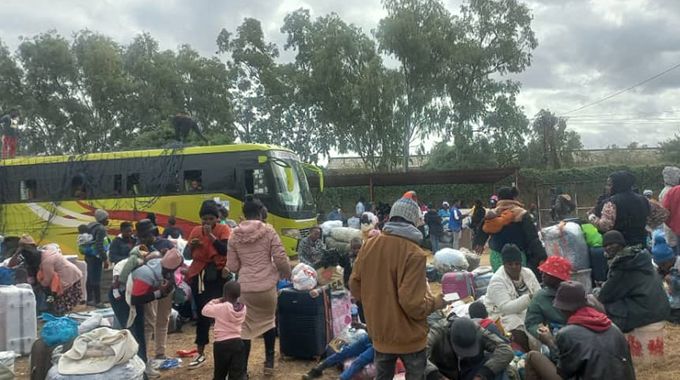
Abel Mavura
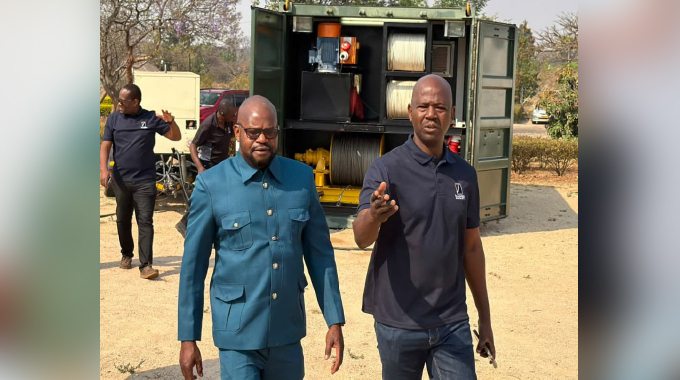
A recent article, Beyond Return: Why Reintegration Matters, authored by Ambassador Park Jae Kyung and Diana Cartier, published in The Herald rightly argues that migration governance does not end when migrants cross the border back into their country of origin. Reintegration is an essential, yet often overlooked, component of migration policy.
The community-based approach being implemented by the International Organisation for Migration, with support from the Republic of Korea through the Korea International Cooperation Agency, is an important contribution towards restoring dignity and opportunity for returning Zimbabweans.
If Zimbabwe is to develop a comprehensive migration governance framework, we need to broaden how we understand both migration and reintegration.
Human mobility is one of the defining features of our interconnected world. According to the United Nations, more than 304 million people now live outside their country of birth, representing approximately 3,7 percent of the world’s population.
Migrants also sent an estimated US$905 billion in remittances worldwide in 2024, demonstrating that migration is not simply about crossing borders. It is also about sustaining families, supporting communities and contributing to national economies.
For Zimbabwe, migration is not an occasional phenomenon. It has become an enduring feature of our social, economic and political landscape. For decades, Zimbabweans have moved across the region and beyond in search of employment, education, security and opportunities, creating transnational networks that continue to shape livelihoods and local development.
While public debate often focuses on outward migration, Zimbabweans also return home, whether voluntarily, through assisted return programmes or because changing political, economic and immigration environments leave them with limited alternatives.
Recent anti-immigrant protests and growing public hostility towards foreign nationals in South Africa, accompanied by calls for tougher immigration enforcement, have highlighted how rapidly migrants’ circumstances can change. This is true even for people who have lived, worked, raised families and contributed to their host communities for many years.
Reports from South Africa have described migrants living in fear, following demonstrations demanding the removal of undocumented foreign nationals. Some migrants have been displaced from their homes, while others have sought assistance from their governments to return to their home countries.
Significantly, even migrants with legal documentation have expressed concern that formal status may provide little protection from intimidation, hostility or violence.
For Zimbabweans living in South Africa, these developments are particularly important. South Africa has long been a major destination for Zimbabwean migrants seeking employment, education and economic opportunities.
Changes in public attitudes, immigration enforcement and political rhetoric can therefore affect, not only individuals living in South Africa, but also the families and communities in Zimbabwe that depend on their income, care and support.
These developments remind us that migration is shaped, not only by individual aspirations, but also by political, economic and social conditions that migrants cannot control. A person may intend to remain abroad, build a business or raise a family, only to find that changing laws, public hostility, economic decline or threats of violence suddenly make return necessary.
This is precisely why reintegration should not be viewed merely as a response to isolated return events. It must be understood as part of a broader migration system in which decisions to move, remain or return are shaped by interconnected forces operating across borders.
Yet, return is rarely the end of the migration journey.
I have conducted my own research across Europe and Africa, including long-term ethnographic fieldwork among migrant communities living in informal settlements in France. Results have shown that migration is seldom a straightforward journey from departure to destination, and finally home. People’s lives are far more complex.
Many migrants move several times during their lifetime. They maintain families across borders, circulate between countries or return temporarily before migrating again. Others remain deeply connected to relatives, employers and communities abroad long after returning to their country of origin.
Migration is, therefore, better understood as a continuous social process rather than a single event. Return is one stage within that wider process.
This reality challenges conventional understandings of reintegration.
Too often, reintegration programmes assume that once migrants receive livelihood support, vocational training or small business assistance, they can simply resume a normal life. These interventions are important and deserve recognition because they provide valuable foundations for rebuilding lives. However, they represent only one dimension of reintegration.
Reintegration is equally about identity, belonging, trust and recognition.
Many returnees come home to communities that have changed while they were away. Families have developed new routines. Children have grown older. Social relationships have shifted. The returnee may also have changed through years of living and working in another country.
Expectations from relatives and communities can be overwhelming, particularly where migration was associated with hopes of economic improvement. Those who return without visible financial achievements may experience disappointment, stigma or feelings of personal failure, despite having endured extraordinarily difficult circumstances abroad.
A returnee may have survived exploitation, insecure employment, homelessness, discrimination, detention or threats of deportation. Yet upon returning home, the person may still be judged primarily by whether they have brought back money, property or other visible signs of success.
Successful reintegration therefore requires far more than economic assistance. It requires restoring dignity, strengthening mental wellbeing, rebuilding confidence and creating spaces where returnees can once again feel that they belong. Psychosocial support is particularly important.
Return may involve relief and renewed family connection, but it can also bring grief, shame, uncertainty and emotional distress. Mental health assistance should therefore not be treated as a short intervention offered only at a border post. It should remain available within communities as returnees rebuild relationships and adjust to life after migration. Importantly, we must also rethink how we view returnees.
Too often, they are portrayed primarily as vulnerable individuals requiring assistance. While many undoubtedly need support, they also return with significant assets. Migration exposes people to new technologies, labour markets, cultures, institutions and different ways of solving everyday challenges.
Returnees therefore bring home not only financial resources, but also skills, resilience, entrepreneurship, professional experience, intercultural understanding and social networks. These capabilities can make significant contributions to national development when they are properly recognised and supported.
A person who worked in construction abroad may return with technical knowledge and experience of different building methods. A care worker may bring valuable skills in health and social support.
Zimbabwe should therefore view return migration not simply as a humanitarian concern, but as a strategic national development opportunity.
This requires institutions that can identify, recognise and connect returnees’ skills with employment, entrepreneurship, education and community development opportunities. Reintegration policy should ask not only what returnees need, but also what knowledge, experience and relationships they bring.
The community-based approach described by the International Organisation for Migration demonstrates why this matters. By bringing returnees and other community members together to identify shared priorities, strengthen livelihoods and improve local infrastructure, the programme recognises that reintegration is fundamentally relational.
Returnees do not rebuild their lives in isolation. Their ability to reintegrate depends on relationships with families, neighbours, traditional leaders, local authorities, employers, schools, health services and financial institutions.
Communities become stronger when returnees are not treated as outsiders who have failed abroad, but as active citizens capable of contributing to local development alongside everyone else.
Community projects can also reduce resentment by ensuring that support does not benefit returnees alone, but strengthens shared services and opportunities.
At the same time, reintegration should not be confined to short-term development projects. A six-month or one-year intervention cannot fully address the complex realities of rebuilding a life after migration. Reintegration is a long-term process shaped by employment opportunities, housing, healthcare, education, local governance, social acceptance and broader economic conditions.
A returnee may receive business training and a start-up grant, but the enterprise may still struggle if markets are weak, finance is unavailable, infrastructure is poor or inflation erodes earnings. Similarly, vocational training may have limited impact if it is not connected to actual employment opportunities.
Success should therefore not be measured simply by the number of businesses established, goats distributed or vocational certificates awarded. It should also be measured by whether returnees can maintain sustainable livelihoods, restore social relationships, access essential services and participate fully in society over time. This is where a systems perspective becomes essential.
Migration does not exist in isolation. It is connected to labour markets, education, housing, governance, healthcare, climate change, social protection and economic development. It is also connected to decisions taken in destination countries, including changes in immigration law, employment policy and public attitudes towards migrants.
Policies that focus only on the moment of return overlook the interconnected factors that determine whether reintegration succeeds or fails. Sustainable reintegration therefore requires coordinated action across government ministries, local authorities, civil society, the private sector, development partners and communities themselves.
It also requires better data. Zimbabwe needs to understand who is returning, where they are settling, what skills they possess, what challenges they face and whether existing support produces sustainable outcomes. Without this evidence, policies risk treating returnees as a single category, despite the considerable differences between people returning voluntarily, those facing deportation, survivors of trafficking, former students, professionals, workers and families displaced by hostility or violence.
Perhaps most importantly, we need to rethink migration itself. Migration is often presented as a crisis to be prevented or a problem to be solved. Yet human mobility has always been part of how societies adapt, survive and prosper. Throughout history, people have moved in search of security, opportunity, education, employment and dignity.
For many Zimbabweans, migration is not simply an emergency response. It has become a way of navigating an increasingly interconnected and uncertain world. Migrants build lives across several places, contribute to more than one society and maintain social and economic responsibilities across borders.
The policy question, therefore, should not simply be how to stop migration or encourage return. Rather, it should be how to ensure that migration remains safe, orderly and dignified throughout every stage of the migration cycle, including when people choose, or are compelled, to return home.
The article by Ambassador Park Jae Kyung and Diana Cartier makes an important contribution by highlighting the significance of community-centred reintegration. The next step is to embed reintegration within a broader migration governance framework that connects employment, housing, education, mental health, entrepreneurship, local governance and community development.
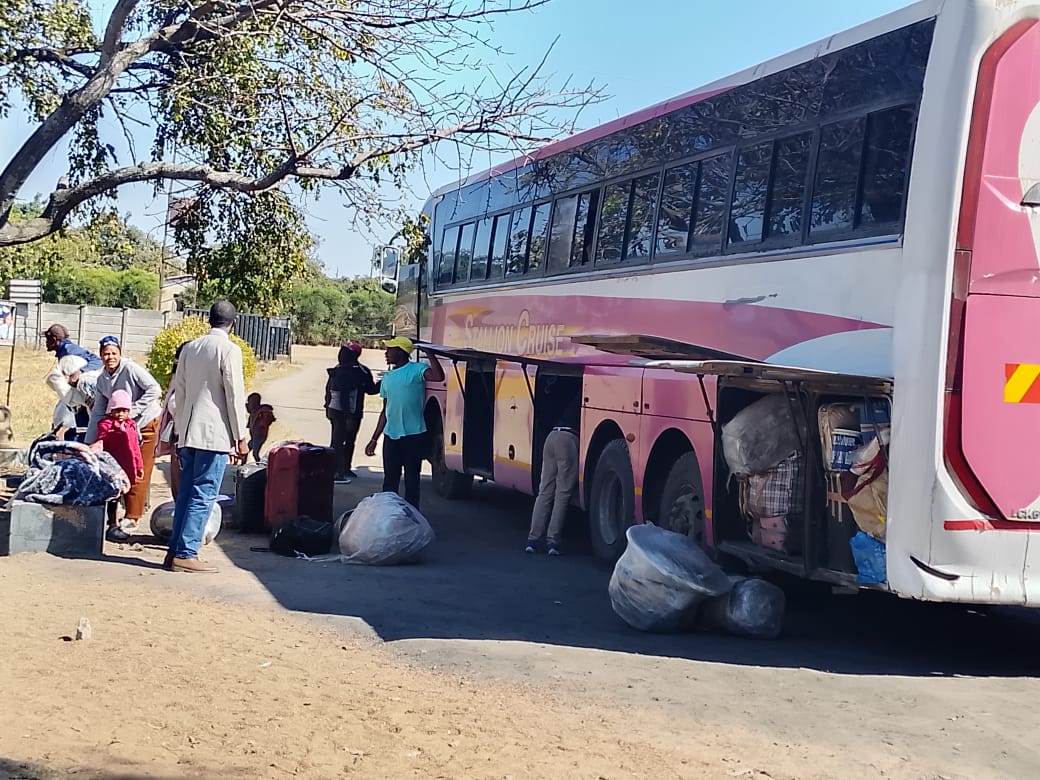
Zimbabwe should also strengthen cooperation with countries hosting large numbers of Zimbabwean migrants. Reintegration cannot begin only when a person arrives at Beitbridge, Plumtree or Chirundu. Early information, consular assistance, legal guidance, skills recognition and coordination with communities of return can reduce uncertainty and allow people to prepare for a dignified transition. Return should not be understood as the opposite of migration, nor as its final destination. It is one stage within a much broader process of human mobility that continues to shape families, communities, economies and societies.
If Zimbabwe embraces this broader perspective, reintegration will become more than a programme for assisting returnees. It will become a long-term investment in human capability, community resilience and national development.
Ultimately, successful migration governance is not measured only by how many people cross borders. It is measured by whether people can move, remain, return and rebuild their lives with dignity, security, opportunity and hope.
*Dr Abel Mavura is a migration researcher at the University of Cambridge. He holds a PhD in Development Studies specialising in migration and an MPhil in Architecture and Urban Studies from the University of Cambridge.