Online Reporter
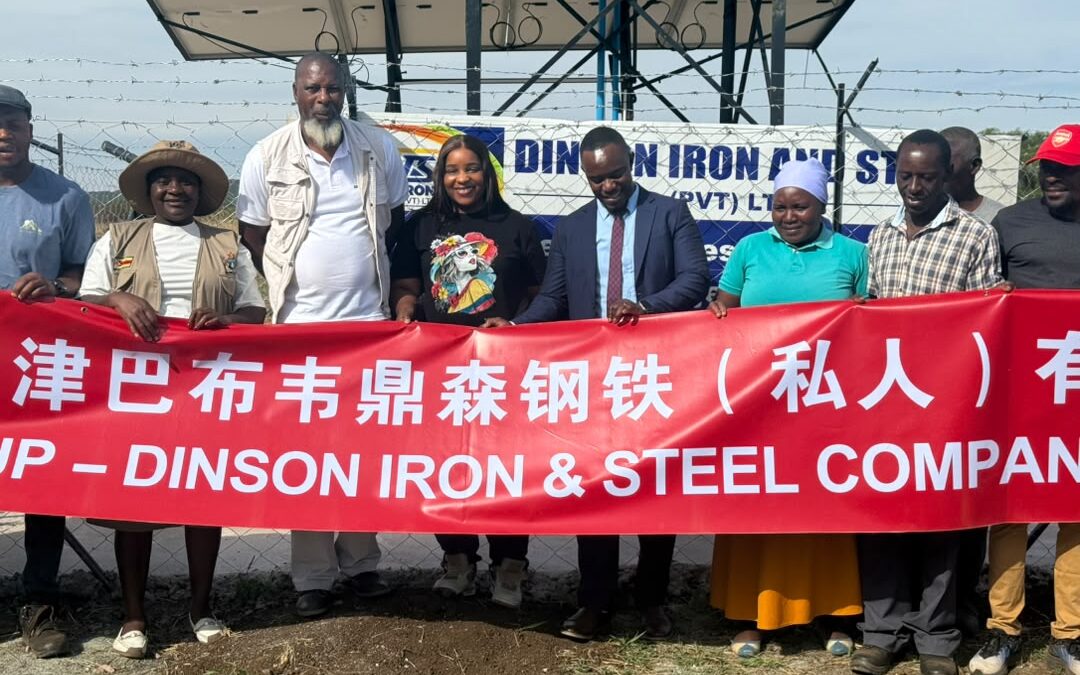
DINSON Iron and Steel Company has extended the benefits of its industrial investment into rural communities after handing over a borehole facility in Chikomba District, in a development that illustrates the role of the private sector in advancing Zimbabwe’s National Development Strategy 2 (NDS2).
The facility, handed over to residents of Sable Flats Extension on November 11, 2026, is expected to improve access to water while opening opportunities for agricultural production, household food security and income-generating activities.
The intervention comes as Zimbabwe implements NDS2, its five-year economic development blueprint covering 2026 to 2030, which seeks to accelerate progress towards an empowered and prosperous upper-middle-income society.
While Dinson’s integrated iron and steel manufacturing complex at Manhize represents a major investment in Zimbabwe’s industrialisation and mineral beneficiation agenda, the company is also extending its development footprint through community-focused infrastructure projects.
The borehole handover demonstrates how industrial investment can be complemented by practical interventions addressing essential needs in surrounding communities.
Dinson Iron and Steel project manager Wilfred Motsi said the company regarded inclusive development as a fundamental part of its long-term investment philosophy, emphasising that the benefits of industrialisation should be reflected in improvements in people’s living standards.
“At Dinson Iron and Steel, our understanding of development goes beyond constructing one of the country’s largest integrated steel manufacturing facilities. We believe industrialisation must be accompanied by meaningful social and economic transformation within the communities that host our investments,” he said.
Motsi said the company’s community development initiatives were consistent with Government efforts to promote inclusive economic growth, strengthen infrastructure and improve food security under NDS2.
“The National Development Strategy 2 places considerable emphasis on inclusive economic growth, infrastructure development, food security and climate resilience. As an investor operating within Zimbabwe’s economic development framework, we recognise our responsibility to contribute towards these national priorities through practical, community-centred interventions.
“Access to water is fundamental to human development. When communities have reliable water infrastructure, opportunities emerge for improved agricultural productivity, household food security and small-scale economic activities. These are essential building blocks for sustainable rural development,” he said.
NDS2 places infrastructure development, agricultural productivity, food security, climate resilience and economic transformation among the country’s principal development priorities.
Against this background, investment in rural water infrastructure can contribute to the broader development agenda by supporting productive agricultural activities and strengthening household resilience.
Motsi said sustainable corporate social responsibility programmes required cooperation among investors, local authorities, traditional leaders and the communities benefiting from development projects.
“Our objective is not simply to hand over infrastructure, but to support initiatives that can deliver lasting socioeconomic value. This requires community ownership, responsible management of resources and continuous engagement with local authorities.
“Zimbabwe’s Vision 2030 aspirations can only be fully realised when industrial expansion and improvements in people’s living conditions advance together. We want the growth of the Manhize steel project to be associated not only with increased national industrial capacity, but also with positive and sustainable development outcomes for surrounding communities,” he said.
The handover ceremony brought together the District Development Coordinator, Chikomba Rural District Council officials, traditional leaders, village representatives and community members.
The District Development Coordinator commended Dinson for improving water accessibility, noting that Government authorities had assessed the project and found it to have been satisfactorily implemented.
The coordinator stressed the importance of protecting the investment through proper maintenance and recommended that community members receive basic training in the upkeep of the borehole.
She also encouraged residents to explore establishing a community garden to strengthen household food security and agricultural livelihoods.
Chikomba Rural District Council’s chief executive officer called for productive use of the water facility beyond domestic consumption, encouraging residents to develop sustainable agricultural projects.
The council chief executive recommended establishing a water point management committee to coordinate the responsible use and maintenance of the infrastructure.
He also urged Dinson to share its proposed corporate social responsibility programme for 2027 with the local authority and consult residents before implementing major interventions, so that future projects align with district development priorities.
Village chairman Marara welcomed the investment, saying the facility had created new opportunities for villagers to improve agricultural production and strengthen household livelihoods.
“As a community, we sincerely appreciate what Dinson Iron and Steel has done for us. This development is a demonstration that the company is not only interested in its industrial operations but also cares about the welfare of the people living around its investment.
“Water is life, and for rural communities like ours, access to water is also an opportunity to improve our livelihoods. We now have a resource that can help us grow crops, establish gardens and work towards greater household food security,” he said.
Marara said villagers had already begun preparing for drought conditions by planting maize around the facility, with land allocated among households to support agricultural activities.
He also expressed appreciation for the company’s continued engagement with the community through its public relations department.
Villagers appealed for assistance in rehabilitating an older borehole to strengthen water availability and support future agricultural development.
Traditional leaders welcomed the intervention and urged residents to safeguard the facility, emphasising responsible use and collective ownership.
The project highlights the potential for closer cooperation among Government, traditional institutions, the private sector and local communities in delivering sustainable development.
As Zimbabwe pursues its Vision 2030 aspirations, the success of major industrial investments will be measured not only through their contribution to national production and economic growth, but also through their ability to create opportunities for surrounding communities.
For the people of Sable Flats Extension, those benefits begin with access to water, but the longer-term possibilities extend to food production, small-scale agricultural enterprises and stronger household livelihoods.
The borehole may be modest compared with the scale of the Manhize steel complex, but its significance illustrates a central principle of inclusive development: economic transformation becomes meaningful when communities can participate in and benefit from the opportunities it creates.