Tafadzwa Zimoyo
Lifestyle Editor
“Fashion is the armour to survive the reality of everyday life,” said the late American fashion photographer Bill Cunningham.
Few words better capture the spectacle surrounding the funeral of businessman and philanthropist Sir Wicknell Chivayo and his wife, Lucy “Lulu” Muteke, where fashion became another language of grief, faith, status and remembrance.
In a sea of white apostolic garments, sharply tailored black suits, statement hats and expensive accessories, mourners made their statements without uttering a word.
The flowers were immaculate, the marquees imposing, the luxury vehicles gleaming and the guest list a roll call of influential figures from politics, business, music and entertainment.
Every arrival attracted attention, every outfit invited scrutiny, and every carefully chosen detail appeared to tell a story.
This was no ordinary funeral.
Zimbabweans have witnessed a similar fascination before. When flamboyant businessman and socialite Genius “Ginimbi” Kadungure died in a car accident in Harare on November 8, 2020, his extravagant lifestyle, celebrity friendships and widely followed funeral turned his final journey into a defining moment in the country’s popular culture.
Chivayo’s farewell brought back memories of that spectacle, but with its own distinctive character.
He was not a Government official, yet his public profile, philanthropy, business interests and much-discussed displays of wealth had made him a household name.
His funeral attracted a remarkable cross-section of society, illustrating how influence can extend far beyond formal political office.
Love him or hate him, in death, Chivayo became the man of the moment.
For days, his name dominated conversations across television, newspapers, radio and social media.
Zimbabweans wanted to know who had arrived, what was happening next and how the final farewell would unfold.
The interest extended beyond national borders, reflecting the international fascination with a lifestyle that had become part of his public identity.
When a wealthy and controversial personality dies, the world often pauses.
Yet the fascination is not always about money alone; it is also about influence, relationships, symbols and the stories surrounding a life lived in the public eye.
And at this funeral, fashion had plenty to say.
White flowers, black elegance and a grand farewell
The setting was a study in grandeur and solemnity. White flowers transformed the funeral space into an elegant landscape of pale blooms, carefully arranged displays and imposing white marquees.
The arrangements softened the scale of the occasion, creating an atmosphere that was luxurious without losing its solemn character.
White roses, lilies and other pale flowers are commonly associated with purity, peace, remembrance and eternal rest. Their delicate petals and understated beauty conveyed tenderness, while their abundance gave the setting a sense of occasion.
White also resonated with the apostolic religious tradition, in which the colour features prominently in worship and communal gatherings.
For many mourners, it represented more than an aesthetic choice; it was an expression of faith. The visual grandeur recalled international celebrity memorials, including the July 2009 farewell to Michael Jackson in Los Angeles, where elaborate floral tributes and carefully arranged staging reflected the stature of a global music icon.
Yet Chivayo’s funeral had a distinctly Zimbabwean identity. The scale was international in its ambition, but the religious symbolism and presence of the apostolic community rooted the ceremony firmly in local culture.
The black-and-white palette was particularly striking.
Black traditionally conveys mourning, dignity and formality, while white can represent purity, peace and spiritual hope. Together, the colours created a compelling visual balance between sorrow and reverence.
Michael Jackson famously explored racial unity in his 1991 hit Black or White.
At Chivayo’s funeral, the colours carried a different message, bringing together mourners from different backgrounds and traditions in a shared moment of grief.
The apostolic congregants brought waves of white, while black suits and dresses introduced contrast and solemnity. The result was a visual tapestry in which faith, fashion and ceremony coexisted.
The family: Fashion as a language of remembrance
When a family loses its own, clothing can become a deeply personal tribute. Chivayo’s relatives brought different interpretations of remembrance to the occasion.
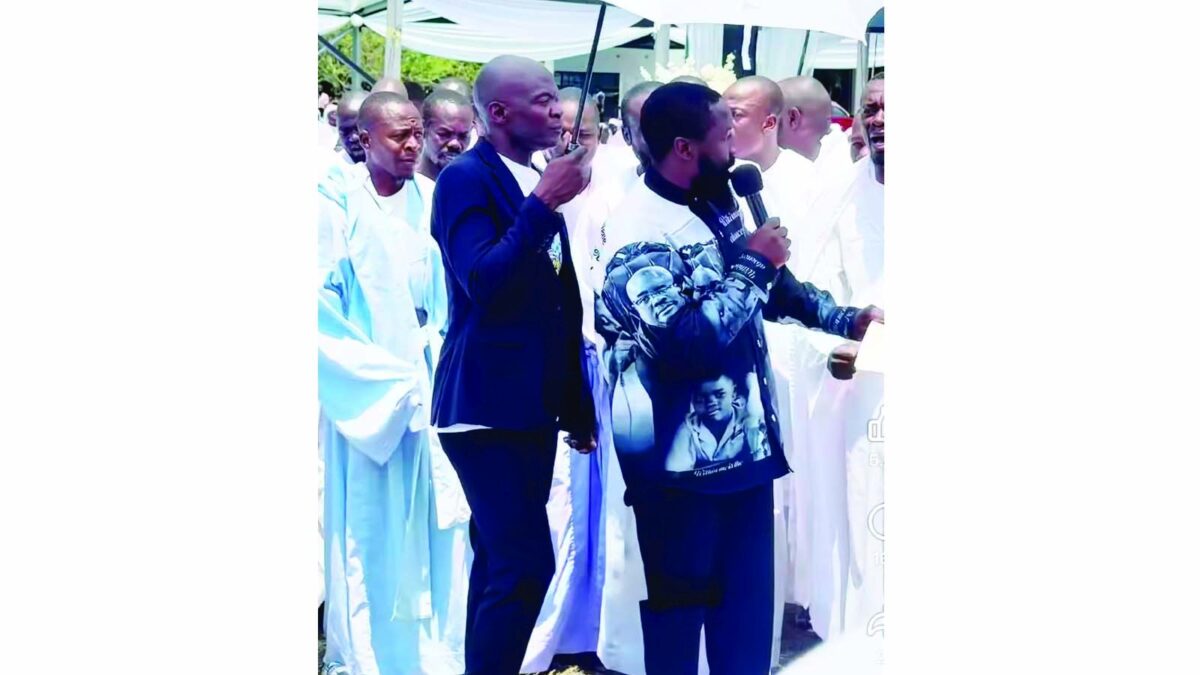
His brother G6 attracted attention with a shirt emblazoned with images of the late businessman. It was a bold, intimate statement, turning clothing into a wearable memorial. Rather than relying on conventional funeral attire alone, he kept his brother’s image close.
Personalised clothing tributes are familiar at international celebrity memorials, where photographs and signature imagery become symbols of enduring connection. G6’s choice suggested that some memories are too personal to be confined to speeches and wreaths.
His brother Fergi opted for a black suit, presenting a more traditional picture of mourning. His closely styled crown-like haircut added character to the look, while the overall appearance remained neat and respectful.
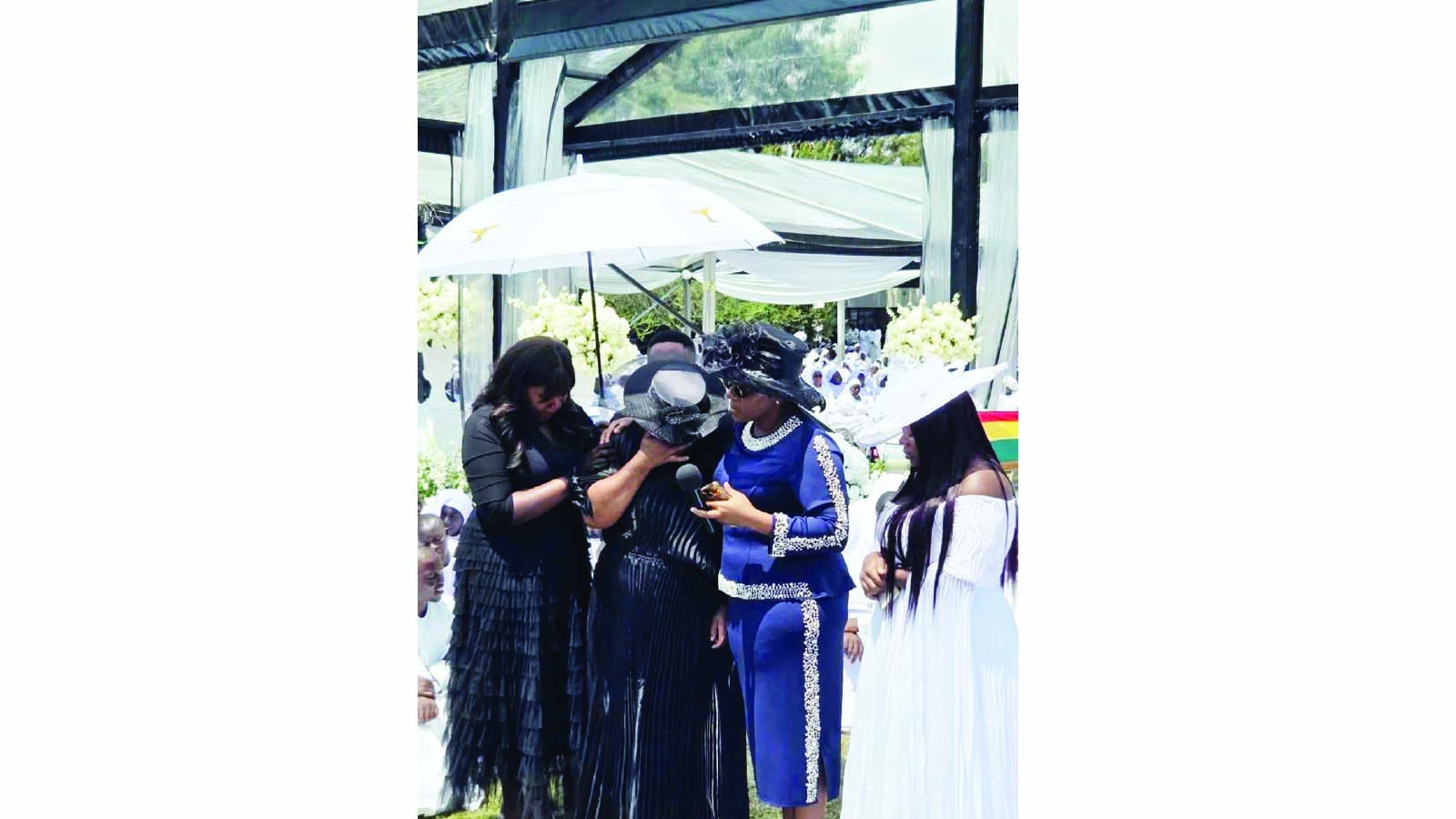
The sisters offered another fashion narrative. Black dresses provided a classic foundation, while one sister’s all-white ensemble stood apart against the darker palette. Others opted for individual touches, including floral prints and coordinated outfits.
Then came the hats.
From wide-brimmed designs to structured fascinators, the headpieces added unmistakable occasion dressing. Lulu’s sister and other female mourners demonstrated how a well-chosen hat can elevate an ensemble, framing the face while introducing personality and sophistication.
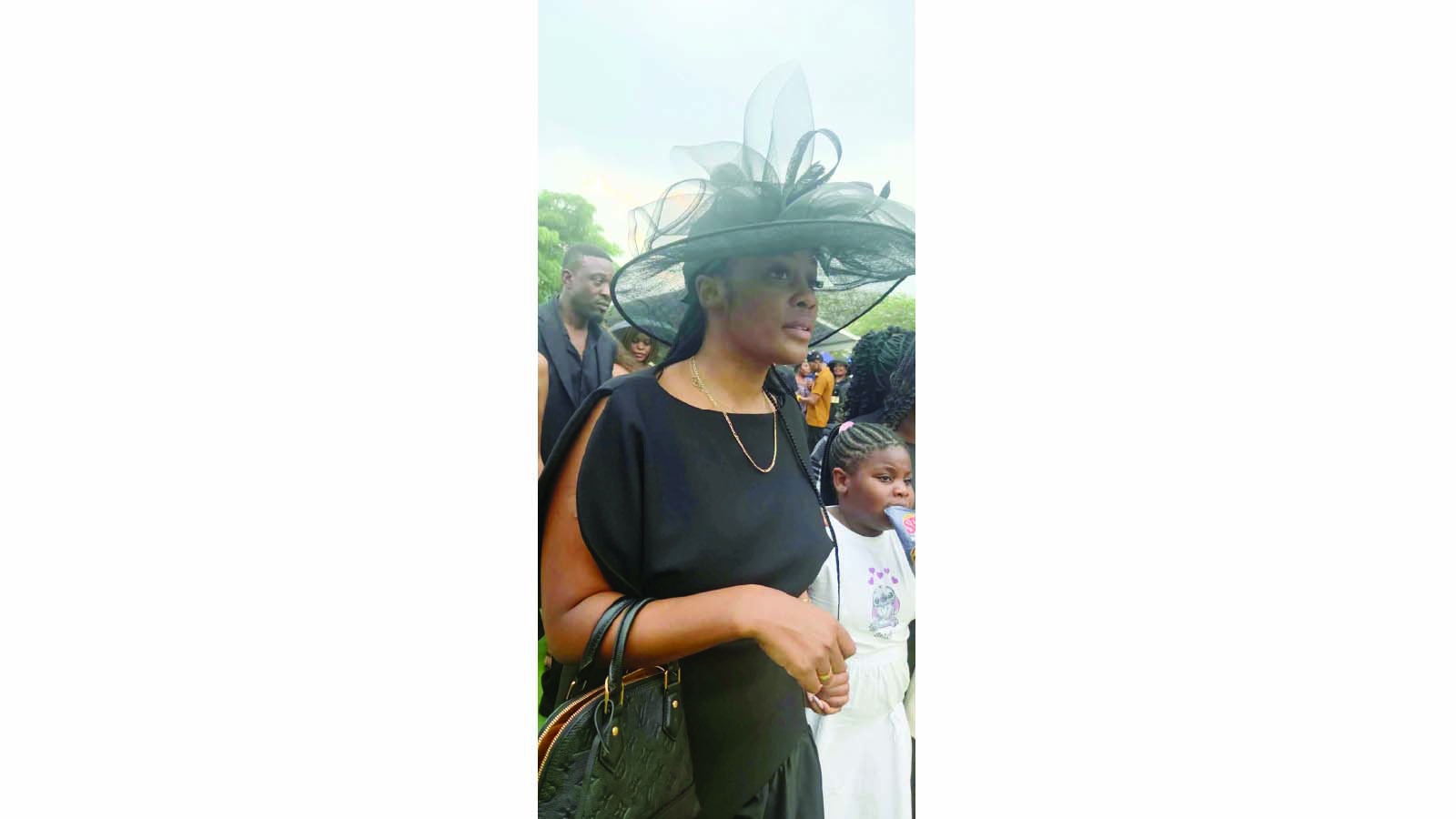
Sonja, who rarely misses an opportunity to make a fashion statement, remained faithful to her polished style in an all-black outfit crowned by a dramatic bow hat. It was a confident choice that balanced elegance with restraint.
The children also stood out in crisp white outfits. Unlike the Vapositori congregants, they did not wear apostolic garments, but their coordinated white clothing complemented the dominant palette. White is traditionally associated with innocence, peace and hope, giving their appearance a poignant quality as they bade farewell to their parents.
In funeral fashion, the challenge is to look appropriate without appearing to compete with the occasion. The strongest outfits understand that distinction.

Chief mourners: Suits, status and sartorial precision
Among the chief mourners and close associates, black tailoring dominated, but the details separated memorable looks from ordinary ones.
Honourable Scott Sakupwanya chose a black suit with a matching tie, delivering a coordinated and formal appearance. It was a classic combination that understood the occasion’s demand for dignity.
Chief J Tazvi Mhaka, regarded as one of Chivayo’s close friends, opted for a black Chinese-collar suit. The streamlined neckline gave the outfit a contemporary edge, while the cut appeared well suited to his frame. It was a reminder that good tailoring is not necessarily about a famous label; it is about proportion, fit and confidence.
Jah Prayzah translated his familiar appreciation for sharp silhouettes into a black double-breasted, four-button suit. Paired with his trademark dark sunglasses, the ensemble was polished and recognisable without unnecessary theatrics.
Honourable Tino Machakaire introduced a subtle splash of colour, combining a black suit with a blue tie and white shirt. The blue provided contrast while preserving the authority and formality expected of a senior public figure.
Honourable Tatenda Mavetera also embraced a black dress, with a doek scarf wrapped around her neck and head, demonstrating how simplicity, good fit and understated styling can deliver an elegant daytime funeral look.
Bona Mugabe also brought understated elegance to the farewell, opting for a black ensemble accented with black roses that added a dramatic floral touch. Her choice was a lesson in monochromatic dressing, proving that an all-black look need not be ordinary. The floral detailing introduced texture and sophistication, striking a balance between personal style and the sombre mood of the funeral.
Fashionistas Pokello and her friend Tanya embraced black dresses and petite hat, with beret-like styling adding a touch of European-inspired sophistication. Their looks illustrated the appeal of accessories that complement rather than overwhelm an outfit.
The funeral also attracted Rasta the Artist, Lebani Thaka – David Sirenje, the Zimbabwean-born painter based in South Africa, known for his distinctive portraits of prominent personalities. However, while black dominated the dress code, he arrived in his familiar signature attire rather than switching to sombre funeral wear. Well, fashion police might just forgive him this time! After all, when your personal style is part of your brand, perhaps even a farewell of this magnitude cannot make you abandon your signature look.
Other dignitaries and celebrities arrived in carefully coordinated formal wear, from fitted suits to statement eye-wear. Even within the shared discipline of mourning, individuality remained visible.
Friends, designer labels and the fashion police
Beyond the immediate family and chief mourners, the apostolic community supplied the most striking collective visual statement. White garments filled the gathering, reinforcing its religious character and creating a sense of unity.
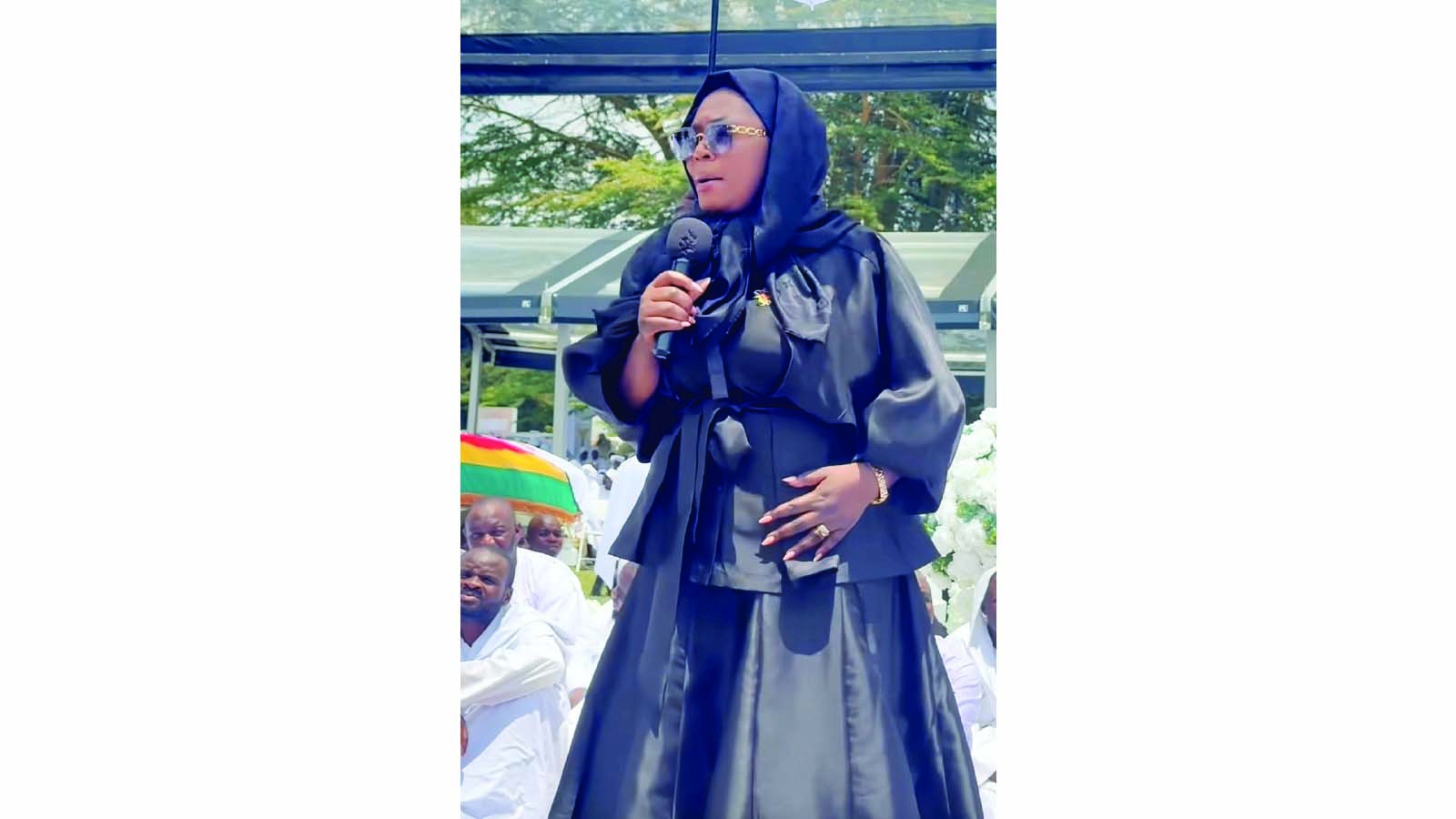
Against this backdrop, designer suits, luxury accessories, sunglasses, fascinators and hats introduced a different vocabulary of style. Some guests favoured conservative cuts and understated finishes; others relied on immaculate tailoring and accessories to distinguish themselves.
But was all this fashion necessary at a funeral?
Yes.
No.
That is where the fashion police must draw the line between appreciation and competition.
A funeral is not a runway, and grief should never be reduced to a contest over designer labels, expensive accessories or who commands the most attention. But classy and identity is expected on some personalities. Yet clothing has always been part of public mourning. Across cultures, families and communities use dress to honour the deceased, observe tradition and express their identities.
The best-dressed mourners were not necessarily those wearing the most expensive clothes. They were those whose outfits respected the occasion, fitted properly and communicated dignity.
A beautifully tailored black suit, a modest dress or a carefully chosen hat could make a stronger statement than an ensemble overloaded with accessories. Ultimately, this fashion story was about more than labels and appearances. It was about the many ways people chose to stand beside a family in mourning.
Chivayo’s funeral may be remembered for its grandeur, distinguished guests and extraordinary public interest. Yet its black from those not vapositori and white dress code also offered a lesson in personal expression: people can share one occasion without dressing identically or communicating grief in precisely the same way.
Perhaps the real measure of funeral fashion is not who looked the richest or commanded the most attention. It is who understood that elegance begins with respect.
The spectacle was unmistakable, the fashion unforgettable, but respect remained the ultimate dress code.