Online Reporter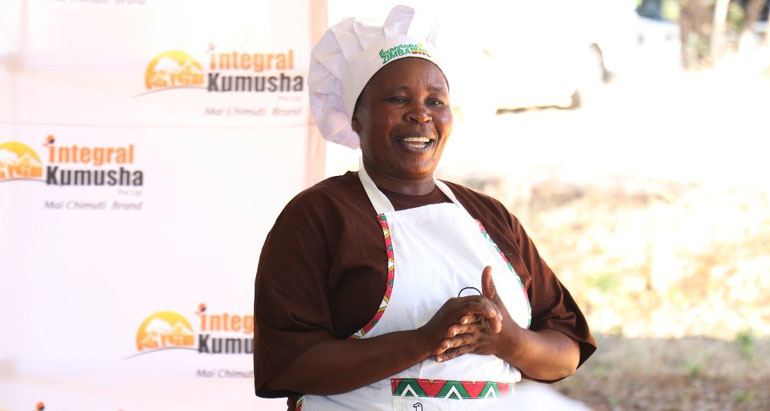
Lloyd Makonya
Correspondent
BUHERA is often associated with a harsh, dry landscape where a good harvest can never be taken for granted.
In Mukoto Village, a group of women is turning preservation which is one of the oldest responses to food scarcity into an emerging enterprise with the potential to improve household nutrition, create income and give indigenous knowledge new economic value.
The women are drying vegetables, pumpkins and fruits, reviving techniques passed down through generations of Zimbabwean women who learnt to stretch the harvest beyond the season.
What was once largely a household survival practice is now being given a commercial purpose.
Working within the wider community empowerment drive associated with Mrs Christina “Mai Chimuti” Taranhike’s Integral Kumusha initiative, the Mukoto women are processing surplus agricultural produce, preserving it for later consumption and packaging it for the market.
It is a deceptively simple idea, but one that speaks to some of the pressing challenges facing rural communities including food wastage, seasonal shortages, household nutrition, limited opportunities for women to earn income and the gradual loss of indigenous knowledge.
What is happening in Mukoto is therefore not the invention of something new. It is the commercial reawakening of something old.
For generations, rural households have relied on drying to make seasonal produce last beyond the harvest. The difference now is that the women are beginning to look at that knowledge, not only as a means of feeding their families, but also as a resource from which they can build livelihoods.
For a community such as Buhera, where agricultural production is vulnerable to dry conditions and erratic rainfall, that distinction is important.
Preservation becomes a bridge between seasons, allowing food harvested when it is plentiful to remain available when fields are no longer producing. The practice has also become a bridge between subsistence and enterprise.
Instead of being forced to sell surplus produce cheaply when everyone else is harvesting, the women can add value to it, extend its shelf life, package it and take it to the market when demand and prices may be more favourable.
That is where the story of the Mukoto Village women begins to move beyond food preservation and into women’s economic empowerment.
The women are not simply producing food. They are acquiring the beginnings of a value chain, from cultivation and harvesting to processing, preservation, packaging and eventually marketing.
That value chain presents another opportunity, creating a distinctly Buhera identity for their products. If the initiative is to grow beyond the village, the products will need to be recognisable in a crowded market. A strong brand could tell consumers where the food comes from, how it is produced and what makes it different.
A “Buhera” identity could potentially transform a packet of dried vegetables or fruit from an ordinary food product into a product carrying a story of place, culture, resilience and indigenous knowledge.
That branding opportunity is particularly important because the women are not simply selling food. They are also carrying knowledge about how food is traditionally prepared, preserved and consumed.
The Integral Kumusha concept provides a natural platform for this.
Bringing together agriculture, culture, community empowerment, indigenous knowledge and rural tourism, the initiative has already created space for value-added products ranging from honey and peanut butter to dried herbs and other agricultural produce.
The dried-food enterprise adds another dimension to that experience.
It is also here that the significance of the Agri4SHE Agrotourism Research Conference held at Mai Chimuti’s homestead in July becomes clearer.
The two-day gathering brought researchers, educational institutions, businesses, tourism practitioners and other stakeholders into the heart of rural Buhera, creating an unusual meeting point between village knowledge and expertise from outside the community.
For the women of Mukoto Village, the value of that encounter may extend far beyond the conference itself. The networks created there can potentially connect them to expertise in food processing, tourism, marketing, finance, technology and markets precisely the areas that can determine whether a promising community initiative remains small or develops into a sustainable enterprise.
The women already possess practical knowledge which cannot simply be taught in a classroom, the next step is to strengthen that knowledge with modern techniques.
The objective should not be to replace indigenous methods, but to refine them.
That is where the network created through Agri4SHE concept being spearheaded by the First Lady, Dr Auxillia Mnangagwa, could become particularly valuable by bringing technical specialists into the village to work with the women rather than simply talking about rural development from afar.
Too often, rural women grow the crops, provide the labour, preserve the food and carry generations of knowledge, only for much of the economic value to disappear somewhere between the farm gate and the consumer.
The Mukoto women have an opportunity to change that equation. They can become, not only producers, but processors, entrepreneurs, custodians of indigenous knowledge and ambassadors of a distinctive Buhera food identity.