Ambassador Kwame-Muzawazi
What kind of Zimbabwe do we want to leave behind for the generations that come after us?
THIS is a question that deserves more attention than we often give it.
The answer cannot be found in infrastructure or growth figures alone, necessary as both remain.
It must also be found in the knowledge we transmit, the values we cultivate, the institutions we establish and the understanding our children develop of their place in history and their capacity to shape the future.
A nation does not become a civilisation merely by possessing a remarkable past.
It becomes one by continually creating knowledge, solving problems, building institutions and preparing successive generations to carry its achievements further.
That is the proposition behind this four-part series on the Munhumutapa civilisation, the essence of which is that our heritage must become something we use.
The first instalment invited us to rediscover a civilisation we had stopped thinking about, the second explored its technological and intellectual achievements, and the third considered what it means to think beyond conventional development cycles.
This final instalment turns to the practical question: How do we translate historical consciousness into a national development capability? The answer begins with education.
For many people, the study of history begins and ends with names, dates, rulers and battles.
These matter, but they are not its ultimate purpose.
Our learners know when Great Zimbabwe flourished, without understanding what its construction reveals about engineering, economic organisation or the transmission of technical knowledge. The young are taught that Munhumutapa ruled an empire in this part of Southern Africa, without grasping the implications this has on political authority, governance systems, diplomacy and trade.
In short, our children are attending history classes but are not being exposed to practical possibilities.
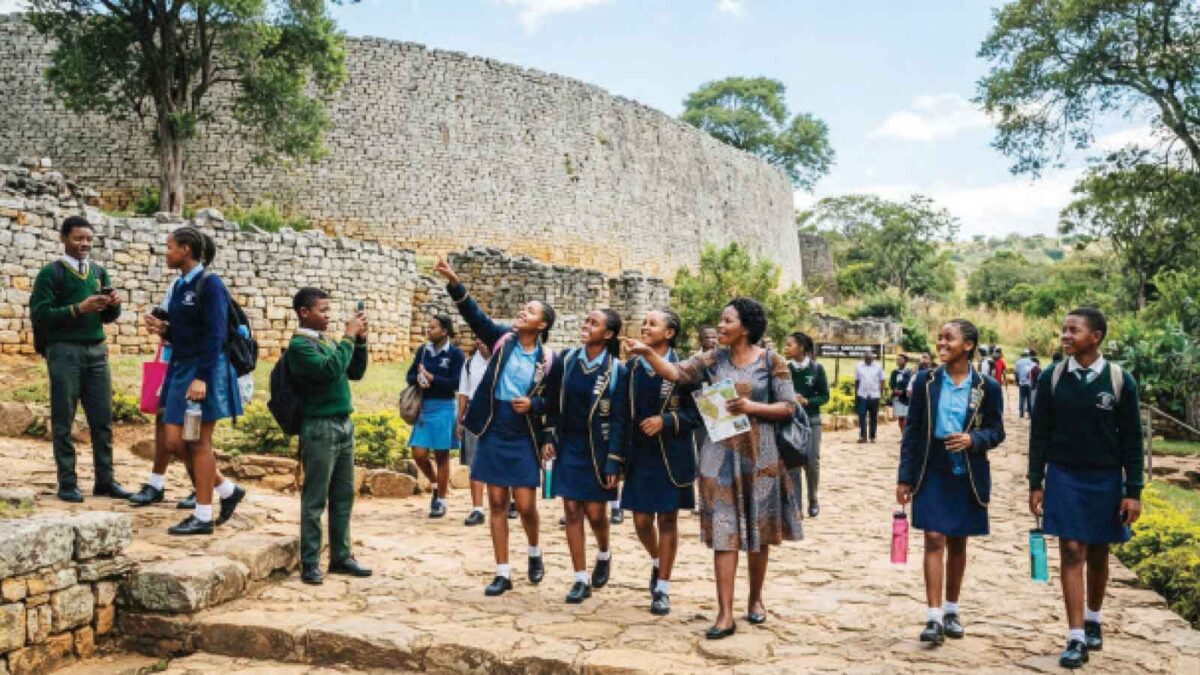
When a child learns about Great Zimbabwe, the lesson should not end with a construction date; it should open into architecture, agriculture, economics, art and the organisation of human settlements.
When a student learns about Munhumutapa, the lesson should extend into governance, diplomacy and the relationship between political authority and economic activity.
History then becomes a resource for understanding the present, not merely a record of the past. Consider Great Zimbabwe not only as a national monument but as a classroom.
Its architecture opens questions about geometry and structural engineering. Its settlement patterns raise questions of urban planning.
Its agricultural foundations invite the study of food systems and land use. Its archaeological record offers material on trade, specialised labour and international commercial networks.
Its artistic traditions speak to design and symbolism. A single heritage site can thus open pathways into numerous fields of learning.
The point is not to force every historical subject into a modern technical discipline, but to recognise connections that already exist.
A visit to Great Zimbabwe should start a conversation between a history teacher and a mathematics teacher.
It should inspire a learner interested in architecture to investigate dry-stone construction, or an aspiring entrepreneur to explore how specialisation and trade built historical economies.
Heritage becomes a living resource when it lets learners connect the past with what they can discover and build today.
The Munhumutapa tradition offers an equally rich opportunity to study how society organises itself — questions of political authority, administration, diplomacy and the management of territory, and of how the state’s participation in regional and international trade shaped Zimbabwe’s place within wider systems of exchange.
These subjects carry contemporary relevance, and exploring this does not mean attempting to transplant pre-colonial institutions into the modern world.
The purpose is to build intellectual maturity.
A society confident in its heritage should have no fear of rigorous historical inquiry.
Indeed, the more seriously we study our past, the more effectively we separate what it genuinely teaches us from what we might simply wish it to teach us.
For this vision to take hold, heritage-based learning must run across the entire educational journey. At early childhood level, children can encounter heritage through stories, songs and age-appropriate visits, nurturing curiosity.
At primary school, learners can connect heritage to the built environment around them — traditional architecture, crafts and local histories.
At secondary level, the approach can turn analytical: examining settlement patterns, comparing technologies, exploring the economic organisation of historical societies.
At tertiary level, universities and technical colleges can develop specialised research linking heritage to engineering, conservation science, digital technologies and tourism.
This progression would ensure heritage is treated not as isolated information but as a source of questions that grow more sophisticated as learners advance.
This will open space for collaboration between schools, universities, museums, communities and industry.
Heritage should be made relevant to the education system without being reduced to a narrow instrument of economic utility; its cultural and historical value stands on its own, and its contribution to technical learning is an additional opportunity, not a replacement.
This brings us to museums.
Museums are often understood primarily as places where objects from the past are collected and displayed. These functions matter — without conservation and documentation, parts of our historical inheritance may be lost.
But museums can do considerably more.
They can become spaces where evidence is interrogated, scientific principles explained and different generations encounter one another through knowledge.
This is the wider opportunity that the Institute of African Knowledge (INSTAK) sees in the Museum of African Liberation, which is located within the Liberation City in Harare.
Its significance extends beyond preserving the memory of Africa’s liberation struggles.
It lies also in its ability to encourage reflection on the experiences and aspirations that shaped Africa’s journey, while creating space for engagement with contemporary African questions.
The Museum of African Liberation provides an experience in which history, culture and public engagement reinforce one another.
It is a place where a child can discover an African achievement and leave with inspiration on what Zimbabwe might achieve next.
Zimbabwe’s ambitions in science, technology and industrialisation will require people with technical skill and the capacity to adapt ideas to changing circumstances.
But they also require an educational culture that encourages inquiry and gives young people the confidence to investigate problems rather than assume solutions must originate elsewhere.
Heritage feeds that culture.
The goal is simply to show that human ingenuity has a history, and that Zimbabwe’s own heritage offers meaningful starting points for inquiry. We should not teach our children to choose between being African and being scientifically ambitious. We should equip them to understand their heritage while mastering the knowledge the future demands.
The success of this undertaking should not be measured by the number of heritage sites visited or museums built. It should be measured by the citizens we help develop.
A Zimbabwean child growing up today may still be contributing to society in 2100.
The decisions we make about that child’s education now will shape the capabilities available to the country decades from now.
The child who learns about Great Zimbabwe should not simply take pride in what earlier generations accomplished — that pride must be joined by curiosity, discipline and a sense of responsibility.
Our youth should not grow up believing that their greatest achievements lie behind them.
They must look at Great Zimbabwe and grasp its significance, and they must look at the unfinished challenges of their own time and believe they have the capacity to address them.
They must see themselves not merely as descendants of a civilisation, but as builders of one. The purpose of studying our civilisational past is not to escape the present — it is to engage the present more intelligently and prepare for the future more deliberately.
As a projects-based think tank, INSTAK sees its role as connecting African historical knowledge with contemporary questions of education, technology, governance and development through research, publications and partnerships that sustain this conversation across generations.
The recently gazetted Munhumutapa Day offers an annual moment to renew that reflection, but the work must continue year-round in our classrooms, universities, museums and communities.
The African renaissance cannot be built on historical pride alone. It requires knowledge, institutions, skills and imagination.
It demands a deliberate commitment to preparing future generations not merely to inherit the world, but to radically improve it
Our ancestors built cities and systems that still command admiration centuries later.
We owe those achievements the honesty of studying them properly, the responsibility of preserving them and the intelligence to learn from them.
Our own generation, too, will be judged by what it leaves behind, in much the same way we pass judgement on those who came before us.
The Zimbabwe of the next century will not be built by historical memory alone.
It will be built by what we choose to do with that memory.
The Zimbabwe of 2100 begins today.
Our ancestors left us evidence of what their generations could accomplish.
Let us leave the next century with evidence of what our own could imagine.
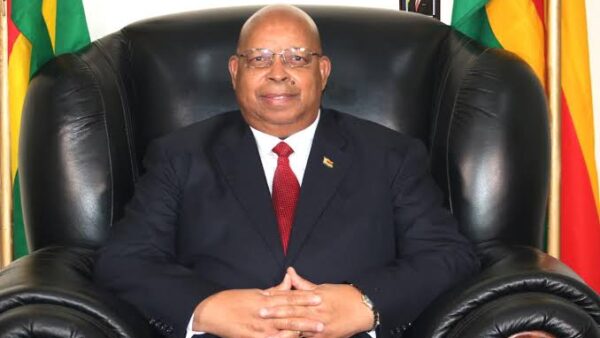
Ambassador Kwame Muzawazi is the chief executive officer of the Institute of African Knowledge (INSTAK).
This is the fourth and final instalment in a series on the Munhumutapa civilisation, the African renaissance and the place of heritage in Zimbabwe’s long-term national development.