Online Reporter
Mbulelo Mpofu [email protected]
ON September 11, Bulawayo’s theatre faithfuls will have another reason to believe that the city’s stage still has a few surprises left in it when The Empty Frame premieres.
Co-written by Memory Kumbota and John Mabuyane kaLunga and directed by Zenzo Nyathi and Nomvuyiso Mabi responsible for the set design, the production brings together a formidable collection of Bulawayo theatre legends.
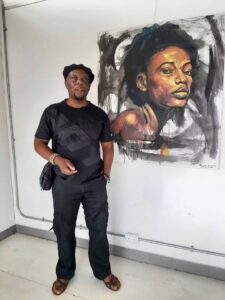
Beyond the story that will unfold on stage, the production is interesting for what its creation represents: collaboration.
At a time when the arts landscape can sometimes feel increasingly fragmented, The Empty Frame offers a reminder of what can happen when experienced practitioners put aside individual pursuits and pool their talents.
Billed under the intriguing tagline, “Legacy at Odds: Can They Frame a Future Together?”, “The Empty Frame” uses the relationship between a father and son to interrogate the difficult questions that emerge when tradition, family expectations and the demands of a changing world collide.
For KaLunga, the story is particularly relevant at a time when conversations around family dysfunction, healing and generational trauma have become increasingly visible in everyday discourse and across social media.
“The topic of family dynamics hangs heavy in the air nowadays. You hear it in random conversations on the streets and across the multitude of healing and recovery videos across TikTok and the wider web. We are all asking the same question: How did we get here?” he said.
This production approaches that question through the eyes of a son who has watched his father sacrifice himself to a business that has long stopped giving back to him. Rather than presenting the father and son as straightforward adversaries, KaLunga said the play seeks to humanise both characters and expose the shared desires beneath their opposing approaches.
“It pries open the unspoken conflict between them and asks the audience to see both men, not as antagonists, but as men who want the same thing but via a different path,” he added.
At the heart of the production is the question of what legacy actually means. The play challenges audiences to consider whether legacy is about preserving history exactly as it was handed down or whether the responsibility of each generation is to learn from the past and use those lessons to construct something better.
The production also represents an important return to the theatre stage for KaLunga, whose creative career has seen him navigate filmmaking, acting and playwriting.
While film provides filmmakers with the luxury of cuts, camera angles, editing and multiple takes, he believes theatre presents an entirely different and more demanding creative challenge.
A two-hander, in particular, strips away many of the conventional devices that filmmakers can use to shape an audience’s experience.
“Film is no doubt a beautiful medium for storytelling. All of them use cuts and angles to make the story pop. A two-hander on stage strips that away.”
That absence of cinematic intervention, KaLunga believes, creates a rare intimacy between performer and audience.
“It fosters the kind of intimacy that makes you as an audience member forget the two people in the seats beside you,” he explained.
For the actors, however, that intimacy comes with enormous responsibility.
“There are no second chances, no pauses to go over your lines and try again. Unlike when we make a film, in theatre we have to make sure we get it right every time,” he said.
KaLunga said the stripped-back nature of the production leaves performers with nowhere to hide, placing greater emphasis on the meaning behind every word, gesture and movement.
“It leaves you with the difficult jobs of making sure every single movement and every single word means something, guides the audience towards the experience you have promised them,” he said.
The cracked, empty frame featured prominently in the production’s poster similarly serves as a metaphor for absence, aspiration and the complicated ways people understand their own histories.
KaLunga deliberately leaves room for audiences to interpret the symbol through their own experiences.
“A frame can be many things, can’t it? It can hold a family portrait, or an award. It can be an heirloom passed down by an ancestor. This is important because while it plays a part in our story, everyone watching has their own ‘empty frame’. This is what it represents — the individual’s view of the absence they have faced, the legacy they are pursuing,” he said.
The production’s creative team has also been central to shaping its theatrical language. KaLunga speaks warmly of working alongside Kumbota, with whom he shares both writing and acting responsibilities, while Nyathi and Mabi bring their own perspectives to the staging and visual world of the play.
“I love working with every member of this team. We’ve always captured magic in the past when we worked together and this was exactly what I was pursuing here.”
Nyathi’s experience, he added, has been particularly valuable in translating the written work into a living stage production.
“Zenzo brings a wealth of experience that influences every staging decision we make,” KaLunga said.
The collaboration between Nyathi and Mabi has also opened up interesting possibilities around the set, with both creatives considering not only the technical demands of the production, but the symbolic importance of each element on stage.
Kumbota, meanwhile, brings a dual contribution as co-writer and performer.
“Memory combines his phenomenal ability to turn a script into something that breathes with his instinctive feel for giving amazing theatrical performances,” KaLunga said.
For KaLunga, the production forms part of a broader creative philosophy centred on using Zimbabwean stories to initiate conversations that may otherwise remain uncomfortable or unexplored.
He pointed to his earlier work, “Dick Print”, which examined the journey of manhood through what he described as an unconventional and generally uncomfortable story.
With, “The Empty Frame”, his attention has shifted towards family legacy and grief.
“Zimbabwe is rich with stories. ‘The Empty Frame’ is just one out of so many that can bring a new conversation to the theatre space,” he said.
The play also reflects KaLunga’s own position at what he describes as a crossroads between traditional values and a rapidly changing society.
“I’m at an age where the issues of family are on my mind a lot. I sit at the midway point between old, traditional values and a new world that is changing not just how we interact and perceive our families, but also the expectations we have of ourselves and the next generation,” he said.
That tension, he believes, is ultimately the true story behind “The Empty Frame.” It is not simply about a father and son struggling to reconcile their differences, but about a generation attempting to understand what should be preserved, what should be challenged and what should be rebuilt.
– Follow on X @MbuleloMpofu