Nqobile Bhebhe, [email protected]
ZIMBABWEAN businesses are showing signs of recovery, with rising turnover, improved trading volumes and stronger profitability, but the rebound remains uneven as larger firms drive investment and employment while smaller enterprises continue to struggle, a new industry survey has revealed.
The Confederation of Zimbabwe Industries (CZI) 2026 Half Year Business Environment Insights report, covering January to June, paints a picture of cautious optimism, with economic stability and stronger domestic demand supporting business activity despite persistent operational challenges.
The survey, which covered 541 randomly selected businesses across different sectors and geographical locations, found that 66 percent of firms recorded an increase in turnover during the first half of the year compared with the corresponding period in 2025.
Average turnover growth stood at 4,4 percent, while 49 percent of businesses reported improved trading volumes, pointing to an expansion in actual economic activity rather than growth driven solely by price increases.
The findings suggest that the stabilisation of the operating environment is beginning to translate into improved business performance, although the benefits are not being shared equally across the economy.
“Despite substantial variation across firms, the first half of 2026 was characterised by a generally positive performance in turnover compared with the same period of the previous year,” the report said.
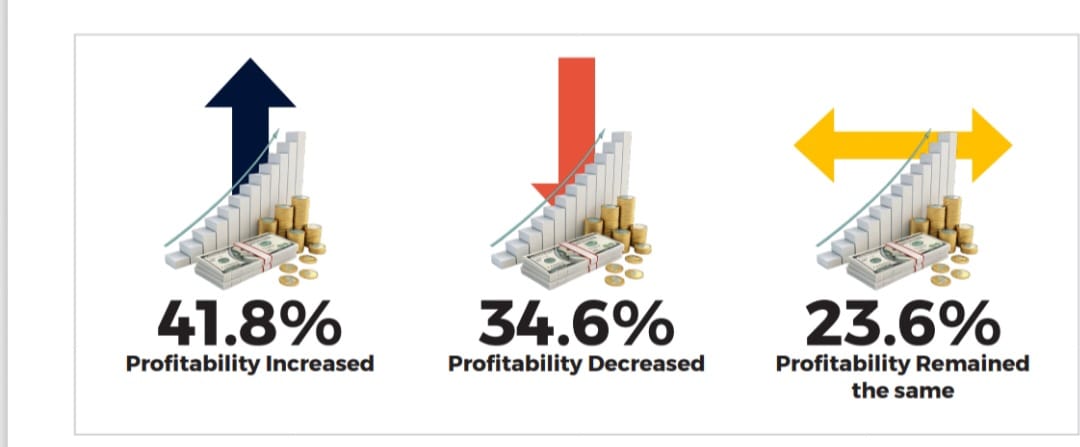
Corporate profitability also showed signs of improvement, with 42 percent of businesses reporting increased profitability, while 35 percent experienced a decline and 24 percent indicated that their profitability remained unchanged.
The improvement in business performance was accompanied by stronger government revenue generation, with corporate income tax collections increasing by 83 percent to ZiG18,9 billion during the first half of 2026, compared with ZiG10,4 billion in the same period last year.
CZI said the increase was consistent with improved business profitability, reflecting the benefits of greater economic stability.
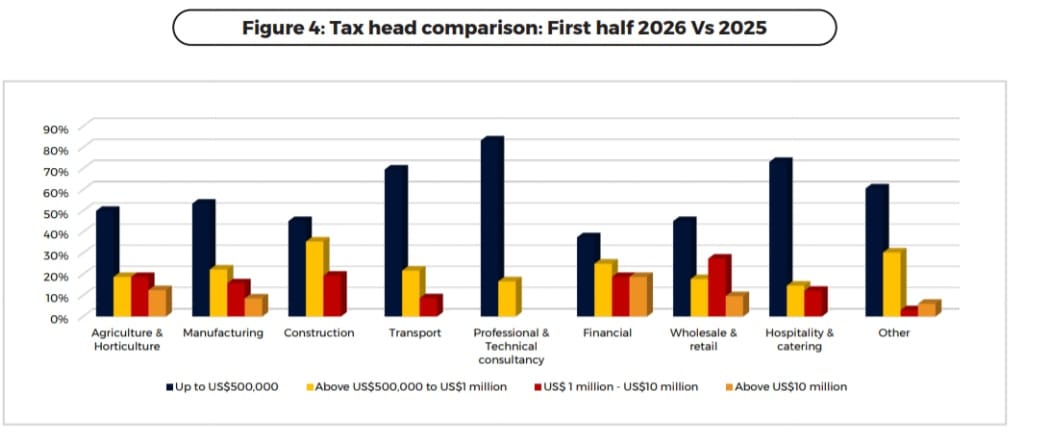
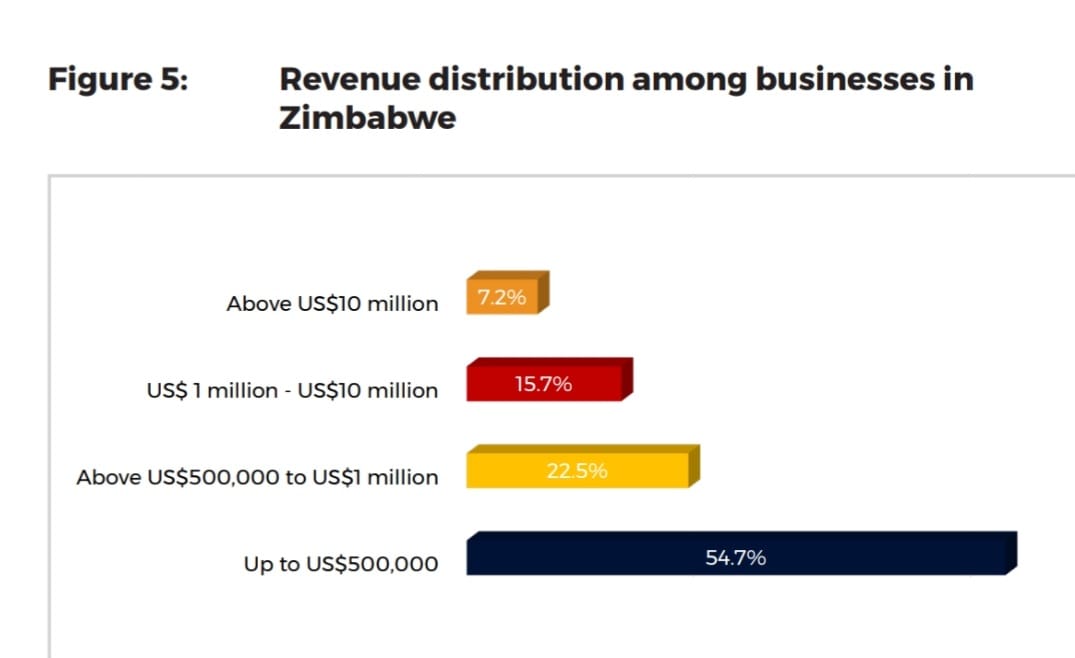
However, the report highlights significant disparities between businesses of different sizes, with medium-sized and large enterprises outperforming their smaller counterparts.
Medium-sized businesses recorded average turnover growth of 10,5 percent, while large firms achieved 11,8 percent growth.
In contrast, small businesses, which account for about 55 percent of the surveyed enterprises, registered negative turnover growth of 0,2 percent.
The report said the findings pointed to structural challenges facing smaller businesses, including limited access to finance, high unit costs and weaker bargaining power.
“Some level of scale may be required to generate significant returns,” the report said.
The investment picture was similarly uneven, with only 33 percent of businesses investing in machinery and other assets during the first half of the year.
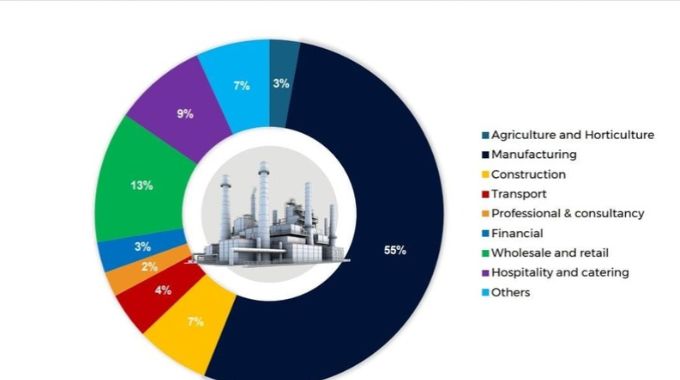
Those that invested collectively spent about US$143,7 million, with manufacturing and agriculture accounting for 88,6 percent of the total investment value.
Manufacturing contributed 46,7 percent of the investment, equivalent to approximately US$67,15 million, while agriculture and horticulture accounted for 41,9 percent, or about US$60,21 million.
Large businesses accounted for 88 percent of total investment, imdicating the concentration of capital expenditure among enterprises with stronger balance sheets and greater access to financing.
CZI said the findings pointed to selective expansion rather than a broad-based investment boom.
Employment outcomes also reflected the uneven recovery, with businesses creating an average of three permanent jobs and retrenching one employee during the period, resulting in net employment growth of five percent.
However, the average casualisation rate stood at 30 percent, meaning nearly one-third of workers were employed on non-permanent terms.
The report said the recovery in labour demand remained constrained by businesses’ continued reliance on flexible employment arrangements.
Among sectors, transport recorded the strongest net employment growth at 16 percent, followed by hospitality and catering at 14 percent, while wholesale and retail registered a decline of one percent.
Competition from imports and the informal sector emerged as the leading business challenge, cited by 22,6 percent of respondents, followed by raw material and input costs at 20 percent and fuel, transport and logistics costs at 19,2 percent.
The report said businesses were increasingly adopting digitalisation, technology, product diversification and customer engagement to remain competitive.
Looking ahead, 49,5 percent of businesses expected the economic environment to improve during the remainder of 2026, while 41 percent anticipated no significant change.
CZI said Zimbabwe’s business environment had largely stabilised, but structural challenges continued to constrain broader economic expansion.
“Overall, the first half of 2026 demonstrates that while Zimbabwean firms are resilient and innovative, their growth trajectory will depend heavily on targeted reforms that strengthen stability, competitiveness, and inclusiveness across the industrial landscape.”
Ends