Mukudzei Chingwere, Senior Zimpapers Reporter
CABINET has approved the Zimbabwe National Artificial Intelligence Charter, establishing ethical guidelines for the development and deployment of artificial intelligence, while providing for oversight, accountability and mechanisms for handling complaints.
The approval comes as the country moves to implement its National Artificial Intelligence Strategy (2026–2030), which President Mnangagwa launched in March, describing AI as a critical tool for modernisation, industrialisation and sustainable economic growth.
Cabinet also approved principles for amending the National Arts Council of Zimbabwe Act to align the legislation with the rapidly evolving creative economy, which now encompasses digital content, streaming, gaming, animation and other emerging industries.
Briefing journalists after yesterday’s Cabinet meeting, Information, Publicity and Broadcasting Services Minister Dr Zhemu Soda said the Charter provides the framework for operationalising the National AI Strategy.
“The Charter operationalises the pillars of the Artificial Intelligence Strategy with binding ethical principles and commitments which ensure that AI development and deployment in Zimbabwe remains human-centric, transparent, inclusive and aligned with national values and the Constitution,” he said.
At the launch of the National AI Strategy at the New Parliament Building in March, President Mnangagwa said artificial intelligence was at the heart of the technological transformation reshaping economies and societies across the world.
He called for increased investment in digital infrastructure and the adoption of emerging technologies to unlock opportunities that would accelerate development.
“The Zimbabwe we all envision must be a digitally robust and agile. We have the duty to embrace emerging technologies to unlock numerous Artificial Intelligence-driven opportunities that will propel modernisation, industrialisation, and sustainable economic growth,” said President Mnangagwa.
The President said the strategy would open new opportunities in agriculture, mining, healthcare, finance and education, among other sectors, while challenging stakeholders to ensure its widespread adoption.
He also called for AI-driven solutions to benefit communities across the country, emphasising that the technology should contribute to improved livelihoods and national development.
Dr Soda described the Charter as a collective agreement involving Government, the private sector, academia, civil society and the public to ensure responsible development and application of AI.
Its principles cover the entire AI lifecycle, from research and development to deployment and use, with provisions for strategic oversight, day-to-day coordination and complaints handling.
The framework is also intended to clarify ethical expectations, promote regulatory predictability and strengthen accountability, drawing on the philosophy of Ubuntu/Unhu.
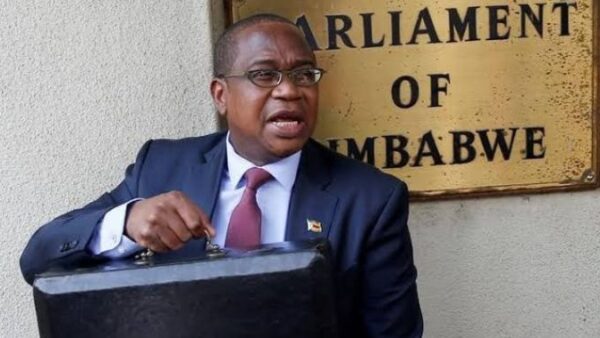
Finance Minister Professor Mthuli Ncube presented the Charter in his capacity as chairperson of the Cabinet Committee on National Development.
On the creative sector, Dr Soda said Cabinet had approved the principles of the National Arts Council of Zimbabwe Amendment Bill, 2026, presented by Sport, Arts, Recreation and Culture Minister Anselem Sanyatwe.
The proposed reforms seek to modernise the regulatory framework established in 1985 to reflect fundamental changes in the production, distribution and commercialisation of creative works.
Over the past four decades, the creative industries have expanded beyond traditional arts disciplines to include digital media, streaming platforms, gaming, animation, film, fashion and international trade in cultural goods and services.
Dr Soda said the amendments would align the legislation governing the National Arts Council of Zimbabwe with developments in the creative economy while addressing corporate governance issues and strengthening the protection of intellectual property rights.