Dr Christopher Chapano
For many generations, people living in Zimbabwe’s rural communities have relied on nature to help them understand the seasons.
BEFORE modern weather forecasts became widely available, farmers would observe the flowering of trees, the appearance of certain insects, the behaviour of birds and changes in vegetation to get an idea of what the coming rainy season might bring.
These observations were not simply guesses.
They were based on years of experience and knowledge passed down from parents to children and from grandparents to grandchildren.
For communities whose livelihoods depended largely on rain-fed agriculture, understanding these natural signs was an important part of preparing for the farming season.
Even today, some rural communities continue to use these observations alongside modern weather forecasts.
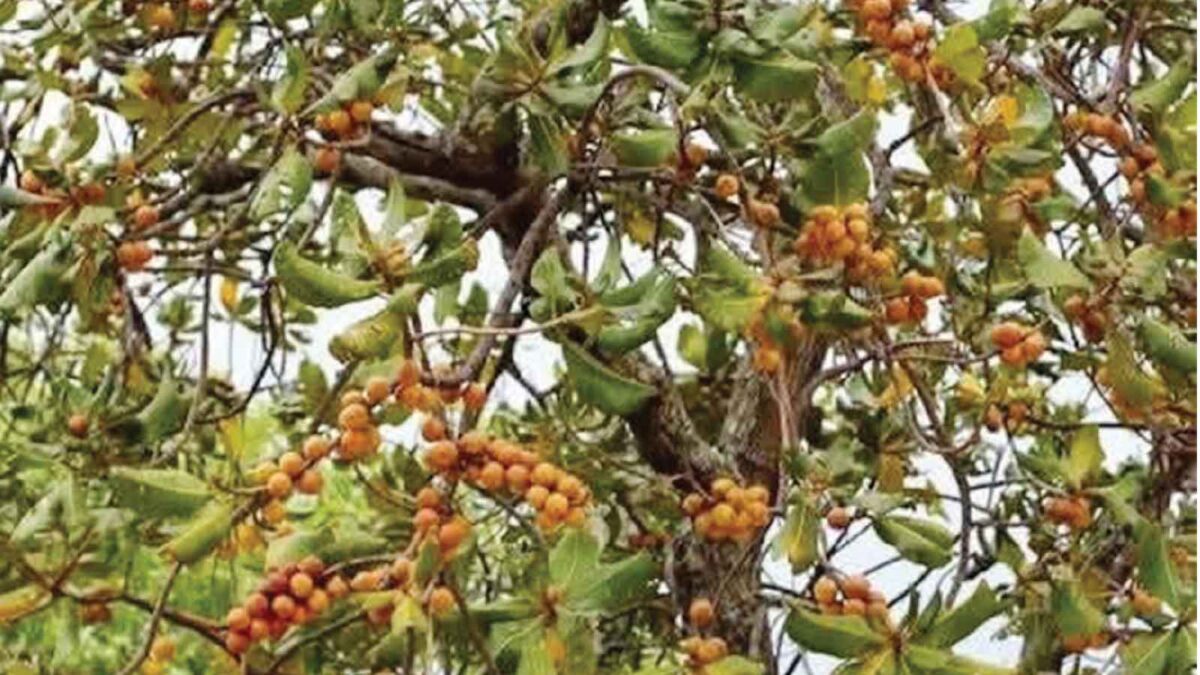
One indigenous tree that has attracted particular interest is Uapaca kirkiana, commonly known as muzhanje.
Muzhanje is a familiar tree in many parts of Zimbabwe, particularly in areas covered by miombo woodlands.
Its sweet fruits are enjoyed by both children and adults, while many families earn additional income by collecting and selling them along roadsides and at local markets.
During the fruiting season, it is common to see vendors displaying heaps of muzhanje fruits for sale.
For many rural households, these fruits are more than just a seasonal treat.
They provide food, income and an important connection to the natural environment.
However, there is another interesting aspect of muzhanje that deserves attention.
In some rural communities, people believe that when certain indigenous trees produce unusually large quantities of fruits, it could be a warning that the coming rainy season may not be favourable.
This raises an interesting question: Could the unusually heavy fruiting of muzhanje trees be telling us something about the possibility of drought?
What can we learn from the fruiting of muzhanje trees?
Anyone who has observed indigenous fruit trees over several years may have noticed that they do not produce the same amount of fruit every season.
In some years, muzhanje trees may be heavily laden with fruits, with branches appearing almost overwhelmed by the harvest.
In other years, the same trees may produce relatively few fruits.
This variation is part of the natural behaviour of trees, but it is also influenced by environmental conditions.
Rainfall, temperature, soil moisture and the general health of a tree can all affect how much fruit it produces.
For example, when a tree receives sufficient rainfall during the growing season, it may accumulate enough resources to support good flowering and fruit production later in the year.
In this case, abundant fruiting may simply be a reflection of favourable conditions experienced during the previous rainy season.
On the other hand, changes in temperature and rainfall can affect flowering, pollination and fruit development.
Prolonged drought may even reduce fruit production because trees do not have enough moisture to support their normal growth.
This means that heavy fruiting does not necessarily indicate that drought is approaching.
However, the traditional observations made by rural communities raise an important scientific question that should not be ignored.
If unusually abundant fruiting is repeatedly followed by poor rainfall seasons, there may be a relationship worth investigating.
Can muzhanje trees predict El Niño?
In recent years, the term El Niño has become familiar to many Zimbabweans because of its association with drought and poor agricultural seasons.
El Niño is a natural climate phenomenon that develops when ocean temperatures in parts of the tropical Pacific become unusually warm.
Although it occurs far away from Zimbabwe, it can influence rainfall patterns across Southern Africa.
In Zimbabwe, El Niño conditions are often associated with reduced summer rainfall, prolonged dry spells and an increased risk of drought.
However, not every El Niño event results in severe drought, and rainfall conditions may differ from one part of the country to another.
Could muzhanje trees respond to some of the environmental changes associated with El Niño?
It is possible that changes in temperature and rainfall influence when these trees flower and how much fruit they produce.
It is also possible that abundant fruiting reflects favourable conditions during the previous growing season rather than signalling an approaching drought.
At present, there is no sufficient scientific evidence to confirm that heavy fruiting of muzhanje trees can reliably predict El Niño or drought.
Nevertheless, the possibility deserves further investigation, particularly because rural communities have been observing the behaviour of indigenous trees for generations.
Indigenous knowledge should not be overlooked
Zimbabwe has a rich tradition of using indigenous knowledge to understand the natural environment.
In many rural communities, elderly people and experienced farmers have developed an understanding of seasonal changes through years of observing plants, animals and weather conditions.
For example, some communities pay attention to the flowering of certain indigenous trees, the appearance of insects and the behaviour of birds when anticipating the arrival of the rainy season.
Research conducted in districts such as Guruve, Chirumhanzu and Chiredzi has documented the use of indigenous knowledge in seasonal weather forecasting.
These observations are important because they reflect the experiences of people who have lived close to nature for many years.
However, indigenous knowledge and scientific research should not be viewed as competing approaches.
Instead, they can complement each other.
Traditional observations can help scientists identify interesting environmental patterns, while scientific research can establish whether those patterns are consistent and reliable.
In the case of muzhanje, it would be useful to speak to elderly community members and experienced farmers about years when the trees produced exceptionally large quantities of fruits.
Were those years followed by poor rainfall?
Did the communities experience drought?
Or were the following rainy seasons normal?
Answers to these questions could provide useful starting points for scientific investigations.
By comparing community observations with historical rainfall records, researchers may be able to establish whether there is a meaningful relationship between fruit production and subsequent weather conditions.
Climate change is also affecting indigenous trees
Climate change is another important issue that needs to be considered.
Across Zimbabwe, changing rainfall patterns, rising temperatures and prolonged dry periods are creating challenges for agriculture, biodiversity and rural livelihoods.
Indigenous trees are also exposed to these changing conditions.
Just like agricultural crops, trees depend on suitable environmental conditions to grow, flower and produce fruits.
Changes in rainfall and temperature may influence the time of flowering, the quantity of fruits produced and the period when fruits become ripe.
Scientists study these seasonal changes through a field known as plant phenology.
Plant phenology focuses on the timing of natural events such as the emergence of new leaves, flowering, fruiting and seed production.
By observing these events over many years, scientists can better understand how plants respond to changes in their environment.
For muzhanje, changes in fruiting patterns could have important consequences for rural communities.
If trees begin producing fewer fruits, households that depend on them for food and income may be affected.
Similarly, if the fruiting season changes, people may have to adjust when they collect and sell the fruits.
Wild animals that feed on indigenous fruits may also be affected by changes in fruit availability. However, it is important to remember that climate change and El Niño are not the same thing.
El Niño is part of the natural variability of the climate, while climate change involves longer-term changes in temperature, rainfall and other climatic conditions.
Although both can influence the environment, one season of unusually heavy fruiting is not enough to conclude that either is responsible.
An opportunity for scientific research
The National Herbarium and Botanic Garden has an opportunity to contribute to a better understanding of how indigenous trees respond to changing climatic conditions.
One possible area of research would be to investigate the relationship between muzhanje fruit production and seasonal rainfall patterns.
Such a study could be conducted in areas where muzhanje trees naturally occur, including parts of Mashonaland, Manicaland and Midlands provinces.
Researchers could select mature trees and monitor them over several years, recording when they flower, how much fruit they produce and when the fruits mature.
At the same time, rainfall and temperature information could be collected from the same areas. The results could then be compared with historical climate records to determine whether years of unusually heavy fruiting are associated with particular rainfall conditions.
An important part of this research would involve working closely with local communities.
Elderly people and experienced farmers could share their knowledge of past fruiting seasons and the rainfall conditions that followed.
Their observations could help researchers identify patterns that might otherwise be overlooked. The study could also compare fruiting patterns during El Niño years and years when neither climate phenomenon is dominant.
Over time, such research could help establish whether the behaviour of muzhanje trees provides useful information about seasonal rainfall variability.
If a reliable relationship is identified, it could potentially contribute to the development of locally relevant environmental indicators that complement conventional weather forecasts.
However, this would require careful scientific investigation over several years.
Muzhanje trees are important for food security and rural livelihoods
While the possibility of using muzhanje fruiting as an environmental indicator is interesting, the importance of the tree goes far beyond weather prediction.
For many Zimbabweans, muzhanje is part of everyday life and childhood memories.
In rural areas, children often look forward to the fruiting season, while adults collect the fruits for household consumption or sale.
The fruits provide an additional source of food, particularly in communities where access to a wide variety of foods may be limited.
For some households, selling muzhanje fruits along roadsides and at markets provides much-needed income.
During difficult agricultural seasons, indigenous fruits can also help supplement household food supplies.
Muzhanje trees are equally important to wildlife and the wider woodland ecosystem.
They provide food for fruit-eating animals and contribute to the biodiversity of Zimbabwe’s miombo woodlands.
Unfortunately, many indigenous trees are under increasing pressure from woodland clearing, agricultural expansion, uncontrolled fires and other human activities.
If these trees are lost, communities may lose not only valuable food resources but also generations of knowledge associated with them.
There is, therefore, a need to strengthen the conservation of muzhanje and other indigenous fruit trees.
Protecting natural woodlands, encouraging the regeneration of indigenous trees and promoting sustainable harvesting practices are important measures that can help preserve these resources.
Communities should also be encouraged to retain indigenous fruit trees on farms and around homesteads wherever appropriate.
Conserving these trees is not only about protecting biodiversity.
It is also about safeguarding food resources, supporting rural livelihoods and preserving Zimbabwe’s natural heritage.
Nature may still have important lessons for us
As Zimbabwe continues to experience changing rainfall patterns and recurring droughts, there is a need to explore every possible source of information that can help communities understand and prepare for climatic challenges.
For generations, rural communities have observed the natural environment and developed their own ways of interpreting seasonal changes. Some of these observations may have scientific explanations that are not yet fully understood.
The belief that unusually heavy fruiting of indigenous trees may be followed by drought is one such observation.
In the case of muzhanje, the relationship has not yet been scientifically established.
However, it presents an interesting opportunity for research.
By bringing together indigenous knowledge, botanical studies and meteorological information, Zimbabwe could improve its understanding of how indigenous trees respond to climatic variability. Such research would also help strengthen the conservation and sustainable use of indigenous plant resources.
Whether or not muzhanje eventually proves to be a useful indicator of drought, one thing remains certain: It is an important indigenous tree that deserves greater attention and protection.
Christopher Chapano is a botanist, taxonomist and researcher. He is the head of the National Herbarium and Botanic Gardens.