Mukudzei Chingwere
Senior Reporter
CANADA is seeking to deepen trade and investment ties with Zimbabwe, with mining, energy and agriculture emerging as priority areas for cooperation following high-level diplomatic talks in Harare yesterday.
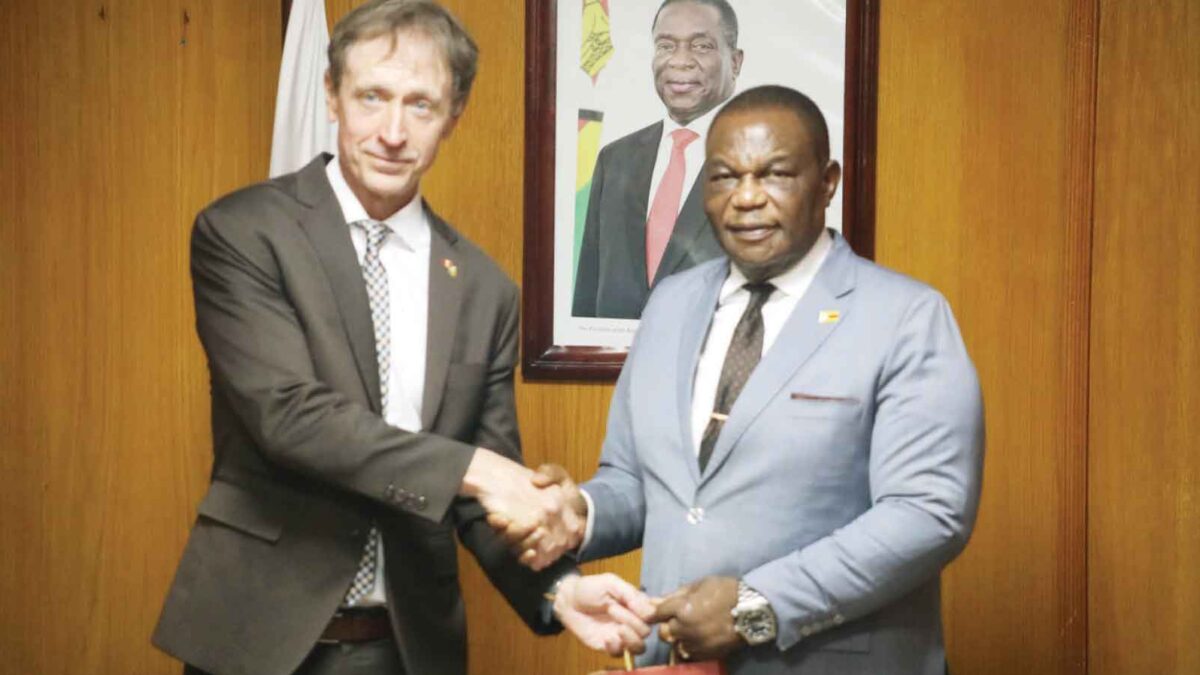
Canadian Ambassador to Zimbabwe, Mr Jeffrey Senior, disclosed this after paying a courtesy call on Vice President Dr Constantino Chiwenga, where discussions focused on expanding bilateral economic cooperation under the Second Republic’s investment and industrialisation drive.
“We had a very good and rather wide-ranging conversation with Honourable Vice President Dr Chiwenga this morning,” Ambassador Senior said.
“It focused largely on economic cooperation, the current situation in the country and some of the pathways forward, as well as opportunities where Canada and Zimbabwe have similar interests and strengths. That includes minerals, energy and agriculture.”
The two nations aim to expand a relatively modest trade relationship. United Nations Comtrade data puts bilateral merchandise trade at approximately US$13.62 million in 2025, comprising US$9.30 million in Canadian exports to Zimbabwe and US$4.31 million in imports.
Agriculture and agro-processing featured prominently during the meeting, with Ambassador Senior noting that Canada’s advanced food-processing sector aligns with Zimbabwe’s drive to modernise farming and expand agro-industrial value chains.
“The Honourable Vice President was also very clear and articulate on agro-processing and agriculture being a traditional strength of Zimbabwe.
“So, I think that is also an area where Canada is known to have significant strength,” he said.
Data from Agriculture and Agri-Food Canada shows the country’s agriculture and agri-food sector generated roughly US$113 billion in gross domestic product in 2025, accounting for about seven percent of the economy and employing 2.3 million people, while food and beverage processing contributed US$25.1 billion and employed 346 400 workers.
Ambassador Senior also pointed to his home province of Saskatchewan, which produced 35.5 million tonnes of cereal grains, oilseeds and pulses in 2024 and exported US$13.5 billion worth of agricultural goods.
Mining and mineral beneficiation offer further scope for collaboration as Zimbabwe pushes for local value addition.
“I think an obvious and easy area to start is mining. Canada likes to present itself as a mining and energy superpower.
“We have a lot of strengths and experience in those areas,” Ambassador Senior said.
According to Natural Resources Canada, the minerals sector contributed approximately US$113.9 billion, directly and indirectly, to the Canadian economy in 2024, with mineral exports reaching US$111.7 billion and mineral processing alone adding US$35.8 billion to GDP while supporting 314 000 jobs.
Ambassador Senior stressed that while governments must foster an enabling business climate, private-sector companies will ultimately drive project investments.
“Government has a role in creating enabling environments and drawing attention to where opportunities exist. It is then up to businesses and the private sector to assess those opportunities and make their own decisions,” he said.
The talks also touched on existing cooperation in scholarships, tourism, research, development assistance and potential collaboration in security, with follow-up engagements scheduled with the Office of the Vice President and the Ministry of Foreign Affairs and International Trade.