Chronicles from the 2nd Chimurenga
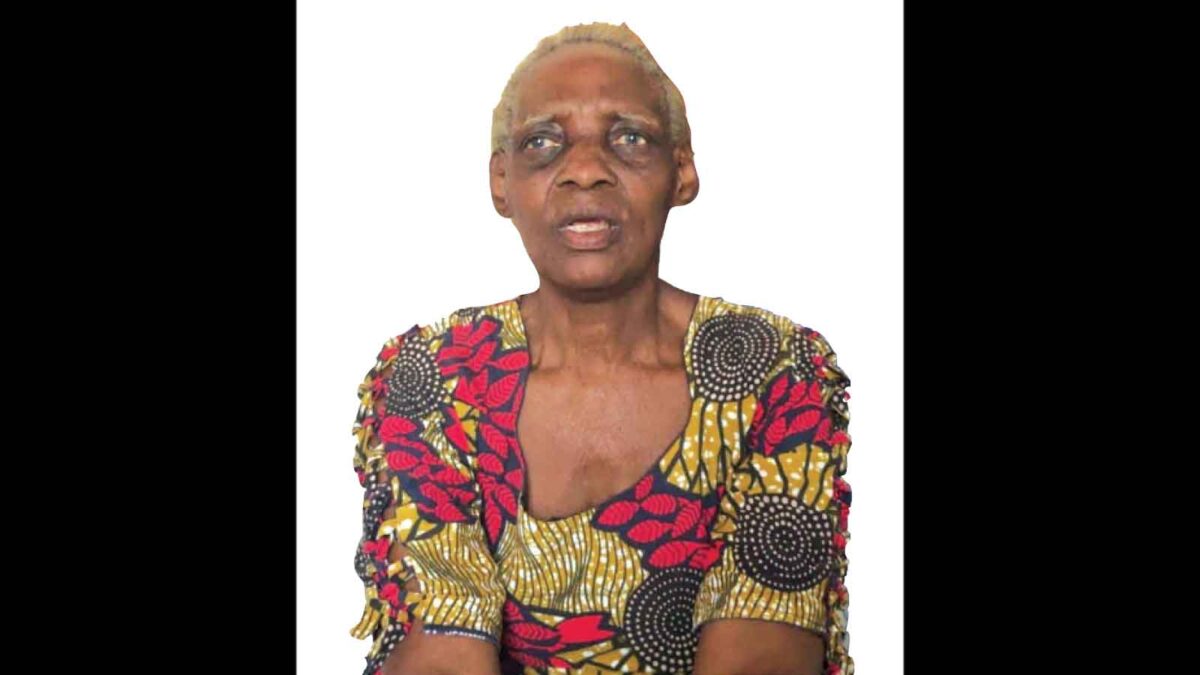
CDE NANCY MUSIYIWA, who used the nom de guerre Muchaneta Mabhunu, last week told Zimpapers Politics Hub’s KUDA BWITITI how she was kidnapped by Thomas Nhari’s rebels in Zambia. She also revealed how she ingeniously engineered the abductors’ arrest by Zambian soldiers. However, she was caught in the crossfire and detained by Zambian soldiers as they sought to verify what had really transpired. This week, she chronicles the brutal aftermath of the mutiny and the fate that befell its architects.
***************
Q: What happened to you when Zambian officers arrested you as you tried to explain your story?
A: Initially, the Zambian authorities did not believe that I was a victim of kidnapping.
They placed me in the same cell as the kidnappers. One of those I was detained with, whom I vividly remember as a member of the rebels, was Cde Catherine Garanewako.
I continued to plead my case, insisting on my innocence. Remember, I was still pregnant at the time and the stress of detention weighed heavily on me.
I remained in detention for approximately two weeks before the authorities decided to transfer us to Chombwe, where a Zambian regiment had its base.
Members of the Nhari Rebellion were also held at this prison. Then one day, during lunch, a rebel disarmed a guard and managed to escape.
Virtually all of them seized the opportunity and fled into the bush. I, however, remained at Chombwe in detention, not daring to join them.
One of the comrades I was with was Cde Loice, who belonged to the St Albert’s group that had joined the war in 1972.
Together, we endured the uncertainty of those days, not knowing what would become of us.
Q: Were the escapees captured?
A: The Zambian authorities activated their systems and one by one the escapees were recaptured. ZANLA comrades were also involved in this operation, working alongside the Zambian security forces to track down the fugitives.
Of the entire Nhari Rebellion, only one comrade — Santana — escaped and reports indicated he fled to Malawi for a while.
Once they were rearrested, the rebels were taken to Chifombo Base in Zambia, where their fate would be decided.
Q: Were you still detained at this stage?
A: Yes. It was even suggested that I should be taken to Chifombo to suffer the same punishment as the rebels. However, Cde Tongogara saved me as he understood my case and briefed the others that I was not part of the mutiny.
While the rebels were transported to Chifombo in a truck, I travelled with Cde Tongogara; Cde Patrick Mupunzarima, my husband; and Cde Chigowe in a Land Rover to Chifombo to witness what would happen to the rebels.
We arrived at the same time as the truck that carried the rebels, as they prepared to face their punishment from the comrades.
Q: Please tell us how the rebels were punished.
A: As the rebels descended from the truck, horrific scenes began to unfold.
There was one rebel named Farai Chirimuuta.
The moment he stepped down, Cde Joseph Chimurenga pounced on him and attacked him so viciously that he killed him on the spot.
As this was unfolding, Cde Tongogara advised me not to watch what was happening, and a cloth was placed over my eyes so I could not see. But the sounds — the screams, the chaos — were inescapable.
I could hear everything, and the memory of those cries has never left me . . . it was also time to reconnect with those who had survived the kidnapping by the Nhari rebels.
Among them were Cdes Zvinavashe and Kumbirai Kangai.
Leaders of the rebels had left instructions to shoot the captives by December 11.
But before that date arrived, reinforcements came from East Africa and rescued Cdes Zvinavashe and Kangai at Chifombo.
Their rescue was a moment of relief amid the carnage.
Q: What was the mood like at Chifombo after that?
A: The atmosphere was heavy with grief, fear and a grim sense of resolution.
Comrades walked about in silence, their faces etched with the weight of what had just occurred.
There was no celebration, no sense of triumph — only the stark realisation that the liberation struggle had turned inwards . . . The Nhari Rebellion had threatened to tear ZANLA apart from within, and the response had been swift.
Q: How did this experience affect you personally?
A: I was pregnant, vulnerable and far from home.
I had been kidnapped, detained . . . The trauma of those days at Chifombo left deep scars.
Yet I drew strength from knowing that Cde Tongogara had intervened to protect me.
Q: What lessons do you draw from the Nhari mutiny and its aftermath?
A: The Nhari and Badza mutiny remains one of the darkest chapters of our liberation struggle.
It taught us that internal division and indiscipline can be as dangerous as the enemy we face on the battlefield.
Next week, Cde Musiyiwa concludes her account as she speaks about what happened to her and how she remained in Zambia until the end of the liberation struggle. She also talks about what happened to Cde Patrick Mupunzarima.