Online Reporter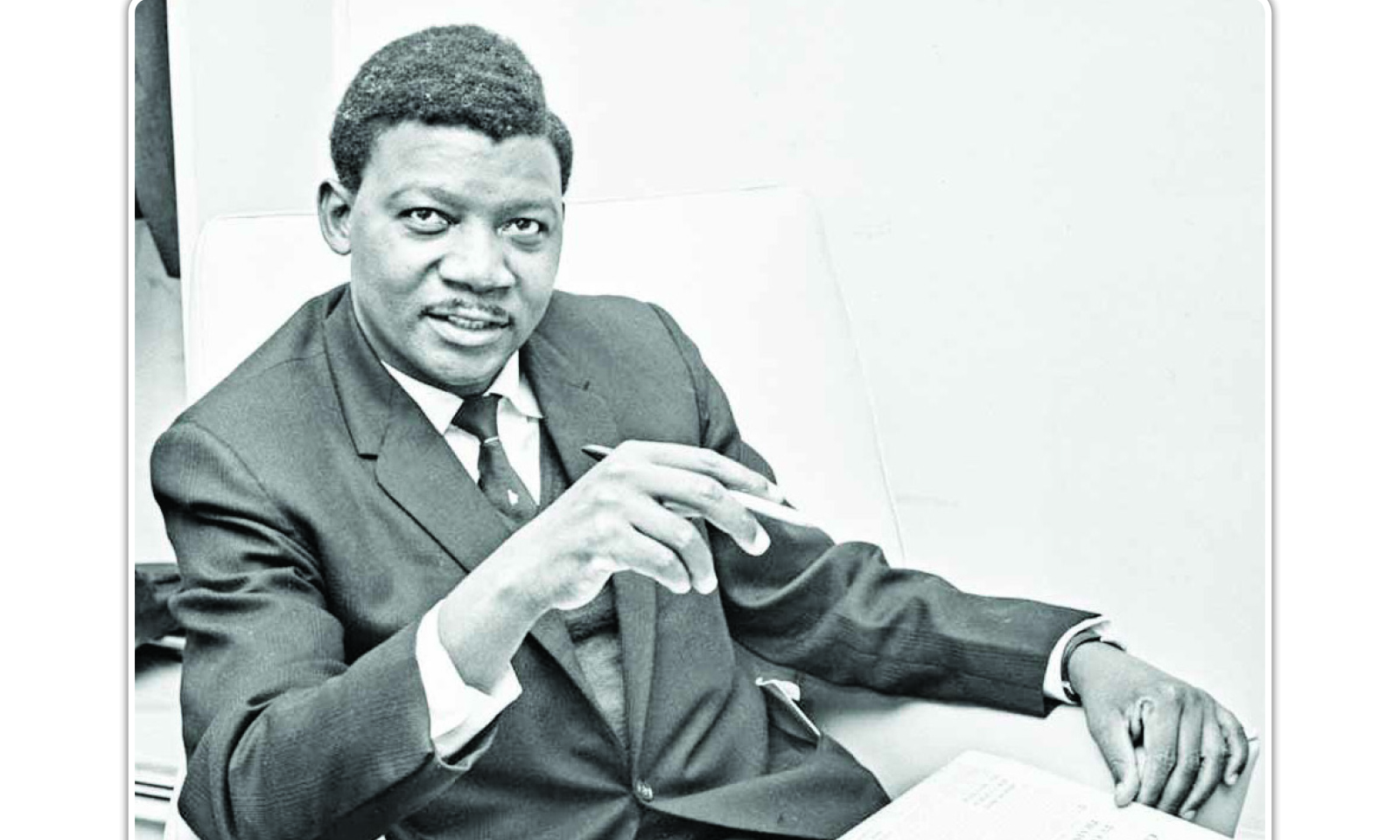
NATIONAL hero Herbert Chitepo was the first black barrister in Zimbabwe.
Chitepo died in Zambia on March 18 1975 when a car bomb planted in the garage of his Lusaka home exploded.
He was buried in Zimbabwe on August 11, 1981.
Former Chief Justice Godfrey Chidyausiku described him as one of the greatest lawyers the country has ever had.
“For me, Herbert Chitepo was and is my hero,” Chidyausiku said when he addressed lawyers at the Joint Bar – Judiciary end of term colloquium in Vumba in 2014.
“He was a man who inspired many of us to follow the legal profession in spite of the challenges that bedevilled that profession before Independence.
“Allow me, Ladies and Gentlemen, to take this opportunity to acknowledge this great son of Zimbabwe. I have no doubt in my mind that Herbert Chitepo was both a political and legal icon.
“His reputation as a politician has tended to overshadow his reputation as the great lawyer that he was.
“I enrolled for the Law degree in 1968. Upon my enrolment, I was told in no uncertain terms by those who used to run the Law School that it was ill-advised for a black man to join the Law School.
“I was told that a black man’s temperament and background were not ideal for the absorption of legal concepts and that there were no employment prospects for black lawyers,” he said.
The christening of the Great Zimbabwe University Law School after the country’s first black lawyer, Chitepo, carries immense symbolic value.
Chitepo was the legendary legal representative of the late Vice President Simon Muzenda, who was arrested by colonial authorities after reciting Solomon Mutsvairo’s poem, Nehanda Nyakasikana.
According to the late veteran journalist Bill Saidi, Chitepo shocked the white bench, while defending Cde Muzenda, that the charges were unfounded because the words of the poem were ipsissima verba (the very words verbatim).
“The whites were shocked for they were not expecting to hear that Latin phrase from a black man,” said Saidi.
Born on June 5, 1923 at Bonda in Nyanga, Chitepo’s life was decorated, with firsts.
He was the first African barrister at Gray’s Inn in England where that nation’s former president, Winston Churchill, had once worked.
In 1954 Chitepo challenged the Land Apportionment Act, which barred all blacks from owning property, and succeeded, which saw him establishing his own law firm in Harare.
“And it is the great nationalist that Great Zimbabwe University named its Law School after,” said Great Zimbabwe Vice Chancellor Prof Rungano Zvobgo.
“Advocate Chitepo was an eminent nationalist, who led the liberation war from Zambia. He was the first black lawyer in Zimbabwe and the first Attorney-General of an independent Tanzania.
“He stood for democracy and justice. He is a household name in our national politics, so it was only proper that we name the law school after him. We sought permission from his family, which was granted and we are immensely grateful for that.
“We are proud to be associated with this huge name, it will help sell the image of the law school and give it the seriousness it deserves.”
He said the name Herbert Chitepo will inspire the quality of graduates from the law faculty to be conscious of their historical realities and the need to use law as a tool of emancipation.
“Our graduates will uphold the basic principles of human justice, democracy and rule of law which Chitepo stood for.
“It will help them foster the sense of responsibility to national good and social equality in their country.
“Every graduate will leave while pumped up with the nationalist spirit; commitment to the development of Zimbabwe and patriotism,” he said.
He added:
“Herbert Chitepo School of Law is not just a Law School. It seeks to tie together the teaching, understanding and practice of law within the context of African culture.
“Law was used to subjugate the Africans, the violent dispossession of all Africans, in all areas of life. The land Apportionment Act of 1930 ensured that Africans were subjugated, African culture was dismissed.
“Until we begin to transform the law; to understand it is the knife which cuts the bread, then we have not yet started using the law as an effective tool for human development and advancement,” he said.− The Herald