Online Reporter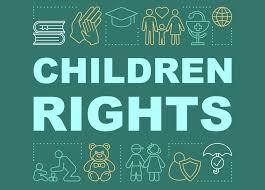
Garikayi Chipfunde, Correspondent
ACROSS the globe, children’s rights are recognised as fundamental human rights.
These rights are clearly articulated in the United Nations Convention on the Rights of the Child (CRC) and regionally reinforced by the African Union through the African Charter on the Rights and Welfare of the Child (ACRWC).
Together, these frameworks affirm that every child has the right to survival, development, protection and participation.
Yet within many African communities, an important conversation continues: how do we protect children’s rights while ensuring that they grow into responsible, respectful and community-minded adults?
Increasingly, some people, including children themselves, mistakenly equate children’s rights with unchecked freedom, indiscipline, delinquency or disregard for elders and cultural norms. This misunderstanding calls for a deeper reflection on rights, responsibilities and the guiding philosophy of Ubuntu (hunhu).
Rights are not lawlessness
The CRC and the ACRWC do not promote rebellion against parents, guardians, or cultural institutions. Rather, they seek to protect children from abuse, exploitation, neglect and discrimination.
Article 19 of the CRC protects children from violence; Article 18 promotes the upbringing and development of the child as well as the best interests of the child; and Article 12 upholds the child’s right to be heard.
However, the ACRWC goes further by explicitly recognizing that children also have responsibilities. It emphasises respect for parents, elders and the community and encourages the preservation of positive African cultural values. This balance between rights and responsibilities is critical.
Legal scholar Geraldine Van Bueren, a leading authority on children’s rights, argues that children’s rights are not about granting absolute autonomy but about ensuring dignity and protection within evolving capacities. In other words, children require guidance to exercise their rights responsibly.
Similarly, sociologist Allison James emphasises that recognising children as social actors does not remove adult responsibility. Instead, it demands partnership, adults must guide, mentor and create safe structures within which children develop.
The role of duty bearers
Children are rights holders, but parents, guardians, teachers, communities and governments are duty bearers. Their responsibility is to create environments where rights are realised without eroding discipline or moral development.
Philosopher Martha Nussbaum explains through her Capabilities Approach that rights must be supported by social structures that enable individuals to flourish. For children, flourishing requires education, protection, emotional security and moral formation.
When duty bearers neglect guidance and discipline in the name of rights, children may interpret freedom as license. Conversely, when adults suppress children’s voices under the guise of culture, rights are violated. The solution lies in balance.
Ubuntu/Hunhu: The African moral compass
Ubuntu, often summarised as I am because we are, reflects the communal foundation of African societies. It emphasises respect, solidarity, empathy and shared responsibility.
African philosopher John Mbiti famously wrote, I am because we are and since we are, therefore I am. This worldview underscores that individual rights exist within community relationships.
Ubuntu does not contradict children’s rights, rather, it strengthens them by rooting them in responsibility and mutual respect.
Under Ubuntu:
A child’s right to be heard does not cancel respect for elders.
A child’s right to protection does not eliminate discipline.
A child’s right to participation does not erase cultural norms.
Instead, Ubuntu shapes behaviour without violating international or regional conventions. It ensures that rights are exercised with responsibility and empathy.
The misinterpretation challenge
Today, rapid social change, digital influence and globalisation complicate traditional structures of authority. Some youths mistakenly use the language of rights to justify:
Disrespect toward parents and guardians.
Substance abuse and delinquency.
Rejection of positive cultural norms.
Yet neither the CRC nor the ACRWC supports such behaviours. Rights are safeguards against harm, not shields for misconduct.
Scholar Michael Freeman, a prominent children’s rights theorist, argues that rights must always be interpreted in the best interests of the child. Substance abuse, criminality or deviance clearly undermine those best interests.
The confusion often arises not from the rights instruments themselves, but from inadequate civic education. Children need structured learning about what rights mean and what they do not mean.
Educating for balanced citizenship
To resolve this tension, several steps are essential such as rights education in schools where children must be taught both their rights and their responsibilities as outlined in the ACRWC. Families must also discuss rights openly while reinforcing discipline and respect through community engagement where elders and traditional leaders actively interpret children’s rights within cultural frameworks.
On its part, the Government must enforce accountability through ensuring child protection systems are strong while supporting family cohesion.
It is important to realise that when children understand that rights come with responsibilities, they grow into adults who respect both law and culture.
A harmonious future
While children’s rights are good, necessary, legally binding and morally sound they are not a replacement for guidance, discipline or cultural identity.
The African Charter wisely integrates rights with responsibilities, reflecting the spirit of Ubuntu. Rather than seeing children’s rights as a threat to African values, societies must see them as tools for nurturing dignified, responsible and compassionate citizens.
The future of Africa depends not only on protecting children’s rights but also on shaping children’s character. Rights without responsibility breed chaos, responsibility without rights breeds oppression. Together, guided by Ubuntu, they build a just and humane society.
Garikayi Chipfunde is a social scientist who can be contacted on email: [email protected]