Bunjiwe Mkwananzi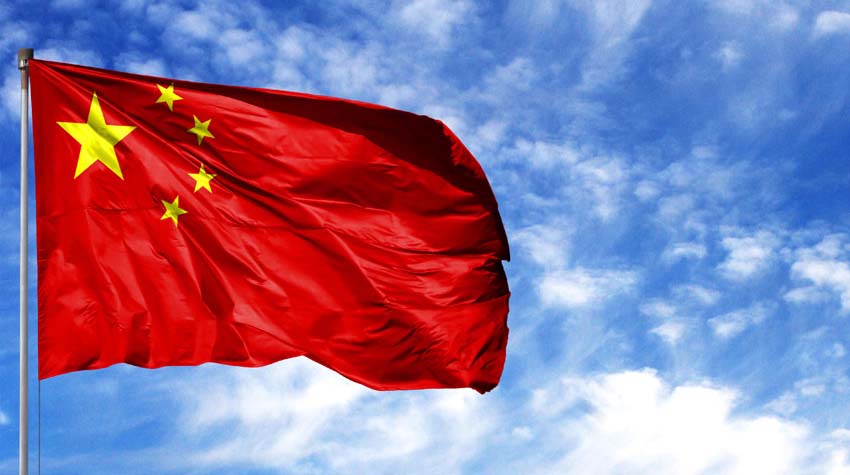
By Tichaona Zindoga
Last week, on October 1, the People’s Republic Republic of China celebrated its 77th anniversary of its Founding which was attained in 1949.
Zimbabwe and China enjoy close relations dating back to the liberation struggle when China provided military, technical and moral support for the execution of the war against the British settler regime of white minority Rhodesia. China, through the Communist Party of China under Cde Mao Zedong, provided an ideological and political handbook that continues to guide Zimbabwe today under the aegis of the revolutionary party Zanu-PF.
The converging historical paths shared between China and Zimbabwe have cemented fraternal bonds between the two countries.
So, the founding of China is an occasion to pause and reflect how China is reshaping the world, and what it means for friendly countries like Zimbabwe
The founding of China arguably ranks among one of the most consequential events of the past 100 years globally. China overcame its “Century of Humiliation” characterised by external imperialism, aggression, partitioning, colonialism and subjugation by certain powers of the world. This also includes the so-called Opium Wars whereby Britain forced China to take harmful drugs as trade. The drugs destroyed the social and economic fabric of China.
China also suffered the invasion, aggression and occupation of imperial Japan, and China’s defeat of Japan as part of the World War 2 theatre, ranks among the most defining moments of international relations whose implications for the globe are consequential to date
Through immense fortitude in the face of significant odds, China – itself and ancient civilisation of over 5000 years – rose again.
Certain key lessons that China learned throughout its difficult history have come to positively influence its philosophies and outlook today; like pursuing of peaceful development as China never colonised any country, while continuing to help developing countries achieve modernisation.
Through its lessons of history, China has also resolutely carved a path of its own self-dependence and self-determination; something that is reflected in its current policies such a the 15th Five Year Plan.
Chairman Mao Zedong led the revolution that was undertaken by the Communist Party of China (CPC) leading to the attainment of Independence after which it remarkably set out about the job of helping other oppressed and colonised peoples and building solidarity among countries of the Global South, which began in earnest with the adoption of the Five Principles of Peaceful Coexistence at the 1955 Bandung Conference of the Non Aligned Movement.
Today, these five principles guide China’s relationship with the Global South including Africa where President Xi Jinping has defined our relationship as built on amity, sincerity, good faith and real results.
President Xi has stated that China and Africa stand together in weal and woe, meaning in good and bad times. This has been evident in the broader economic and political cooperation, as well as during crises such as Ebola in Central Africa, the COVID 19 pandemic and local disasters such as Cyclone Idai floods and droughts in which China assisted Zimbabwe, placing China as the provider of global public goods.
In 2024, at the Forum on China-Africa Cooperation summit in Beijing, President Xi said: “The friendship between China and Africa transcends time and space, surmounts mountains and oceans, and passes down through generations.”
He noted that during the “new era” of China-Africa relations since the establishment of FOCAC, China had “advanced forward hand in hand with our African brothers and sisters in the spirit of sincerity, real results, amity and good faith”.
“We stand shoulder to shoulder with each other to firmly defend our legitimate rights and interests as once-in-a-century changes sweep across the world. We get stronger and more resilient together by riding the tide of economic globalization, delivering tangible benefits to billions of ordinary Chinese and Africans. We share weal and woe in fighting natural disasters and epidemics together, creating touching stories of China-Africa friendship. We always empathize with and support each other, setting a stellar example of a new type of international relations.”
This sincerity and intensity of passion is unmatched by any global leader anywhere currently or in recent past for their clarity and focus on establishing meaningful relations with Africa.
Most importantly, this is not just talk but pragmatic cooperation at global, multilateral and bilateral levels – all of which Zimbabwe is part.
Throughout various global initiatives introduced by China covering infrastructure and connectivity; governance, security, development and civilisation Africa is a key partner.
It was also at the 2024 FOCAC summit that President Xi announced that the overall characterization of China-Africa relations be elevated to an all-weather China-Africa community with a shared future for the new era.
He noted that, “Thanks to nearly 70 years of tireless efforts from both sides, the China-Africa relationship is now at its best in history.”
That fact of history and contemporary global dynamics is not deniable – and it is significant.
China leads.
Pain and sacrifice
Let me take you back a bit to the significance China’s attainment of Independence.
Given its painful history China has stated that it does not intend to colonise other nations and has dedicated itself to a peaceful rise, as well as building an all weather global community with a shared future.
What stands out for me is the sacrifice that China – still a poor country barely into its Independence and after the Second World War, almost immediately began helping Africa to achieve political and economic Independence.
Liberation fighters of Zimbabwe, for example, began receiving military training and assistance from China in 1961 – just 11 years after China got its Independence. China sustained this support until we won our Independence from Britain in 1980.
At the same time, China also embarked on its first major landmark infrastructure project Tanzania–Zambia Railway (TAZARA) which was completed in 1977 at a huge financial and human cost – of scores of Chinese workers died. Their blood nourished the economic soil of Africa in its first shoots, till the flowering blossoms we see today, as China has expanded itsninfrastructure footprint, accelerated under the Belt and Road Initiative
Chairman Mao is reported to have told Tanzanian President Mwalimu Julius Nyerere:
“You have your difficulties, and we have ours. But they are not of the same kind. We will help you build this railway, even if we have to forsake building our own.”
In between, China was providing missions to support health, agriculture and other development in Africa
Today, China has transformed from a developing country into a major provider of global public goods, contributing to infrastructure, peacekeeping, healthcare, climate action, renewable energy, disaster relief and international development benefiting countries like Zimbabwe.
From 2003, Zimbabwe pivoted to China when Western countries imposed sanctions on the country; and in 2008 China used its veto at the United Nations Security Council to block America and Britain from “doing a Libya” on Zimbabwe – meaning China, alongside Russia, prevented war mongering Western countries from imposing sanctions and invading the country militarily under false rationale to effect regime change.
The result would have been catastrophic, and potentially destabilise the whole of Southern African region.
China’s strength in reshaping global dynamics has its roots in its founding and resolute path of modernisation and globalisation at a time other world powers have moved in different direction.
In the final analysis, China’s founding was more profound and went beyond a nation-state; it became a global turning point.
____
The writer, Tichaona Zindoga, is a journalist, researcher and friend of China. He has produced a substantial body of work on China-Africa-Zimbabwe affairs covering newspaper articles, special reports and documentaries.