Online Reporter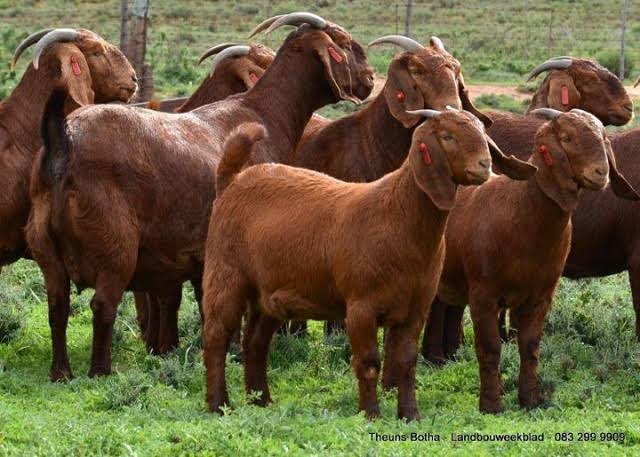
Talking Farming
Sifiso Ndlovu Agbetorwoka
IN my previous article, I made the case for why more Zimbabwean farmers should consider goats as a smart livestock investment. But once you have decided that goats are the right enterprise for you, another important question quickly follows:
Which breed should I keep?
This is one of the most common questions I am asked by aspiring goat farmers. My answer is usually simple: there is no single breed that is best for everyone.
The right goat for your farm will depend on what you want to produce, where you live, the climate, the feed resources available to you and, importantly, the market you are targeting.
Are you producing meat, milk or breeding stock? Do you have access to good quality feed and veterinary care? Are you farming in a dry communal area or running a more intensive commercial operation?
Before spending money on expensive animals, every farmer should answer these questions.
The Boer goat — The meat production specialist
The Boer goat is probably the best-known commercial meat goat in Zimbabwe. Originally developed in Southern Africa, it is loved for its fast growth, large frame and excellent muscling.
For farmers targeting the meat market, these qualities are a major advantage. A well-managed Boer goat can produce a heavier carcass than many indigenous goats, and quality purebred breeding stock can also command attractive prices.
However, there is a catch: good genetics need good management to perform.
A farmer should not expect to buy expensive Boer goats, release them into the veld with little supplementary feeding and expect miracles. Boer goats generally perform best when they receive good nutrition, healthcare and management. In difficult environments, their potential may not always be fully expressed.
The Kalahari Red — Beauty meets adaptability
The Kalahari Red is another impressive meat breed that is becoming increasingly popular in Zimbabwe. Its distinctive red colour is not only attractive but is also associated with an animal developed for tough, dry environments.
Kalahari Reds are large-framed, hardy and well suited to meat production. From a Zimbabwean perspective, their ability to perform in semi-arid conditions makes them particularly attractive.
Their disadvantages are similar to those of other improved breeds: good animals can be expensive, and farmers still need to provide proper nutrition and management if they want to achieve good results.
For farmers looking for a quality meat goat with good adaptation to dry conditions, the Kalahari Red is certainly worth considering.
The Savanna — A tough and hardy meat goat
The Savanna goat is another Southern African meat breed that deserves attention. It is generally known for its hardiness and ability to cope with challenging environments.
The breed has a strong reputation as a functional, hardy goat and can be an excellent option for farmers interested in meat production under extensive conditions.
One challenge, however, is availability. Good quality Savanna breeding stock may be more difficult to find in Zimbabwe than Boer or Kalahari Red goats. As with any breed, farmers should buy from reputable breeders and focus on healthy, functional animals rather than simply purchasing a goat because it carries a fashionable breed name.
The Matabele goat — Our home-grown treasure
Sometimes, in our excitement about imported breeds, we forget the tremendous value of the goats that have been living and surviving in Zimbabwe for generations.
The Matabele goat is one of Zimbabwe’s important indigenous breeds. It is generally larger than the Mashona goat and is well suited to meat production. Perhaps its greatest advantage is its adaptation to our local conditions.
Matabele goats have survived generations of droughts, changing weather conditions and challenging grazing environments. They are hardy and generally require less intensive management than some exotic breeds.
Their main disadvantage from a commercial meat production perspective is that they may not grow as quickly or produce the same carcass weight as a well-managed specialised meat breed.
But this does not make them inferior. It simply means they have different strengths — and those strengths can be extremely valuable in a Zimbabwean farming system.
The Mashona goat — Small but mighty
The Mashona goat is another important indigenous breed. Smaller and more compact than the Matabele goat, it is well known for its hardiness and ability to survive under challenging conditions.
For communal and small-scale farmers with limited resources, this resilience is a major advantage. The Mashona goat has adapted over generations to local conditions and can perform where a more demanding breed might struggle.
Its smaller frame can mean a lighter carcass, which may be a disadvantage where the farmer’s primary goal is maximum meat production. However, good management and careful breeding can still significantly improve productivity.
Zimbabwe’s indigenous goats are not simply animals of the past. They are an important part of our future, particularly as climate change forces farmers to think more seriously about resilience and adaptation. Our indigenous breeds have genetic qualities that money cannot simply buy.
What about dairy goats?
For farmers interested in goat milk, the Saanen is one of the world’s best-known dairy breeds. Under good feeding and management, it has the potential to produce impressive quantities of milk.
However, Zimbabwean farmers should remember that dairy farming is a more demanding enterprise. A high-producing dairy goat requires excellent nutrition, clean housing, good health management and a reliable market for milk.
The Saanen’s light-coloured coat can also make it less suited to extremely hot conditions unless adequate shade and good management are provided.
For Zimbabwe, I believe the Anglo-Nubian is another dairy breed worth serious consideration. It is a larger, dual-purpose goat that can produce both milk and meat and is generally considered better suited to warmer climates than some of the traditional European dairy breeds.
For farmers considering dairy goats, my advice is simple: do not buy a dairy goat simply because it is fashionable. First make sure you have the feed, the management skills and, most importantly, the market for the milk.
Why we believe in crossbreeding at Bulembe
At Bulembe Livestock Centre, we have had positive experiences with crossbreeding. We have crossed Boer goats with Matabele goats and Kalahari Reds with Matabele goats as part of our efforts to improve carcass weight while retaining some of the valuable hardiness and adaptation of our indigenous goats.
The idea behind crossbreeding is not to suggest that one breed is better than another. Rather, it is about combining desirable qualities.
A good crossbred animal may benefit from the growth and muscling of a specialised meat breed while retaining some of the resilience and adaptability of the indigenous mother.
This approach is also becoming increasingly attractive to farmers across Zimbabwe. We are seeing significant demand for good-quality crossbred breeding females from farmers who want to improve the productivity of their herds without necessarily moving straight into expensive purebred breeding programmes.
Of course, crossbreeding must be done with a plan. Randomly mixing different breeds without clear breeding objectives can eventually create animals with inconsistent characteristics. Decide what you want to improve — whether it is carcass weight, growth rate, milk production or hardiness — and breed towards that goal.
Choose the goat that fits your farm
The most expensive goat is not necessarily the best goat and the biggest goat is not necessarily the most profitable.
A small, hardy indigenous goat that survives, reproduces and raises healthy kids may be more profitable than an expensive animal that struggles because the farmer cannot provide the nutrition and management it needs.
So before choosing a breed, take a good look at your farm. Consider your climate, grazing, budget, management skills and market.
Whether you choose a Boer, Kalahari Red, Savanna, Matabele, Mashona, Saanen, Anglo-Nubian or a carefully planned crossbreed, remember that the breed is only the beginning. Good genetics must be supported by good nutrition, healthcare and sound management.
The best goat for your farm is ultimately not the one with the most fashionable name. It is the one that can perform, reproduce and make a profit under your farming conditions.
Goat Farmer’s Takeaway: Choose a breed with your head, not just your eyes. The best goat is one that suits your farm, your resources and your market.
Sifiso Ndlovu Agbetorwoka is the Director, Bulembe Livestock Centre Email: [email protected] | WhatsApp: +263775369910.