Chronicle Editor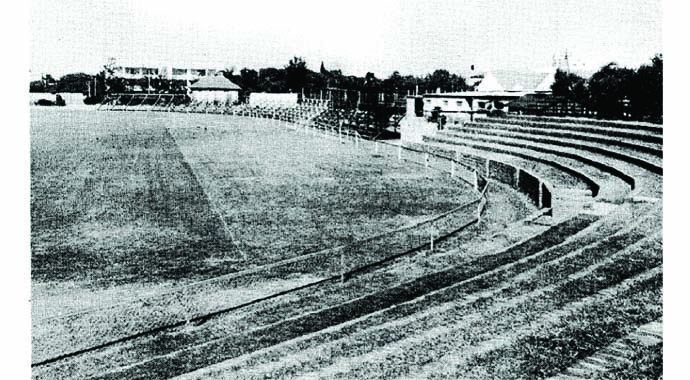
Simba Jemwa, Sports Reporter
IT is Bulawayo’s oldest sports club and like other sports facilities in the city and beyond, it has suffered over the years, lost a few members and struggled to keep up with sporting codes that were once its lifeblood.
For a minute now, sports clubs have been slated for moving away from their core function of providing recreational and sporting facilities to members. Management has been accused of being greedy and driven by profits at the expense of developing young talent.
Both central and local governments are on record raising their concerns about this “migration” by sports clubs the country over.
And these management boards will argue that the economic problems faced by the country and Covid-19 forced them to reinvent their facilities into prime entertainment spots.
But Queens Sports Club’s young management board has elected to go back to the basics – resuscitate sport as its key function. And they have made a fair bit of headway in this regard.
Queen Sports Club wants to see the return of young people who have swapped community sport for bike rides or other unstructured physical activities during Covid-19 lockdowns and may not return – unless it finds new ways to re-engage them.
Queens Sports Club president, Ntuthuko Gabella, said if clubs cannot entice former members to return – and recruit new ones – community sports could very well lose a generation of people, especially children aged four to nine who showed the biggest drop-off.
“The early adopter group missed out on school PE as well as club sport. Many have not yet developed skills to throw or kick a ball and don’t have much motivation or confidence to join clubs.
“Recruiting this group will require us to go back to basic skills development in a fun and inclusive environment.
“Declining physical literacy of young children has been an issue for years, but the pandemic made it worse. If we don’t do something now, Covid-19’s legacy will be an even wider gap between advantaged and disadvantaged children,” said Gabella.
Another reason for the drop-off may be due to parents who have reassessed time and cost commitments of club sport compared to the less demanding activities that featured during lockdowns – especially those with several kids, he said. Gabella said one solution to address this is for clubs to find flexible ways to involve the family in a range of competition and play formats, including informal sport.
He said sports club members join clubs primarily for enjoyment and socialising, meaning recruitment strategies must emphasise fun over sporting victories. This is especially true for girls and young women at another critical drop-out stage of adolescence.
“Against this backdrop, we continue struggling to recruit and retain members and volunteers who are our lifeblood, especially coaches and athletes.
“We have developed an ambitious national strategy for PE, school sport and physical activity that we hope will be supported by long-term funding through increased membership and sponsorship opportunities for our various sporting codes and clear accountability measures designed to drive up activity levels, health and wellbeing of children and young people across all age groups.
“If we need to ring-fence investment in sport-based programmes as part of key club plans to cut crime, improve health, raise educational attainment and enhance the skills employability of young people then this is what we must do,” said Gabella.
“Our vision is the improved understanding of the availability and accessibility of our facilities and the natural environment at local level to identify risks and opportunities and target investment effectively.
“Greater emphasis must be placed on the role of sport, recreation and physical activity in reducing the burden of preventable disease at national level and locally,” Gabella concluded.
And how is Queens Sports Club going to bridge this growing gap that may lead to the demise of sports clubs in general?
The club’s vice president, Sindiso Mazibisa, revealed that the club has developed and put in place a sports development strategy that seeks to increase membership while also encouraging more sporting participation among members, young and old.
Mazibisa said he and his fellow management board members made a resolution to radically reform in order to support the growth and development of sports at the club. He said they had agreed to develop and adopt a clear strategic vision for how to fully harness the potential of sporting, recreational and social activity within the club to improve the physical, mental and social wellbeing of the nation and support our renewal as a country post-pandemic.
“We believe this strategic realignment of our activities at Queens Sports Club will help us unlock the potential that we have to improve our membership numbers and then conversely increase participation in sporting, recreational and social activities. We feel that physical activity is the “miracle cure” which can tackle the growing burden of preventable illness among young adults and the elderly as well as our young ones who are getting sucked into drug abuse,” Mazibisa shared.
“If anything, the current sporting success by codes such as netball, rugby, cricket and to some extent football brings into sharp focus what we are calling for in the sports development strategy, reinforcing the need for a different approach built on substantive, long-term policy solutions to the challenges we collectively face.
“We hope that this strategy document can help reshape sport and recreation within our club and beyond and support further dialogue on the kinds of interventions we believe are necessary to unlock the potential of our sector,” Mazibisa told Chronicle Sport.
Mazibisa revealed that after the establishment of the Queens Pool Academy, management has engaged Zimbabwe Cricket (ZC) about retaining control of Queens Sports Club cricket team as the flagship of the sporting facility and this engagement has been positive.
He added that given that the 20-year lease agreement between Queen Sports Club and ZC is up in a couple of years, a change is unlikely as the two parties have a “mutually beneficial relationship”.
“Cricket is our flagship sport and for that reason we have engaged the ZC through the local franchise and to have Queens Cricket Club being a part of the club. But our focus is not just focused here. We have a rich heritage in various sporting codes such as rugby, football, hockey, squash among others and we have resolved to revive all of these.
“We have three squash courts although only one is currently operational after our members worked together to revive it. We now have a pool academy and we are looking at the possibility of building a volleyball court in the car park adjacent to the cricket pavilion.
“All these projects are an effort to ensure that we go back to our founding principles and ensure sport becomes the major reason why anyone would come to Queens. We are also focused on being a development platform for young, talented sports prodigies. We have in place a very strict children safety policy that ensures that we continue to offer a family-friendly sporting, recreational and social environment,” Mazibisa said.
Queens Sports Club has a rich heritage in sport having been officially granted the piece of land on which the club stands today in mid-1894 by the British South Africa Company. Zimbabwe’s oldest sports club is today still situated on this piece of ground, bordered on the north by Connaught Avenue and on the south by First Avenue, between Robert Mugabe Way and Fife Street.
According to those who know the history of the club well, the land was given to the club by a Deed of Grant dated June 25, 1895. However, 11 years later the club sold the land to the BSA Company for £1 638.11s and the company later sold it to the municipality for more than double that price on condition that the land continued to be used for sporting facilities.
Following much deliberation between the Council and the club management over the years that followed, a series of short five-year leases were negotiated.
Following further negotiations with the Council, the club was finally granted a 99-year lease in 1953. By then the ground had seen many improvements and new buildings had been built to the satisfaction of the Council. The lease is due to expire in the year 2051. At the time of the signing of the lease agreement, the rent was one pound per annum.
Over the years, the club ground has been the venue for many major events, from sporting events to pop concerts, wedding receptions, fetes, beer fests and military parades. – @RealSimbaJemwa



 Online Reporter