Online Reporter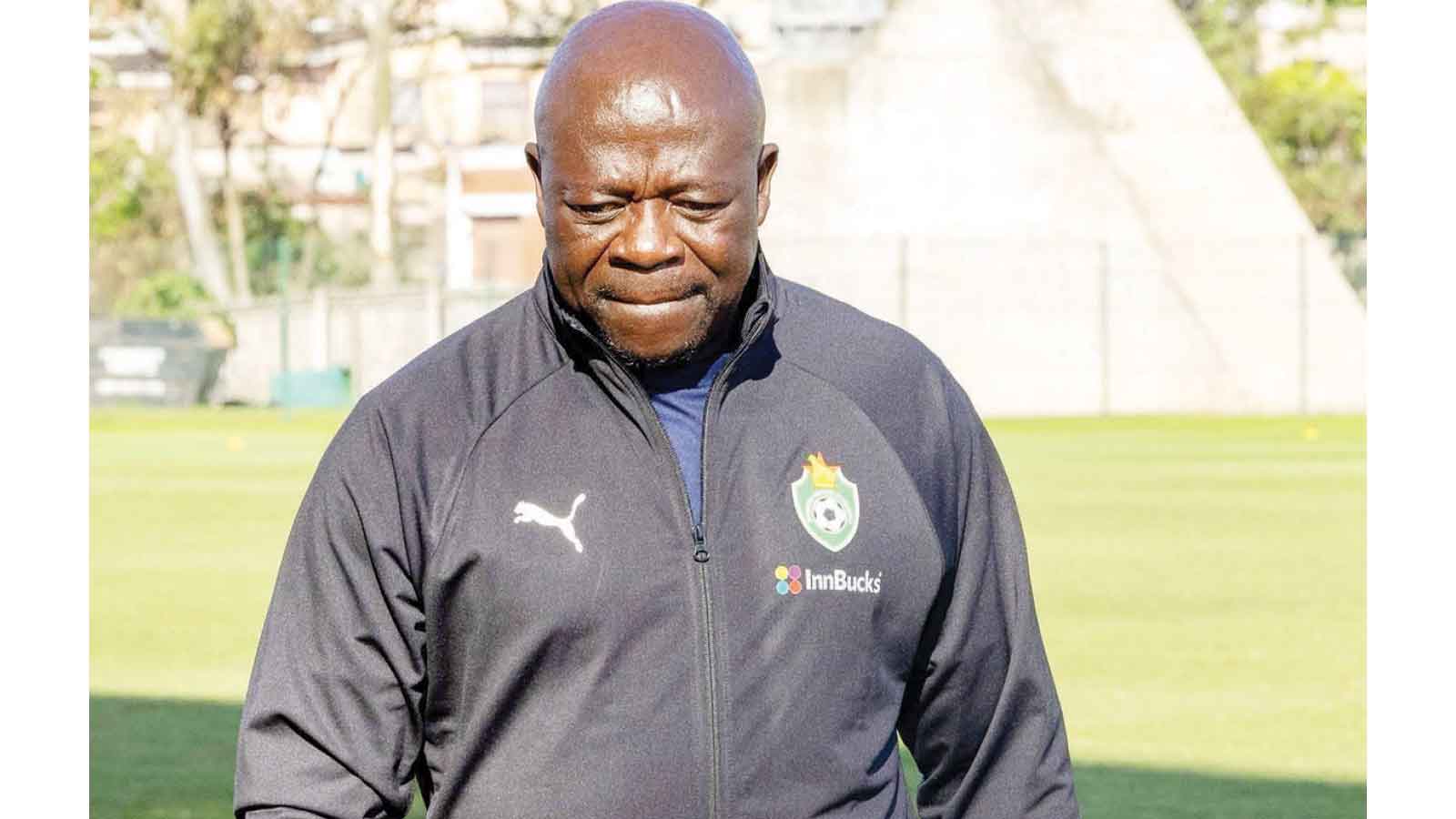
RECENT developments within the Zimbabwe Football Association’s senior national side’s technical department have once again placed the country’s flagship sports team, the Warriors, at a familiar crossroads.
With the sudden departure of Marian “Mario’’ Marinica, the national team faces a moment that calls not for panic or abrupt shifts in direction, but for calm reflection and strategic continuity.
At such a juncture, it is important that Zimbabwean football resists the temptation to demand instant success at the expense of long-term progress.
Instead, there is a compelling case for extending to Kaitano Tembo the same patience and latitude that were accorded to his predecessors Michael Nees of Germany and Romanian Marinica.
It is worth acknowledging that Marinica had begun to make meaningful strides. Indeed, there were visible improvements in structure, cohesion and overall style of play.
The team showed signs of renewed belief, and, for the first time in a while, there was a growing sense of optimism among supporters.
Crucially for Marinica, who began his spell with two friendly matches in the Middle East (against Algeria in Saudi Araba and Qatar in Doha), he was given the time and space to implement his philosophy, the much talked about “Fast and furious style’’.
Despite Marinica’s sudden resignation, ZIFA ought to be commended for opting for continuity, rather than further rock the boat.
And in the spirit of continuity and fairness, it follows that Kaitano Tembo, who was Marinica’s assistant from the first day that the Romanian took charge of Zimbabwe, deserves similar consideration.
Tembo’s appointment should not be viewed through a lens of uncertainty, experimentation or affirmative action.
He is not an outsider attempting to understand Zimbabwean football; he is a seasoned professional with deep roots in the game.
A former Warriors stalwart and vice-captain, he has served the nation with distinction and carries with him invaluable experience from coaching in the highly competitive South African Premier Soccer League. He understands both the technical and psychological demands of the modern game, as well as the unique dynamics of Zimbabwean football and the African game at large.
There is, at times, a tendency within our football ecosystem to undervalue local expertise until it is too late. History offers lessons in this regard. Coaches have often only received full recognition after being entrusted with responsibility and allowed to grow into their roles.
Premature judgment and impatience have, on occasion, undermined promising progress.
Tembo now has an opportunity to build upon the foundation laid by Marinica. Disrupting that process at this stage would risk undoing the gains that have already been made.
It is also important to commend ZIFA for their recent decision to reintegrate CAPS United coach Takesure Chiragwi into the national team setup.
This reflects a mature and progressive approach to football administration.
Chiragwi’s situation was a reminder that the game is, at its core, deeply emotional. However, his willingness to publicly acknowledge his mistake and take responsibility for his actions demonstrated accountability and professionalism.
The youthful coach also publicly apologised to every stakeholder affected by his moment of madness, if not weakness.
ZIFA’s decision to offer him a second chance speaks to an understanding that growth and redemption are essential elements of both sport and leadership. It also provides a pathway for one of the most exciting young tacticians in the game today to continue sharpening his skills.
Zimbabwean football will ultimately benefit from this move.
If such grace can be extended in that instance, it is only reasonable that the same spirit be applied more broadly within the technical setup.
What is required at this stage is not heightened pressure, but collective support. Supporters, stakeholders and critics alike must allow the new technical leadership the necessary space to consolidate and build.
If Marinica was given time to experiment, to refine his approach, and to absorb early setbacks, then Tembo should be afforded the same opportunity. He is not starting from scratch; rather, he is inheriting a team that has begun to rediscover its identity.
Zimbabwean football stands to benefit far more from consistency than from constant upheaval.
Granting Tembo, the time and confidence to execute his mandate is not merely an act of goodwill — it is a strategic necessity.
If, instead, the cycle of short-term expectations and abrupt changes that has characterised previous football regimes continues, the national team risks returning to a familiar pattern of instability.
The path forward is clear: patience, continuity and belief in our own.
And we are not alone in following such a path.
A host of fellow African nations have often turned to their local heroes whenever they have parted company with their journeyman expatriate coaches.
And interestingly short-loved Zimbabwe coach Tom Saintfiet also parted ways with West African giants Mali this week, having taken charge of the Eagles at the 2025 Africa Cup of Nations.
The Federation of Malian Football (FEMAFOOT) are now looking to appoint a local coach for the national team after Saintfiet stepped down earlier than expected.
Just like Marinica, Nees or Baltemar Britto in the Warriors’ case, Belgian, Saintfiet, who replaced Eric Chelle in 2024, left his role after nearly two years in charge of Mali.
This lends credence to the call to have patience with local coaches.