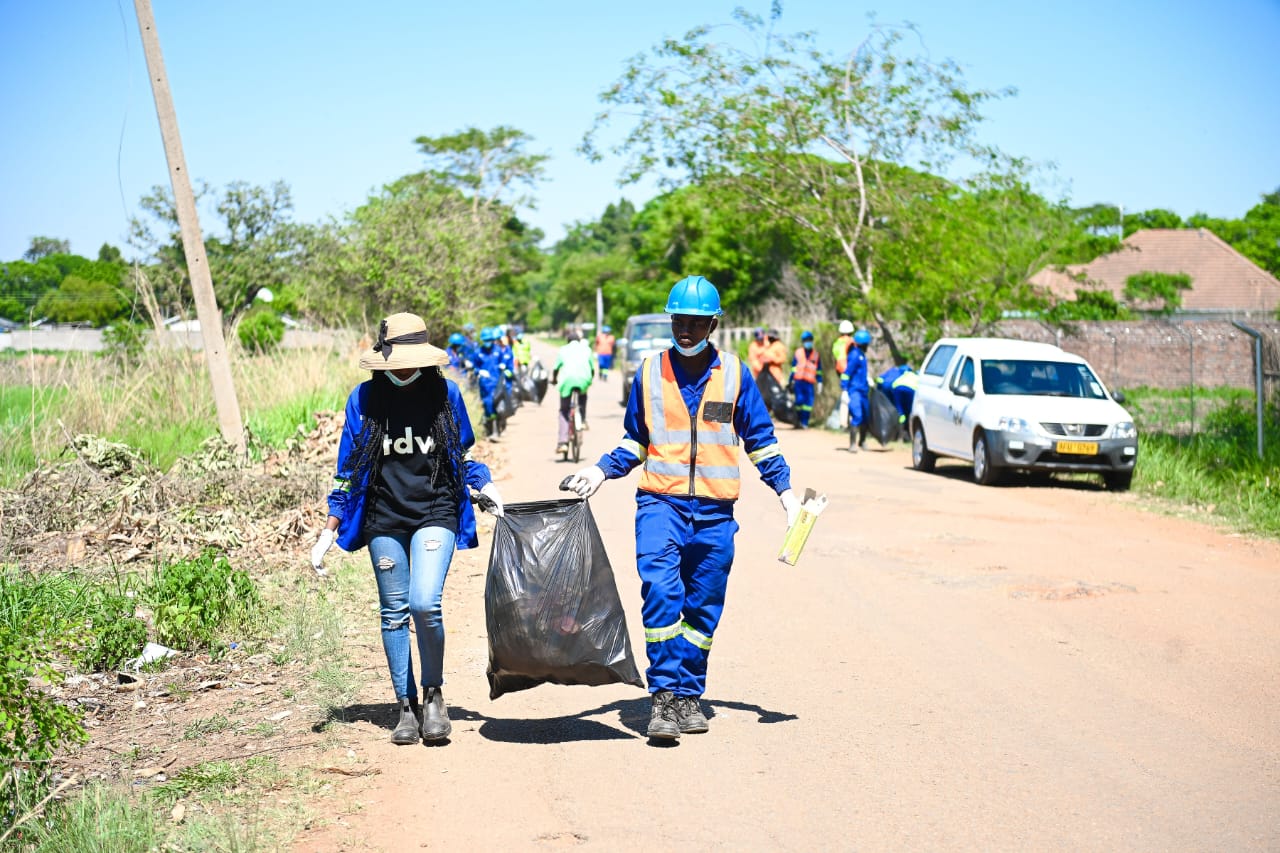
ZIMBABWE’S quest for clean, orderly, safe and environmentally sustainable urban centres is an important development priority that deserves serious attention from Government, local authorities, businesses and residents.
As cities and towns continue to expand, the need for effective urban management, proper planning and responsible use of public spaces has become increasingly apparent. It is against this background that Operation Chenesa/Hlanzeka should be understood, particularly as authorities seek to address illegal structures, regulate informal trading and restore order in urban communities.
However, the success of any urban renewal initiative cannot be measured solely by the number of structures demolished, vending sites cleared or streets cleaned. It must also be measured by its ability to improve people’s living conditions, protect livelihoods and create an urban environment in which economic activity and orderly development can coexist.
Government’s clarification that Operation Chenesa/Hlanzeka is not intended to destroy livelihoods or people’s property but to promote orderly urban development is therefore an important message.
It provides an opportunity to establish a constructive relationship between authorities and communities, ensuring that the campaign achieves its intended objectives without unnecessarily disadvantaging vulnerable citizens.
There is little argument that Zimbabwe’s urban centres require effective management. Illegal settlements, unregulated vending, indiscriminate waste disposal, poorly constructed structures and the misuse of public spaces create challenges that cannot simply be ignored. These problems have implications for public health, environmental protection, road safety, infrastructure maintenance and the general appearance of towns and cities.
For a country seeking to modernise its urban infrastructure and attract investment, proper spatial planning and effective municipal governance are essential. Clean streets, functional drainage systems, organised trading areas and properly maintained public facilities contribute to a healthier population and a more attractive business environment.
Victoria Falls, in particular, occupies a unique position in Zimbabwe’s tourism economy. As an internationally recognised tourism destination, its urban environment forms part of the overall visitor experience. The cleanliness, organisation and appearance of the city matter not only to tourists but also to residents, businesses and investors.
The city must therefore maintain standards that reflect its international standing while ensuring that its development does not leave ordinary residents behind. A world-class tourism destination should also be a city in which local people can earn a decent living, access affordable trading facilities and enjoy reliable municipal services.
This is where the balancing act becomes particularly important.
Informal trading is not simply an urban management inconvenience. For thousands of Zimbabweans, vending represents an important source of income and a means of supporting families in an economy where formal employment opportunities remain limited. Small traders contribute to household welfare, provide affordable goods and services and sustain economic activity within communities.
Consequently, removing vendors from undesignated trading areas without providing realistic alternatives risks creating economic hardship and undermining the very communities that urban development should benefit.
The concerns raised by traders at Bulawayo’s Espramprekini vending sites and residents in Victoria Falls deserve to be taken seriously. Their experiences demonstrate why enforcement measures must be accompanied by meaningful consultation, clear communication and practical alternatives.
Government and local authorities should therefore ensure that designated vending spaces are adequate, accessible, affordable and strategically located. Such facilities should provide basic amenities, including water, sanitation, waste collection and appropriate security arrangements.
It would be counterproductive to relocate traders to isolated areas where customer traffic is limited and business becomes unsustainable. The objective should be to organise informal trading rather than undermine it.
Equally important is the need for consistency and transparency in the enforcement of municipal regulations. Residents and business operators must understand the requirements governing land use, construction, vending and waste management. Authorities should provide reasonable notice, clear guidelines and opportunities for compliance before taking enforcement action, except where immediate intervention is necessary to address an urgent safety risk.
The principle should be straightforward: urban regulations must be enforced fairly, consistently and without discrimination.
Local authorities also have a responsibility to demonstrate that they possess the capacity to provide the services and infrastructure expected of modern municipalities. It is not enough to demand compliance from residents while public facilities remain poorly maintained, refuse collection is inconsistent or drainage systems are neglected.
Operation Chenesa/Hlanzeka should therefore become a broader programme of municipal accountability, service delivery and community participation.
The groundbreaking ceremony for the construction of the Victoria Falls Civic Centre provides an opportunity to reflect on this wider development agenda. Modern municipal facilities can strengthen administrative efficiency, improve service delivery and create a better environment for interaction between local authorities and residents.
However, infrastructure development must go hand in hand with improved governance. Residents should be able to see tangible improvements in water supply, sanitation, road maintenance, waste management and public amenities.
Minister Garwe’s warning about the predicted El Niño conditions during the 2026/2027 rainfall season also deserves attention. Zimbabwe’s experience with flooding and other weather-related disasters highlights the importance of preparedness rather than reactive intervention.
Clearing stormwater drains, protecting wetlands, enforcing responsible land-use practices and strengthening early warning systems are practical measures that can prevent avoidable loss of life and property.
Local authorities should not wait for heavy rains to expose weaknesses in their infrastructure. Disaster preparedness must be a continuous responsibility supported by adequate planning, resources and community awareness.
The reported interest in Operation Chenesa/Hlanzeka from Zambia, Uganda and Tanzania also provides an opportunity for Zimbabwe to exchange experiences and learn from other African countries grappling with similar urban management challenges. However, the effectiveness of any such initiative will ultimately depend on how it is implemented and the measurable improvements it delivers to communities.
Ultimately, the conversation surrounding Operation Chenesa/Hlanzeka should move beyond demolitions and enforcement towards building sustainable, inclusive and functional urban spaces.
A clean city should not come at the expense of livelihoods. Equally, the protection of livelihoods should not become an excuse for allowing unsafe structures, environmental degradation and disorderly development to continue unchecked.
These objectives are not mutually exclusive. With proper planning, adequate infrastructure, transparent enforcement and meaningful community engagement, Zimbabwe’s towns and cities can accommodate economic activity while maintaining acceptable standards of cleanliness, safety and environmental protection.
The responsibility is shared. Government must provide policy direction and resources, local authorities must enforce regulations fairly and deliver essential services, while residents and businesses must play their part in maintaining clean and orderly surroundings.
Operation Chenesa/Hlanzeka should ultimately be judged by the quality of urban life it helps create. Its lasting legacy should be cleaner streets, safer neighbourhoods, organised markets, stronger municipal institutions and improved economic opportunities for ordinary citizens.
The real measure of a successful urban clean-up is not how much is removed, but how much is improved. Zimbabwe needs cities that are clean without being exclusionary, orderly without being oppressive and modern without sacrificing the livelihoods of the people who give them life.