Online Reporter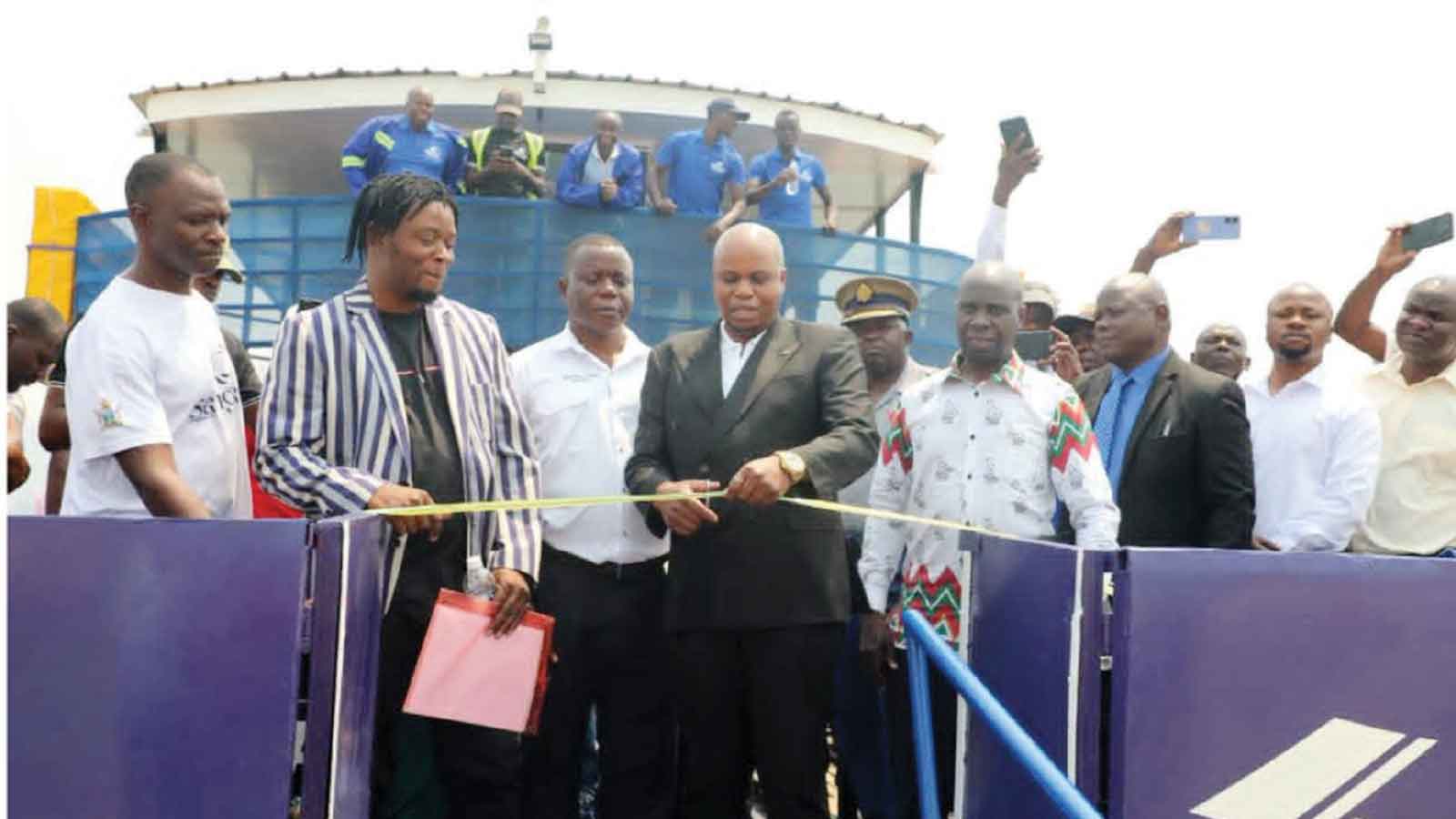
AFTER the Kariba ferry capsized on August 11 killing 97 of those aboard, the Government moved swiftly with immediate support and promises of more medium-term and long-term support for the affected communities along the lake shore, including an intermediate relief ferry and food support.
These were not empty promises.
At the end of last week, a private-sector smaller ferry was commissioned to provide the relief ferry service while longer-term arrangements to procure a larger custom-designed new ferry or ferries from Dubai.
At the same time, logistics staff worked out how to use suitable trucks of local transport operators for the final leg of grain deliveries to the affected communities.
All this has been a follow-on from the immediate Government action.
President Mnangagwa declared the ferry capsize with its high loss of life a State of Disaster, which allowed the support to start flowing very fast, initially the rescue, body-recovery and funeral services, and then the supply of emergency food, some of it by helicopter, to the afflicted villages.
More longer-term support was being put in place, again using the fast-track route of the disaster state, to cope with the needs of fairly small communities where there was hardly a family that had not lost at least one person to the waters of the lake. Many households had also seen their small businesses and fishing income hammered by the lack of transport.
Among the new measures were free schooling for the children of hard-hit families, and assessments of exactly what was going to be needed in future, in some cases for several years at least, to support the hardest hit and restore the incomes of all.
One early promise was a replacement ferry service, restoring the critically necessary passenger and cargo service along the lake route. Fortunately a suitable craft in private ownership was available that could be adapted and upgraded to provide this service.
It seems to have been a support craft for the local fishing industry, and the changes and upgrades included adding passenger accommodation and the ancillary safety services.
Government regulators and experts worked with the owner to make sure the replacement met all regulations, especially those concerning safety, plus recommendations that have already come from the investigations even before the final report.
So there is now a 60-passenger ferry on the lake, ready to make two voyages a week. Safety equipment includes 120 life-jackets and automatic weighing of cargo to prevent over-loading.
Two small tenders come with the ferry, working boats that will help move passengers and goods to smaller centres, but which will also be available as rescue boats should someone fall overboard or if there is a major emergency.
The Government has already opened negotiations with a Dubai company with a great deal of experience over the supply of a lead ferry of a new class specially designed for Lake Kariba.
Even when this vessel is built and commissioned, and some of the work will have to be done in Zimbabwe as it will be impossible to move a complete larger craft by road, there will still be urgent need for other smaller ferries on the lake, so the private sector has business opportunities.
The ferry of the Rural Infrastructure Development Agency that capsized last month was carrying almost double the 90 licenced passengers. Regardless of what effect this had on the capsize, it shows the growing demand for lake services, demand that must rise further.
There are also opportunities for smaller and shallower draft vessels to extend the services further up the lake, and that not only helps fishing communities but also opens doors for tourism in a unique Zimbabwean environment.
Other local fixes came when those responsible for transporting Government food aid into the affected communities turned to these communities for ideas and their local know-how.
It was quickly found that while the very long and heavy standard grain trucks could not negotiate the local roads, local transporters had smaller and suitable vehicles that could manage these roads.
Arrangements were made to hire these trucks with the grain being brought close by the large trucks and then repacked into the vehicles that were already operating in the area.
With both the ferry and truck services the Government found private-sector partners who knew what they were doing. This meant the Government could keep its promises, but far more important that the afflicted communities could be promptly supported with what they needed urgently.
This is a small, albeit important, example of how Zimbabwe is progressing so fast.
Smart business and smart Government working on the same track mean we as a nation are moving ahead much faster than if everyone was going alone.