
THE national policy that all minerals must be processed locally to agreed levels, which adds enough extra value to double, triple or quadruple export earnings, is absolutely essential for the future prosperity of Zimbabwe.
So far the Government has been firm, that any arrangements to export ores or even ore concentrates are only temporary and dependent on progress being made to install and commission the necessary plant and machinery.
But the Government has not ruled that every miner must have this processing capacity, only that it must ensure its ores and concentrates are processed within Zimbabwe.
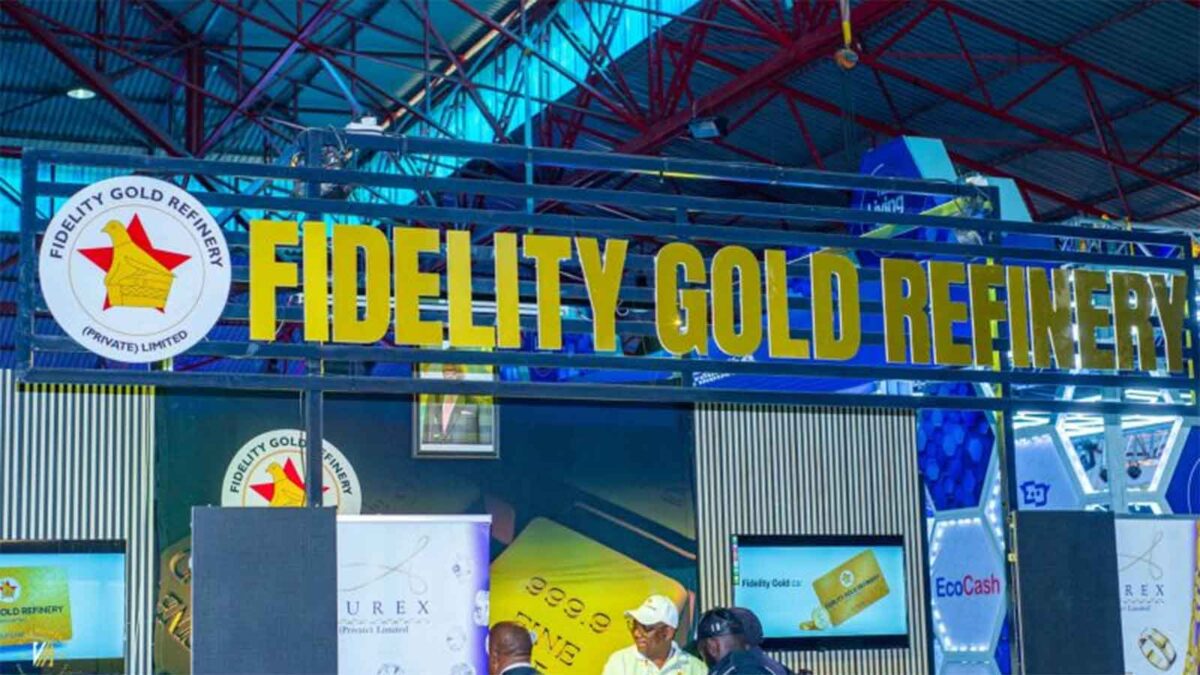
In fact, for several minerals, starting with the gold refining monopoly held by the Reserve Bank of Zimbabwe subsidiary Fidelity Gold Refinery, miners send their semi-processed or unprocessed concentrates to a third-party refiner.
This could easily be expanded for other minerals, including lithium and platinum group metals. It would be possible for the mining companies to combine refining investment to set up a jointly-owned refining company; that might well be the solution for platinum group metals where there are three major mines at present with a fourth now licensed and in the earliest stages of development.
A platinum group refinery is a major undertaking, having to not just melt out the metal as what happens in a gold refinery, but to separate out a set of metals with very similar chemical characteristics.
When we talk about platinum group metals we are talking about a group of metals that can be separated, but which need some fancy and fairly expensive equipment to do so.
The total volume of Zimbabwe’s output is probably just large enough to make a joint refinery a viable business proposition. After all, we need just one gold refinery.
Lithium miners might well want a variety of options. The first lithium sulphate processing plant is owned by earliest of the new breed of large miners.
At least one other miner is well on their way to commissioning their own plant. But several mining operations have made it clear that the high levels of investment required are difficult at present global prices.
Lithium prices, especially for ores and concentrated ores, fluctuate fairly strongly which makes raising the required capital even more risky.
Spreading the investment has now been suggested as a sensible and viable option.
A stand-alone processing plant could, in effect, do contract processing for a fee, accepting ore concentrates from any mine.
The industry could work out rational and sensible fees that would cover operational costs of an efficient operator plus the return on capital. This would be a fixed charge per tonne.
The mining companies would be receiving a significantly higher payment for their exports which must cover the processing and mining charges with some left over for legitimate profits.
It might even be possible to licence a third party investor, who would buy the ores, process them and export the lithium salts, which would remove the entire processing risk from the miners, although at the cost of seeing the third party investor winning any increase in profit.
It could even be possible for plants already commissioned or soon to be commissioned to add contract processing or processing ores bought from other miners to their inputs.
This also allows smaller and medium companies, the sort of operation that Zimbabwean investors might prefer at this stage, to participate in lithium mining and so help spread wealth. Again gold offers examples of large, medium and small mines all sending their output to Fidelity.
When we talk about processing lithium ores, we need to remember that lithium sulphate is only an intermediate processed product.
Global trade in lithium is done in lithium carbonate or lithium hydroxide, the two salts that a battery factory wants delivered to the back gate, with the hydroxide likely to become the preferred commodity with the latest technologies.
So even if all lithium ores are processed to lithium sulphate, the present target, as we move up the value chain, a second set of processing will be needed to get full value.
Any investor looking at a battery factory in Zimbabwe will also want the top level of lithium salts, so regardless of where our lithium ends up, we will have to be looking at this higher tier of processing plant.
Thanks to low inflation and exchange rate stability, Zimbabwe is building up its own pool of capital. That allows Zimbabwean investors, such as the sovereign-wealth Mutapa Investment Fund, to move into mineral processing, or to be a partner in a joint investment.
There are many financing models available depending on who is investing and why they are investing. The only real requirement is that the investment must provide a real return as well as adding value. That does not seem difficult considering the higher value that processed products earn.
The same sort of models can be used for other minerals, thus ensuring that the processing investment can be spread, or brought in from third parties.
This would also allow miners to concentrate on their core business of mining, while allowing engineering and chemical industries to concentrate on processing and working out, in addition, how to use waste for additional products that add value.