Online Reporter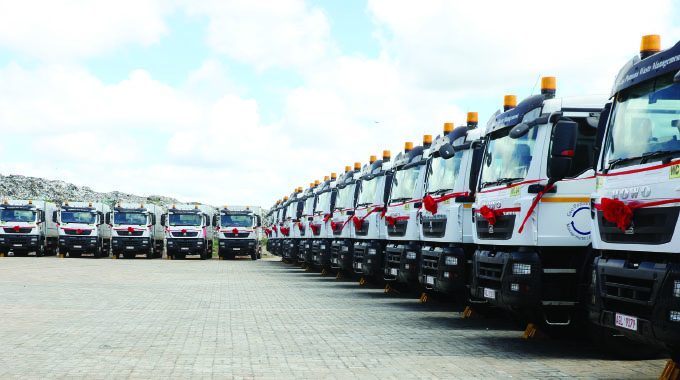
President Mnangagwa has pushed hard during his Presidency for Zimbabweans, their formal and informal businesses, and their local authorities to change the old culture of acceptance of a filthy environment and instead work together to at least be able to live in cleanliness inside our own homes.
As usual, the President goes far beyond the mere words and instead has been looking at a range of practical solutions that involve people and businesses and councils doing something constructive, all the way from keeping litter and filth off the streets to providing services that take the collected rubbish for suitable processing.
It needs the full range of solutions so no one has to dump rubbish just to keep their own area clear, but also requiring cooperation from those with rubbish, and that is all of us, to work with their council to have it shipped out.
Harare, being easily the largest urban area, is the greatest source of rubbish in Zimbabwe.
The growing densities, even within cluster housing in the leafy suburbs and the vibrant environment and streets mean that rubbish accumulates.
Over recent decades the city council has found it increasingly difficult to cope and the ad hoc blitzes to remove illegal dumps are not really the way to create a sustainable system and encourage residents to pack and bag their rubbish so it can be collected properly. Even the final destruction of the collected rubbish was running into problems since large cities cannot really use inefficient landfill.
Geo-Pomona was brought in to change the whole technology, starting with proper management of the final dump, and this in part meant converting the dump into a power station, but more importantly making sure that rubbish was properly processed as it arrived so the days of major fires ended.
This was a joint venture in some ways, although the Government had to step in to ensure the pure arrangement between the company and Harare City Council would work.
The arrangement quickly grew.
Harare does not have enough refuse collection trucks, having given higher priority to fancy SUVs for senior staff over rubbish trucks and even ambulances.
So this year Geo-Pomona expanded its footprint by taking over collection routes, with the intention when its own fleet of trucks is complete of running the collection service.
That will place pressure on the city council to sort out its own accounts and rate collection, as the waste collection fees need to go to the new contractor, who is bound to be more efficient so able to provide a better service for the same cost.
The company is building up its fleet fast. The original modest collection of trucks was augmented by a delivery of a new batch not that long ago, and this week President Mnangagwa presided over the commissioning of the second batch. So Geo Pomona is well on its way to having a large enough fleet of functioning trucks and compactors.
Impressed, the President wants to see similar arrangements between other local councils and efficient private sector firms to upgrade refuse collection and processing.
Growing sophistication of technologies involved, and the need for specialist services that are not dependent on mood swings among councillors, seem to demand the use of the private sector, so long as it can do the job more efficiently than a council.
But we still need to build up the relationship between households, businesses and Geo Pomona.
Even where they provide the trucks and follow a strict schedule, with the weekly garbage collected from kerbs in a one hour slot, it still needs the household to have that garbage properly bagged and carried to the kerb.
A pile just left there will be collected but will still leave the overflow.
There was a time, decades ago, when Harare insisted residents bought proper dustbins, so that rubbish did not spread everywhere.
These were replaced by bags, that did split and were holed, and then there were no rules.
It seems Geo Pomona, the city council, the Government and others can and must develop a set of rules for households and businesses over how they present their rubbish for collection, so it is efficiently collected.
Geo Pomona cannot be expected to have teams sweeping up litter or spending 10 minutes at each house with shovels scraping up the rubbish from the kerb.
They must provide a decent collection service, but the residents and the businesses need to get the refuse to the trucks without it spilling everywhere.
There can be a range of possibilities, but simply piling the refuse up loose cannot be one of them. Binning, bagging or even using skips at shopping centres seem the most obvious solutions, and so the new efficiencies introduced by Geo Pomona need to be complemented by residents determined to keep their environment clean and finding it easy to do so when all rubbish can be properly collected.