
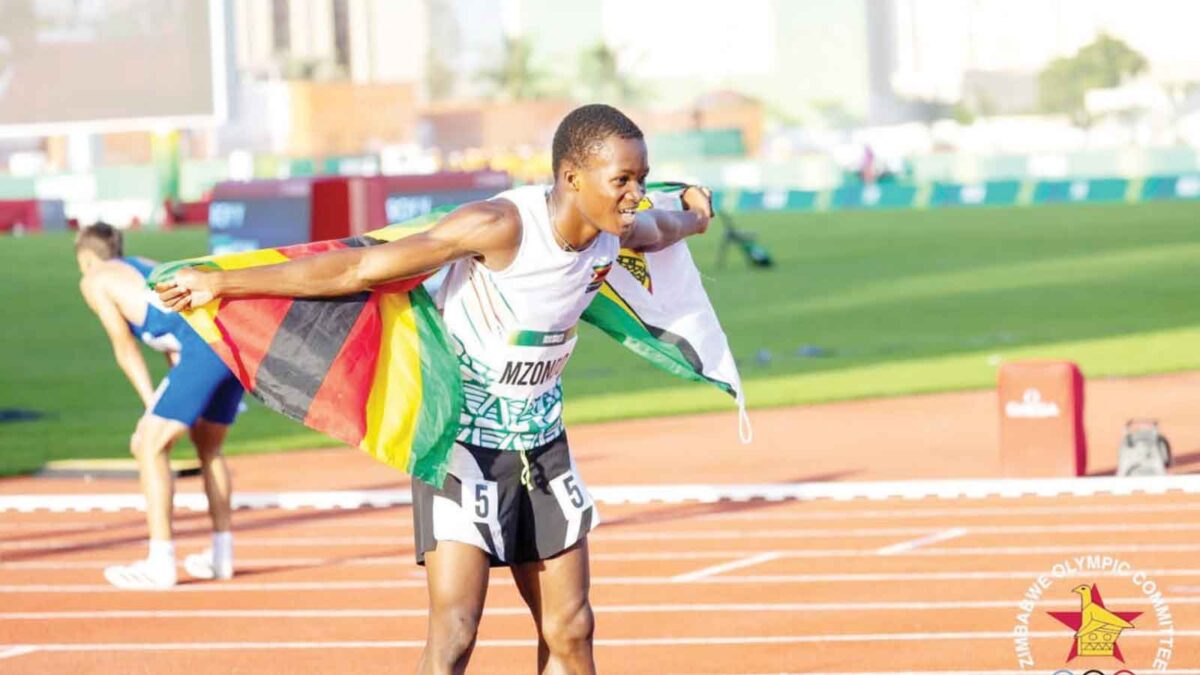
ROPAFADZO Mzondo’s historic gold medal at the Dakar 2026 Youth Olympic Games is more than just a personal achievement.
It is a victory for Zimbabwe, a triumph of perseverance, and a powerful reminder of what young Zimbabweans can accomplish when talent is nurtured, encouraged and given an opportunity to flourish.
As the first Zimbabwean athlete to win a gold medal at the Youth Olympic Games, Mzondo has done much more than break records. He has shattered mental barriers that have often limited the aspirations of many young athletes.
His success sends a clear message that Zimbabwean athletes can compete and win on the biggest international stages if they are prepared, supported and determined.
What makes Mzondo’s story particularly inspiring is that it is rooted in ordinary circumstances familiar to many families across the country.
He did not emerge from a high-tech athletics academy or enjoy the privileges that athletes in wealthier nations often take for granted. Instead, his journey began with a father who believed in him, encouraged him and refused to let his dream fade despite the challenges.
His father, Liberty, once had ambitions of becoming a successful athlete himself but was held back by financial constraints.
Rather than allowing disappointment to define his legacy, he channelled his passion into supporting his son. Today, the dream he could not achieve has been realised through the next generation.
This lesson should resonate strongly with parents across Zimbabwe. Too often, talent in sport is viewed as secondary to academic achievement.
While education remains vital, there is a growing need for families to recognise that sport can also open doors to scholarships, careers, international exposure and national pride. Parents must become active partners in identifying and nurturing talent, just as Liberty did for his son.
Schools should also see Mzondo’s achievement as a wake-up call. Across Zimbabwe, schools have long been the breeding ground for sporting excellence.
Many of the country’s greatest athletes first displayed their abilities on school fields, tracks and courts. However, sporting programmes in numerous institutions have suffered from inadequate resources, poor facilities and a lack of consistent investment.
At the same time, corporate organisations, local authorities and national sporting associations must play their part. Zimbabwe cannot continue to rely solely on individual determination and family sacrifice to produce champions. There is a need for sustainable talent identification programmes, better training facilities and increased sponsorship for young athletes who show promise.
For aspiring athletes, Mzondo’s achievement is proof that dreams are valid regardless of one’s background. His journey from school competitions to a Youth Olympic podium shows that success does not happen overnight.
It requires years of hard work, discipline, sacrifice and belief. Young athletes should understand that talent alone is not enough. It must be matched by commitment, dedication and a willingness to keep improving.
If parents encourage, schools invest, communities support and young athletes believe in their abilities, Mzondo’s golden moment will not stand alone. It will become the spark that inspires a generation of Zimbabwean champions to follow in his footsteps and carry the nation’s flag even higher on the world stage.