Online Reporter
Precious Manomano, Zimpapers Reporter
THE ongoing construction of high-impact dams across the country is set to revolutionise Zimbabwe’s agricultural landscape and boost economic growth.
With a focus on rural industrialisation, the Government is rapidly advancing the construction of 12 large dams aimed at irrigating at least 350 000 hectares.
This initiative responds to the growing demand for increased crop production and is part of a broader strategy to empower smallholder farmers.
By addressing critical water shortages, these projects are foundational to improving the lives of rural communities.
Among the completed projects are Tugwi Mukosi, Muchekeranwa, Marovanyati and Chivhu, all of which are already providing water and irrigation services to local communities.
Lands, Agriculture, Fisheries, Water, and Rural Development Minister Dr Anxious Masuka said the projects are vital for national development.

“We have reviewed all the dams that are under construction. Through irrigation schemes and water for drinking, we will transform the lives of people and spur rural development.”
This underscores the Government’s commitment to enhancing the lives of its citizens through strategic infrastructure development.
Several key projects are under construction, including Kunzvi, Dande, Gwayi-Shangani, Mbada, Bindura, Defe, Tuli Manyange, Semwa and Vungu dams.
The Government has allocated a substantial budget of $1.1 billion for high-impact dam construction, which is progressing steadily across the country.
Notable projects include the Gwayi-Shangani Dam, which is over 70 percent complete and is designed to provide both irrigation and a reliable water supply for Bulawayo, a city facing perennial water challenges.
Similarly, Kunzvi Dam, currently 64 percent complete, will supply water to Harare and its surrounding areas.
Dr Masuka said the development of these dams is part of long-term plans to support smallholder irrigation and boost food production.
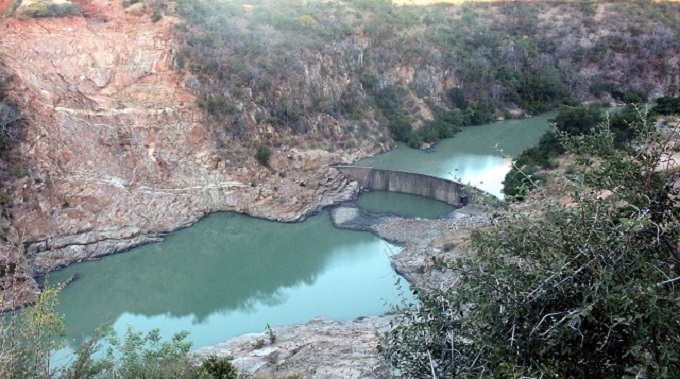
“The development of dams is part of long-term plans to support smallholder irrigation, boost food and agricultural production, and harness water for industrial and domestic use,” he said.
This comprehensive approach seeks to create a sustainable agricultural framework while addressing crucial water shortages in rural areas.
The Government is also committed to establishing 35 000 boreholes across villages and improving access to clean water.
Over 2 000 villages have already benefitted from these initiatives. The construction of these dams is expected to spur economic growth by creating job opportunities in various sectors, including construction, agriculture and fisheries.
Economic analysts have noted the potential for these projects to stimulate local economies and boost tourism, reinforcing the idea that dam construction is a catalyst for broader economic development.
The Government aims to build 12 high-impact dams by 2027, aligning with its vision to transform Zimbabwe into an upper-middle-income economy by 2030.
This ambitious plan includes the development of fisheries, essential for economic growth and food security.
Recently, Deputy Minister of Lands, Agriculture, Fisheries, Water, and Rural Development, Davis Marapira, expressed optimism about the ongoing projects.
“There is great progress on the dams that are under construction. Kunzvi Dam and Gwayi-Shangani will solve all water problems in Harare and Bulawayo, respectively.”
He said these projects would facilitate smooth agricultural operations through irrigation while supplying water to major urban centres.
Moreover, the development of these dams is crucial for climate adaptation. By providing a reliable water supply, they help mitigate the effects of climate change on agriculture, which has historically been vulnerable to shifting weather patterns.
The Government is keen on promoting intensive conservation practices, such as the Pfumvudza/Intwasa programme, which supports sustainable farming methods at the smallholder level.
Dr Masuka reiterated that these practices, combined with new irrigation infrastructure, will enhance resilience against climate variability.
Chivhu Dam, commissioned in 2023, exemplifies the Government’s commitment to rural industrialisation, providing water to Chivhu town and facilitating agricultural activities in the region.
Similarly, projects like the Runde-Tende Dam in southern Masvingo aim to export water to Limpopo province in South Africa, enhancing regional co-operation and resource management.
The ambitious dam construction projects not only seek to improve agricultural productivity but also serve as a foundation for economic growth and resilience in rural areas.
By focusing on irrigation, fisheries, and sustainable practices, the Government is poised to transform the agricultural landscape and empower communities across Zimbabwe.
As these projects come to fruition, they will play a crucial role in driving the nation towards achieving its developmental goals, specifically Vision 2030, to become an upper-middle-income economy.