Trust Freddy
Business Correspondent
Delta Corporation will commission new lager beer production lines this month to plug persistent beer supply shortages across the country, which have driven prices beyond the company’s recommended retail prices, a senior executive has said.
The company said it had already spent US$35 million to expand production capacity in Southerton, Harare and Belmont in Bulawayo.
According to the company, the investment will expand output in Harare, while Bulawayo will see increased brewery capacity and a new packaging line.
The beverage giant has been struggling to satisfy market demand. The acute shortages have hit popular brands, including Carling Black Label and Castle Lager quarts, as well as selected Zambezi lager lines.
For instance, the supply shortage has driven the retail price of brown quarts up from the recommended US$1,50 to US$1,75.
Delta Corporation attributed the strong demand for its products to firm consumer demand, stable pricing, growing economic stability, increased liquidity from the mining and tobacco marketing seasons, improved consumer incomes, and consistent product availability.
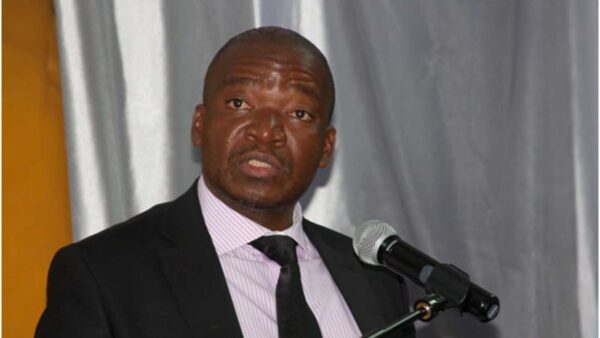
Delta Corporation finance director Mr Alex Makamure told the company’s half-year analyst briefing in Harare on Wednesday that additional capacity was almost ready and, once fully on stream, should lift output to match current demand.
“We think we are largely there in terms of the programme. … the additional production from the brewery capacity we are talking about is being commissioned, and we are starting to get brews out of it,” Mr Makamure said.
“If that capacity comes in, which is in November, our outputs will grow to match what we believe is the current demand.”
Strong local demand has also forced the company to import specific premium brands such as Castle Lite, Corona, and Stella Artois to supplement local output.
“The crisis is not necessarily about total output. We have selected packages such as Zambezi and the cry for the quart headmaster, Carling Black Label,” Mr Makamure said.
He said consistently high demand throughout the year prevented Delta from building stock during winter for the Christmas peak, compounding the supply shortages.
“We are doing volumes that are probably 20 percent ahead of last year. That is where the constraint is. This year we have had a very consistently high demand,” he said.
“So normally we would have produced during winter to build up stock cover to supply the high demand in this period. We were not able to do that because we were also going into production constraints. But with the additional capacity that we have, we largely think that we will not have these challenges.”
Prices are expected to remain unchanged, Mr Makamure said, as the group moves to restore normal supply.
Meanwhile, Zimbabwe’s largest beverage company posted a 13 percent increase in half-year operating income as robust volume growth across its domestic beer and spirits divisions helped offset tax pressures and regional weakness.
The group’s operating income climbed to US$112,2 million for the six months ended September 30, 2026, up from US$99,6 million a year earlier.
Group revenue advanced 18 percent to US$607,5 million, underpinned by double-digit volume expansion in lager and sorghum beer across its primary domestic market.
Delta, an associate of AB InBev SA/NV, benefited from relative exchange rate stability in Zimbabwe, firm mining activity, strong diaspora remittances and liquidity from the agricultural marketing season, with domestic foreign currency sales edging up to 97 percent of total revenue.
AB InBev is the world’s largest brewing company, headquartered in Leuven, Belgium.