Ranga Mataire – Group Political Editor
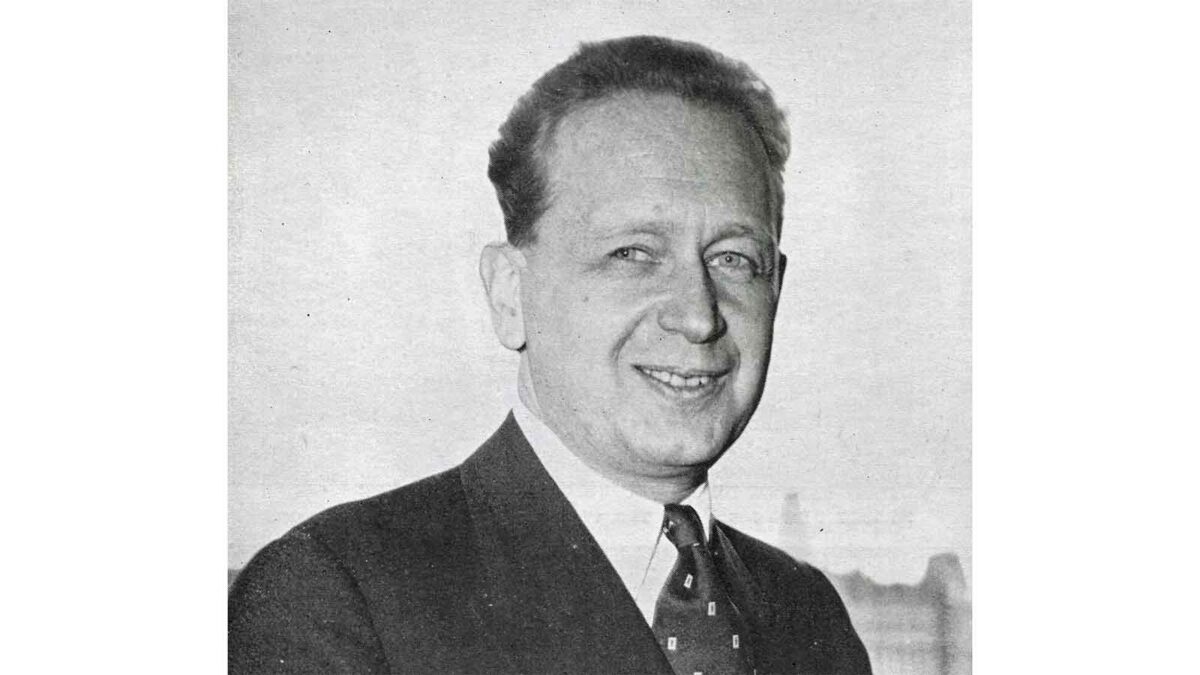
Sixty-five years ago, in September 1961, United Nations Secretary-General Dag Hammarskjöld was killed while trying to broker peace in the then Republic of Congo, now the DRC.
On the night of 17-18 September, his aircraft crashed shortly after midnight in Ndola, Northern Rhodesia — now Zambia. Sixteen people died, including Hammarskjöld and 15 others on board.
He was flying to meet Moise Tshombe, leader of secessionist Katanga province, to negotiate an end to the war with mainland Congo.
Tshombe was a darling of the West — the USA, Britain and former colonial power Belgium. He was propped up by mercenaries, mainly from apartheid South Africa, who trained and fought for his secession to protect Western mining interests in mineral-rich Katanga.
Hammarskjöld’s death ended a remarkable career. He became Secretary-General at 47 in 1953 — the youngest ever — and was re-elected in 1957. His tenure defined the modern UN: Suez, the Congo crisis, and the rise of the Secretary-General as a global peacemaker.
Most white settlers in central and southern Africa celebrated his death. He was seen as a supporter of African decolonisation and majority rule. Across the world, it was met with horror.
The Official Lie: Pilot Error
The first Rhodesian inquiry said pilot error. A UN Commission in 1962 said it could neither confirm nor exclude sabotage.
For six decades, that uncertainty remained.
Then in 2024, the UN-appointed Eminent Person, former Tanzanian Chief Justice Mohamed Chande Othman, reported that an external attack or threat remained a plausible explanation. He also concluded it was “almost certain” that crucial information remains undisclosed in the archives of some member states. The United States, Britain and South Africa have still not fully declassified their files. Zimbabwe has.
Zimbabwe: The Country That Opened Its Files
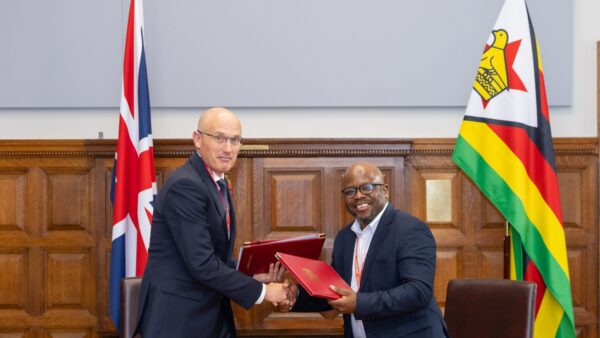
Judge Othman singled out Zimbabwe for commendation. While others embargoed, Zimbabwe declassified. While others stalled, Zimbabwe investigated. The Zimbabwe team submitted has so far submitted five reports to the UN. They unearthed evidence that changed the investigation.
In 2019, Zimbabwe provided vital archival details on Sergeant Harold Julien, the UN chief of security and sole survivor of the crash.
“This fresh information reveals that the Rhodesian authorities actively sought to prevent Julien’s statements about the flight and the crash from being made public,” — UN commendation, summarised by British researcher Dr Susan Williams.
Julien lived for six days. He told doctors he had seen a smaller plane harassing the UN plane. He spoke of an explosion.
Rhodesia kept him in Ndola. They had the capacity to fly him to a better hospital in Salisbury, South Africa, the UK or the US. They chose not to. He died, investigators say, more from neglect than from his injuries.
Zimbabwe gave Julien his voice back as it submitted information that showed apartheid mercenaries were active at Ndola on the day the UN boss lost his life.
Zimbabwe’s reports pointed to increased apartheid mercenary activity at Ndola airport on the night of the crash. That evidence fits the accounts Rhodesia tried to dismiss: charcoal burners who testified they saw two planes in the sky before the bigger one crashed just after the runway.
Operation Celeste: the apartheid plot
The link between apartheid-era agents and the crash first emerged in August 1998 during South Africa’s Truth and Reconciliation Commission (TRC).
TRC investigators, probing separate apartheid atrocities, discovered a cache of internal documents from a white supremacist mercenary militia — the South African Institute for Maritime Research (SAIMR).
The documents detailed a plot code-named “Operation Celeste” — a plan to assassinate Hammarskjöld by planting a TNT bomb in the wheel well of his aircraft, the Albertina, timed to detonate when the landing gear retracted after take-off from Elizabethville, now Lubumbashi.
The SAIMR documents alleged Western intelligence supported the plot, with the CIA and British MI5 co-signing Hammarskjöld’s removal because his support for African independence threatened Western mining interests in Katanga.
Key figures cited include Keith Maxwell, nicknamed “The Commodore,” who oversaw SAIMR’s mercenary and clandestine operations until his death in 2006, and Alexander Jones, a former intelligence officer who came forward in the 2019 documentary Cold Case Hammarskjöld, claiming the organisation ran hit squads, coups and assassinations across Africa to protect minority rule.
Another name is Jan van Risseghem, a Belgian pilot and RAF veteran, alleged in later investigations to have been the pilot who shot down Hammarskjöld’s plane under direction of, or in cooperation with, mercenary elements.
The Verdict So Far
Subsequent UN inquiries led by Justice Othman concluded that an “external attack or threat” remains a highly plausible explanation.
Definitive closure remains elusive — not because evidence does not exist, but because South Africa, the US and the UK are yet to fully comply with the UN request to declassify all relevant intelligence files from the era.
Zimbabwe is among the few countries that have fully complied. It is one of the few that have unearthed evidence proving the 1961 crash was not pilot error.
Sixty-five years on, the question is no longer whether Hammarskjöld was murdered. The question is: Will the countries still hiding their files follow Zimbabwe’s example and tell the truth?