Online Reporter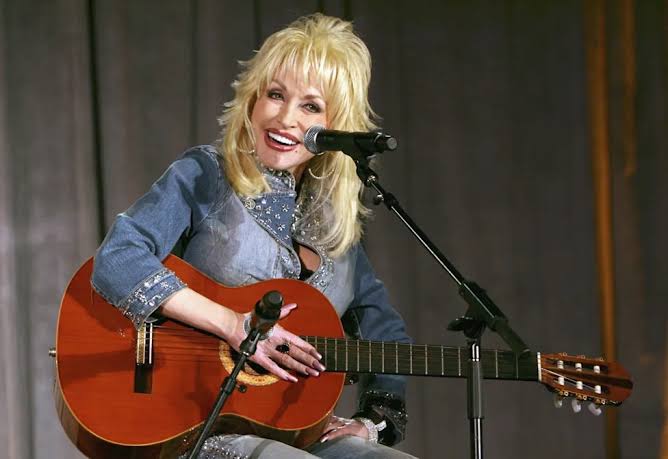
Bruce Ndlovu Sunday Life Reporter
AS the family of Dolly Parton was burying her in Nashville, Tennessee, last Friday, Tafi Dube was also mourning her with his guitar at the intersection of 8th Avenue and Fife Street in Bulawayo.
For those familiar with Bulawayo, Dube’s spot near Pioneer House, has become a cultural landmark, an unmissable and unmistakable part of the cityscape. Armed with a keyboard, a mic and an intimate knowledge of Don William’s catalogue, Dube provides the soundtrack of every day on one of the busiest streets in the City of Kings.
Last week, as Parton was being interred by her family at Woodlawn Memorial Park and Mausoleum alongside her husband of 60 years, Carl Thomas, Dube was also in mourning.
Like Williams, who passed away in 2017, the death of Parton left a hole in Dube’s soul. So, when he got to his “stage” on 28 August, every note, every lyric was sung with a mournful passion dedicated to the late country music icon.
“I have always been a big fan of Dolly Parton because she is one of the people whose music inspired not only what I do, but my life. I know I have always been associated with Don Williams but in my life I have taken a lot of influence from other country musicians,” he told Sunday Life.
Dube is a country music aficionado, a lover of a music genre whose roots are deeply entrenched in the American south. He is not the only one. In Bulawayo, country music has a lot of fans. The City of Kings is home to a lot of cowboys who have never seen a saddle, let alone rode a horse. They know the music of Parton, Johnny Cash or Willie Nelson better than some staunch Hillbillies in
Texas or Georgia.
When Parton died, long-time country music fans dusted up their old collections and played the genre’s greatest hits.
“I have always been a country music fan,” said Sibongile Dube, as Parton’s I Will Always Love You blared from her smartphone.
“We used to listen to her songs on record players when I was younger.
“Over the years we drifted away from her music but her death has reminded us why we love her so much,” she said.
The death of Parton was predictably received with a mixture of sorrow and celebration in Bulawayo, as it was in other parts of the world.
The history of country music in Bulawayo, however, goes much further back than the passing of an American superstar. It is a history that begins with guitars, cowboy hats and wandering musicians and one that would eventually help give birth to one of Southern Africa’s most recognisable genres.
Long before the city knew the polished sounds of modern country music, Bulawayo had its own cowboys. They were the omasiganda, nomadic musicians who wandered the streets with guitars, moving between tea parties, beer halls, shebeens, trains and any gathering where an audience could be found.
By the 1930s, the omasiganda had become an important part of Bulawayo’s popular culture. Their rise coincided with the growing popularity of the wind-up gramophone and the rapid industrialisation of the city. As factories and mines drew workers into Bulawayo, entertainment became an important part of urban life.
Colonial authorities and employers also understood the usefulness of entertainment as a distraction from the harsh realities of working life. Workers were exposed to free screenings of low-budget
American Westerns and with them came an image that would become permanently embedded in the African imagination.
The cowboy. Bulawayo’s African musicians embraced the look and cowboy hats, boots and neckerchiefs became part of the fashionable attire of men who, despite being thousands of kilometres from Texas and perhaps never having sat on a horse, could look every bit the part. At the centre of this new culture were musicians such as Josaya Hadebe, George Sibanda and Sabelo Mathe.
They were among the earliest omasiganda players to turn the guitar into a vehicle for African stories, taking sounds that had travelled from the American West and elsewhere and giving them a distinctly local character. Hadebe, in particular, would become one of the most important figures in this story.
His guitar playing popularised ukuvamba, a style in which the musician strums a few chords on the lower strings while picking out a melody on the higher ones. Decades later, the technique would remain a defining characteristic of maskandi.
His songs incorporated izibongo, the rapid-fire praise poetry associated with Ndebele and Zulu culture. On Wazibamba Emarabini, for example, Hadebe turns the song into a declaration of identity, introducing himself through praise poetry as “Hadebe Ishokolote YoMfana, Umfana WakoBulawayo”.
It was a distinctly Bulawayo sound, with the guitar carrying a melody while the voice moved with the rhythm and swagger of a praise poet. His increasing popularity, however, came with controversy.
In colonial Rhodesia, where Christian missionaries had gained enormous influence, popular musicians were sometimes viewed with suspicion. The guitar itself could be treated as an instrument of moral corruption, while musicians were accused of spreading vulgar or immoral messages. Hadebe’s Pendeka, a song about prostitution, was one of the compositions that attracted such criticism.
The hostility was not unique to him. The story of Sabelo Mathe’s guitar being smashed by an elderly woman, who celebrated having “killed Satan”, illustrates the suspicion with which these musicians were sometimes regarded.
But if the guitar was the supposed instrument of Satan, the people of Bulawayo were clearly willing to listen to the devil.
Among the musicians who followed in this tradition was John White, a celebrated albino omasiganda player of the 1950s. Like his predecessors, White took his music to where the people were. His stage could be a street corner, a beer hall, a party or, remarkably, a Rhodesia Railways train.
White developed a distinctive Hawaiian-inspired guitar style, using a bottle against the strings to create a sound resembling that of a pedal steel guitar. The train, in effect, became his concert hall.
He initially played for free, but his popularity became such that he could charge 50 cents for a song. At one gathering in Sarahuru, now Mwenenzi, White’s performance was so popular that people climbed trees to get a better view. A businessman eventually convinced him to perform from an open lorry so that the crowd could see him properly.
Meanwhile, Hadebe would eventually move to South Africa, where he encountered, Phuzushukela, a man that would become central to his unfolding legend. Hadebe taught Phuzushukela the guitar technique known as ukuncinza intambo and with that meeting, the sound travelled further into KwaZulu-Natal, where it found fertile ground among Zulu musicians and audiences.
In Bulawayo, the influence of Hadebe and other musicians from that era would not be lost. Traces of Hadebe’s style can be heard in the music of the like of Lovemore Majaivana and later, Jeys Marabini. Indeed, Majaivana’s Umoya Wakho has echoes of Hadebe’s Gijima Mfana.
Majaivana understood this history and in an interview in the early 1990s, when asked about Hadebe and Sabelo Mathe, he brushed off the suggestion that they were obscure figures.
“Sabelo and Josaya are the pioneers of this music,” he said, acknowledging that his own contribution was to broaden what they had started.
“What I did was to broaden it,” he said. “I think this is what it should be like, the young and upcoming artiste will take from me one day and broaden the sound, experiment further.”