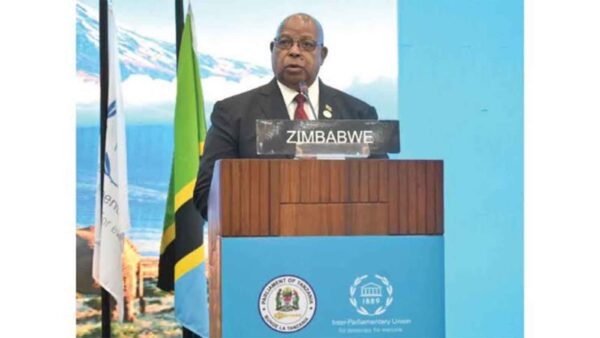
Precious Manomano
Herald Reporter
FARMERS have been advised to be cautious when deciding the best time to plant, as isolated early rainfall events can create the impression that the season has started, a senior Government official has said.
This came out at the Agriculture, Food, Climate and Environment Thematic Working Group on NDS2 meeting on Wednesday.
Chairman of the working group, Professor Obert Jiri, said farmers should be guided by rainfall amounts and soil moisture conditions when deciding on planting.
We still encourage farmers to be patient about planting,” he said.
“Farmers must remain cautious as we move deeper into October and deeper into November.”
In a post on Facebook, the Ministry of Agriculture, Mechanisation and Water Resources Development revealed that the recent scattered and isolated thundershowers do not mean that El Niño-related risks have changed or that the effective planting season has begun.
“Farmers are urged to exercise caution before planting, as forecasts indicate possible dry spells that could affect newly planted crops. Farmers should assess rainfall received in their localities in consultation with their Agricultural Business Advisory Officers.
“Rainfall exceeding 20mm over three days may inform planting decisions, but adequate soil moisture and the likelihood of follow-up rains remain critical.
“As we progress through October and November, farmers are encouraged to remain patient, monitor weather updates and make informed planting decisions to minimise the risk of crop failure,” read the post.
Prof Jiri said the Government is stepping up preparations for the 2026/27 agricultural season to cushion farmers from the anticipated impact of El Niño-induced drought and strengthen the country’s resilience to climate shocks.
The preparations are being anchored on the National Development Strategy 2 (NDS2), with the Government reviewing progress in agriculture, food security, climate resilience and environmental management to ensure the country is better prepared for the challenging season ahead.
He said lessons from previous droughts were informing the country’s preparedness measures.
Prof Jiri said Zimbabwe had experienced severe droughts in the past, resulting in significant losses to farmers.
“We will not allow history to repeat itself. We have learned from the past, we have planned, and we are still planning, and we are prepared,” he said.
Prof Jiri said the NDS2 review was critical in assessing progress towards improving agricultural productivity, mechanisation, food security and resilience.
“These reviews are critical, so that we can see where we are and support the country to move forward,” he said.
Government’s drought response is anchored on six pillars covering strategic grain reserves, climate-smart agriculture, a new financing architecture, livestock, enhanced imports, and coordination and capacity building.
Prof Jiri said the Government was targeting a strategic grain reserve of 600 000 tonnes while expanding Pfumvudza/Intwasa to one million hectares from 718 000 hectares previously.
The response also includes strengthening soil testing and extension services, supporting livestock production and developing innovative financing mechanisms to help farmers withstand climate-related shocks.
Co-chair of the thematic working group, Mr Simon Masanga, said the country’s response to climate shocks should recognise the close relationship between agriculture, food security, climate and the environment.
“The nexus between agriculture, food, climate and environment cannot be altered,” he said.
Mr Masanga said agricultural production depended on healthy forests, reliable water sources and functional ecosystems, while food security depended on productive agricultural systems capable of withstanding climate shocks.
He called for an integrated approach to national development instead of treating agriculture, food security and environmental management as separate areas.
“We must move away from addressing agricultural food security problems and environmental management as separate issues. We must increasingly plan and implement integrated solutions that recognise their interdependence,” he said.
Mr Masanga said droughts, floods, extreme temperatures and unpredictable rainfall required proactive and science-based responses, including climate-smart agriculture, irrigation development, climate-sensitive infrastructure and stronger climate information systems.
Acting Deputy Director for Public Weather Services at the Meteorological Services Department, Isaac Masawana said farmers should understand the distinction between seasonal forecasts and short-term weather information when making decisions.
He said seasonal forecasts were primarily useful for planning, while short-term forecasts and warnings helped farmers make immediate decisions and prepare for imminent weather hazards.
Mr Masawana said a forecast of below-normal rainfall should not be interpreted to mean that there would be no rainfall during the season.
“Below-normal rainfall does not mean that we are not going to experience rainfall,” he said.
He said below-normal rainfall simply meant that cumulative rainfall was expected to be below the long-term average for a particular area.
Farmers could still experience isolated heavy rains, thunderstorms and other weather events during a season forecast to receive below-normal rainfall.
He urged farmers and other stakeholders to regularly follow MSD updates as weather conditions evolved.
“It is important to keep in touch with MSD and get the updates now and again to ensure that you are always aware,” he said.