


 Online Reporter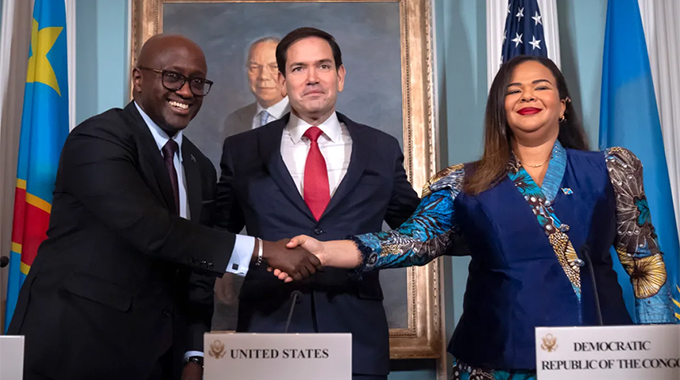
Dr Sultan Al-Khulaifi
The conflict in the eastern Democratic Republic of Congo (DRC) has historically been influenced by a variety of factors, including ethnic tensions, regional rivalries and weak political institutions.
Against this backdrop, the Washington Agreement signed between the DRC and Rwanda in June and the Doha Declaration of Principles signed by the DRC government and March 23 Movement (M23) in July represent a significant diplomatic achievement.
Facilitated respectively by the United States and Qatar, these agreements mark an unusual moment of alignment between the regional and local tracks to support a durable peace in the region.
Their ultimate success depends on two critical factors: Credible implementation and the management of political narratives.
Without sustained international oversight to ensure implementation and efforts to reframe adversarial discourses among elites and communities, the progress embodied in these agreements risks stagnation or reversal.
The Washington Agreement represents a political understanding between two states — Rwanda and the DRC — which stand at the heart of the eastern Congo crisis.
The accord acknowledges the destabilising role of mutual accusations and commits both parties to de-escalation and the cessation of support for armed groups.
Crucially, it outlines a framework for future security cooperation, a mutual recognition of sovereignty and an agreement to use third-party mediation as a guarantor of commitments.
On the other hand, the Doha Declaration of Principles is a detailed road map towards a comprehensive peace agreement between the DRC government and M23 rebels.
Structured around seven pillars — general principles, a permanent ceasefire, confidence-building measures, restoration of government authority, return of displaced people, regional mechanisms and a commitment to reaching a final peace agreement — the document offers a holistic approach to ending the armed conflict.
It clearly prohibits acts of sabotage, propaganda and territorial gains by force, and lays out sequenced actions such as detainee release, oversight mechanisms and post-conflict reintegration.
One of the most commendable features of these two agreements is the commitment to sequencing and timetabling.
The Doha Declaration specifies timelines for implementing confidence-building measures, initiating direct negotiations and signing a final peace agreement.
Likewise, the Washington Agreement’s synchronisation with the Doha process reflects an understanding of the interconnectedness between regional alignments and domestic armed group behaviour.
Additionally, both documents highlight the role of external guarantors — Qatar and the United States — and reaffirm the role of the African union and the United Nations Organisation Stabilisation Mission in the Democratic Republic of the Congo (MONUSCO).
This reflects an integrated peace-building model in which non-Western and Western actors, alongside multilateral institutions, reinforce one another.
Research on conflict mediation indicates that collaboration among multiple mediators enhances the likelihood of reaching peace agreements and contributes to the durability and legitimacy of those settlements.
Joint mediation efforts often combine diverse strengths — such as resources, leverage and normative legitimacy — making negotiated outcomes more robust and acceptable to the parties involved.
Despite these achievements, the real test lies ahead. Many previous peace accords in the DRC have collapsed due to weak implementation, mistrust and political manipulation. The current agreements face similar risks.
Low political will of conflict parties remains a challenge. Past processes like Nairobi and Luanda show that declarations often fail to deliver change on the ground because parties may use them to gain time or boost international legitimacy, rather than pursue peace. Both the Doha and Washington frameworks remain vulnerable to delays and political grandstanding by the conflict parties — patterns that have repeatedly undermined past peace efforts.
Therefore, sustained and credible international political will, alongside committed mediation, is essential to maintain pressure on the parties and ensure progress towards a durable settlement.
Equally important is the discursive environment surrounding the agreements.
In the DRC, public opinion remains deeply suspicious of Rwanda’s role and sceptical of M23’s intentions.
Conversely, Kigali perceives Kinshasa’s alliances with elements linked to the rebel Democratic Forces for the Liberation of Rwanda (FDLR) as a persistent threat.
Managing these narratives, particularly in the national media and on social media platforms, is essential.
If elites and communities frame the agreements as a betrayal or weakness, they risk collapse. International partners should invest in a public outreach campaign to counter anti-peace narratives.
This includes countering disinformation and amplifying peace dividends.
Furthermore, implementation requires stable funding for disarmament, demobilisation and reintegration of fighters programmes, refugee return and border-security coordination.
Finally, a regional peace-building compact must secure buy-in from neighbouring states and curb the emergence of new spoilers.
The Washington and Doha agreements are an important step forward in resolving one of Africa’s most violent conflicts. They reflect a rare moment of multilateral coordination, smart sequencing and political will.
To secure their success, international oversight must be sustained and credible, and the discursive space must be managed with care.
Without such measures, these commendable achievements risk becoming yet another unfulfilled promise in Congo’s long search for peace.
Dr Sultan Al-Khulaifi is a senior researcher at the Center for Conflict and Humanitarian Studies, where he focuses on issues of conflict mediation and resolution. He holds a PhD in Politics from the University of Glasgow.


 Bongani Ndlovu