Ray Bande
Senior Reporter
THE national football association, ZIFA’s Dream 2030 is looking beyond the current Africa Cup of Nations qualifying campaign where the Warriors plunged into battle against Equatorial Guinea in back-to-back fixtures that started with yesterday (Thursday) at the Stade Ahmadou Ahidjo in Yaounde, Cameroon.
The return leg against the National Thunder is set for Monday at the National Sports Stadium in Harare.
The 2027 Africa Cup of Nations will be co-hosted by three East African nations: Kenya, Uganda and Tanzania, an official joint bid known as PAMOJA 2027.
The Warriors are in Group E of the 2027 Africa Cup of Nations qualifiers alongside the Democratic Republic of Congo, Equatorial Guinea and Sierra Leone.
In their first two games, Catala’s men recorded a 3-2 victory over Sierra Leone away before suffering a 2-1 defeat to DR Congo at the National Sports Stadium.
The two back-to-back matches against Equatorial Guinea will therefore be crucial as the Warriors seek to qualify for the AFCON finals.
Be that as it may, the custodians of the game of football in the country, the ultimate goal, beyond PAMOJA 2027, is to have the Zimbabwe senior men’s national team qualify for the 2030 World Cup and the goal is within reach.
For ZIFA Eastern Region chairman Simba Wisdom, several key enablers have already been achieved on the ground to see the Warriors’ first-ever dance at the revered global football showpiece.
Dubbed “Dream 2030”, an ambitious campaign launched by ZIFA president Magwizi, is aimed at seeing Zimbabwe Warriors for their very first FIFA World Cup in 2030.
Zimbabwe has never qualified to the FIFA World Cup and its closest attempt came in the 1993-1994 campaign under the late legendary coach Reinhard Fabisch, featuring stars like Bruce Grobbelaar and Peter Ndlovu. The Warriors came within a single win of qualifying for the 1994 FIFA World Cup, before losing their final qualifier to Cameroon.
But two decades later, buoyed by the exploits of such teams like Cape Verde at the just-ended 2026 World Cup, Zifa have revealed their own audacious bid to help the Warriors qualify for the 2030 edition.
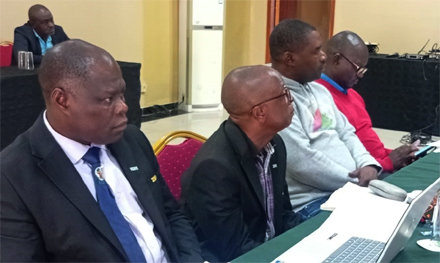
In his keynote address during the official opening of a ZIFA Administration and Management Course in Mutare on Tuesday, Simba said the Warriors can achieve that feat given the progress recorded in recent years.
“The attainment of the ZIFA president’s vision 2030 that of the Warriors qualification for the first ever world cup can be achieved by identifying talent early, invest in coaching, improve the quality and consistence of competition and then create opportunities for players to progress through the age groups.
“The journey from under 15, under 17, under 20, under 23 and ultimately the senior national teams must be deliberate rather than left to chance. What is currently on the ground is the recent participation of our under 15s in the Middle East and the current achievement of our Under 23 is a clear testimony on the path already taken by the association.
“The participation of the youths’ tournaments through the Banc ABC roots impact and the coming Munhumutapa junior tournament to be held in Bulawayo are examples of the achievements so far meant not only to achieve 2030 World Cup qualification, but maintain consistency,” said Simba.
The FIFA World Cup 2030 will be the first-ever men’s World Cup to span across three continents and six countries with primary co-hosts being Morocco, Portugal and Spain.
However, centenary match hosts include Uruguay, Argentina and Paraguay, hosting one special opening match each to commemorate the tournament’s 100th anniversary.
This gives automatic qualification to all six host nations – Spain and Portugal as the main co-hosts and Morocco as one of the three main co-hosts. Centenary match hosts Argentina, Uruguay and Paraguay also get automatic qualification.
Even though the final venue has not yet officially been decided, top contenders, include the Santiago Bernabeu and Camp Nou in Madrid and Barcelona, respectively and well as the under-construction Grand Stade Hassan II in Casablanca, Morocco.
While standard plans have featured 48 teams, 104 matches, FIFA has actively reviewed and considered a potential expansion to a 64-team format.
Magwizi recently told guests at the Munhumutapa Challenge Cup Round of 32 draw that ZIFA had already begun steps towards the Warriors’ World Cup journey.
“As Zimbabwe continues to rebuild its football, we do so with the belief that our game can become not only a source of national pride, but also a bridge to new partnerships, stronger international relationships and greater opportunities for our people. No nation qualifies for a Fifa World Cup by accident. Qualification is earned long before the first whistle of a qualifying match. It is earned in academies, on school grounds, in coaching classrooms, in boardrooms, in communities and through decisions that may seem small today but become defining tomorrow.
“That is why today we launch Dream 2030 — our dedicated national plan to qualify Zimbabwe for the Fifa World Cup.
“It is our commitment to building Zimbabwean football with purpose over the next four years so that qualifying for the FIFA World Cup 2030 becomes an achievable national objective rather than a distant aspiration. Every successful project begins with a clear vision. Ours is built around three Strategic Drivers: Talent, Resources and Culture. Together, these drivers will shape every decision, every investment and every programme undertaken between now and 2030,” said Magwizi.