We publish here the 36th post Cabinet media briefing presented by Information, Publicity and Broadcasting Services Minister Dr Zhemu Soda, in Harare yesterday.
1.0 UPDATE ON THE 2026/2027 SUMMER PLAN INCORPORATING DROUGHT MITIGATION PLAN
In light of the unfolding strong El Nino phenomenon, Cabinet received and noted an update on the 2026/2027 Summer Plan Incorporating the Drought Mitigation Plan, as presented by the Minister of Agriculture, Mechanisation and Water Resources Development, Honourable Dr. A.J. Masuka.
Government, under the Enhanced Strategic Grain Reserve Pillar is leveraging on the new Artificial Intelligence-powered silos to build a dedicated 600 000 tonnes Grain Reserve by October 2027.
As at November 9, 2026, the Grain Marketing Board held a total of 365 688 tonnes of grain of the Strategic Grain Reserve. The Agricultural Rural Development Agency (ARDA), as the food security agent, has contributed over 90% of the Strategic Grain Reserve Intake.
The Presidential Gratitude Grain Collection initiative of 10 kilogrammes per household contribution is now being 8 678 tonnes and 19% above last year. To date, Pfumvudza/Intwasa plots are 14 971 621 being 93.3% of target.
Some 914 Ward Drought Mitigation Centres (WDMC) having been established out of the total of 1527 rural wards. Furthermore, irrigation development is now 308 969 hectares with 119 068 hectares earmarked for maize production this summer.
Government continues to prioritise improving productivity through soil health improvement initiatives and a new soil fertility map has been developed.
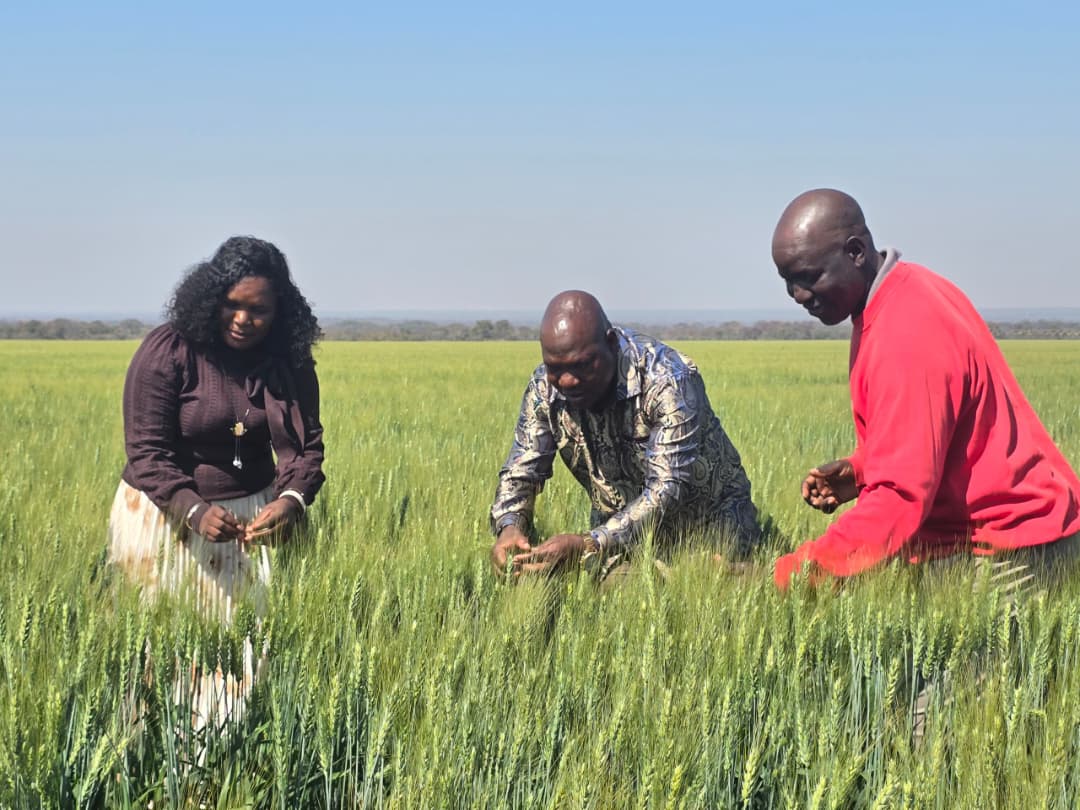
A total of 130 316 hectares of wheat were planted during the 2026 winter season, and to date, 129 860 hectares have been harvested, producing 676 473 tonnes, at an average yield of 5.2 tonnes per hectare.
Under the Livestock Drought Mitigation Pillar, a total of 2 248 498 cattle will be at risk because of the drought, constituting 38.9% of the total cattle population of 5 750 439.
The Presidential Poultry and Goat Schemes are continuing as pass-on initiatives. As at 4 November 2026, a total of 3 543 705 chicks and 6 897 goats had been distributed since the inception of the schemes.
The 2026/2027 Summer Plan is being implemented through Government and sector-wide strategic coordination, with all pillars having been assigned to champions, chaired by the Private sector.
Early warning systems are in place and communication with farmers and traditional leaders is being enhanced, while capacity building of farmers and the extension support system are being strengthened.
2.0 PRINCIPLES FOR THE AMENDMENT OF THE RECONSTRUCTION OF STATE-INDEBTED INSOLVENT COMPANIES BILL, 2026
Cabinet considered and approved the Principles for the Amendment of the Reconstruction of State-Indebted Insolvent Companies Bill, 2026 which were presented by the Minister of Justice, Legal and Parliamentary Affairs, Honourable Ziyambi Ziyambi.
The Reconstruction Act [Chapter 24:27] established statutory mechanism for the reconstruction of State-indebted insolvent companies to facilitate the rehabilitation of such financially distressed institutions and to protect relevant public and economic interests.
Following a High Court of Zimbabwe ruling which declared section 28(2) of the existing principal Act as constitutionally invalid, the proposed amendment seeks to repeal the section by providing for reasonable time for the administrator to assess the viability of the company subject to reconstruction; allowing for employees to make contributions during the reconstruction plan and to be preferential creditors where remuneration became due before reconstruction proceedings; and, in cases where employees are dismissed during reconstruction, providing for their rights to be governed under applicable labour laws.
3.0 NATIONAL ANTI-CORRUPTION STRATEGY 2 (2026-2030)
Cabinet considered and approved the National Anti-Corruption Strategy 2 (2026-2030), which was presented by the Minister of Finance, Honourable Professor Mthuli Ncube as the Chairman of the Cabinet Committee on National Development Planning.
The National Anti-Corruption Strategy 2 (2026-2030) provides a coordinated, Whole-of-Government and Whole-of-Society framework to address corruption and strengthen Zimbabwe’s national integrity system.
Aligned with national and international commitments, the strategy is built around six pillars, namely: Legal Reform, Stronger Institutions, Effective Enforcement, Public Engagement, Targeted Action in High-Risk Sectors and Digitalisation.
The strategy prioritises prevention alongside investigation and prosecution, with results-based monitoring, integration into Government budgets and workplans, and support from development partners while maintaining national ownership.
Its intended outcomes include more accountable institutions, effective laws and enforcement, greater citizen participation, reduced corruption risks and more transparent digital services.
4.0 REPORT ON THE AFRICA SEED SUMMIT: OCTOBER 5-7, 2026: EZULWINI, KINGDOM OF ESWATINI
Cabinet received a Report on the Africa Seed Summit which was held from 5th to 7th October 2026, in Ezulwini, Kingdom of Eswatini, as presented by the Minister of Agriculture, Mechanisation and Water Resources Development, Honourable Dr. Anxious Jongwe Masuka.
The Summit was held under the theme “Resilient Seed Systems for a Food-Secure Africa”.
The Summit brought together participants from 23 countries to advance resilient seed systems and food security.
It reviewed Africa’s seed-sector performance, endorsed the revised Africa Seed and Biotechnology Programme 2026-2035 Action Plan, and recognised the contribution of farmer-managed seed alongside formal systems.
The Summit adopted the Ezulwini Declaration, calling for stronger investment in research, breeding and seed enterprises; climateresilient varieties; harmonised regulations; expanded intra-African seed trade; and an integrated African Seed and Gene Bank System.
Zimbabwe’s strong seed sector performance positions it to contribute to regional leadership and benefit from new investment and market opportunities.
In that regard, Zimbabwe will develop a national plan to implement the Africa Seed and Biotechnology Programme in alignment with its Agriculture, Food Systems and Rural Transformation Strategy 2 (2026-2030) and the Comprehensive Africa Agriculture Development Programme, while integrating farmer-managed seed systems into national policies and programmes.
I THANK YOU!