admin
admin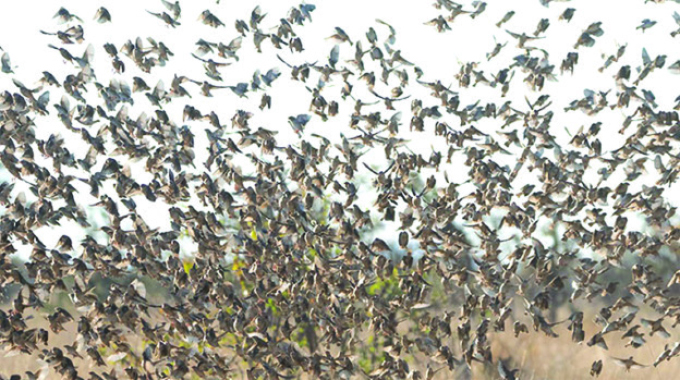
Elita Chikwati Senior Agriculture Reporter
The early planted maize crop which has reached the soft dough stage is under threat from quelea bird attack in most areas especially Midlands.
The Plant Protection and Research Institute(PPRI) has advised farmers to report the infestation early to reduce losses.
The PPRI has received reports of quelea birds in most wheat growing areas where farmers had an maize early crop.
Head of PPRI, Mr Shingirai Nyamutukwa yesterday urged farmers to report quelea bird attack early as the department had more than enough chemicals to spray.
“We have received reports especially from Midlands where the early planted maize is under attack from the birds. Maize at Ngondoma Irrigation Scheme was also affected by the birds.
We have acquired 7 410 litres of chemicals to deal with the birds. We normally buy 5 000 litres which last up to three seasons.
“Farmers with large tracts of land should identify the roosting sites of the birds. The birds are also getting into their breeding season and farmers should identify those sites and alert authorities for early control,” he said.
Mr Nyamutukwa said the fall armyworm population was also building up and farmers should continue scouting so they can make reports before the pest destroys crops.
“So far 17 hectares of maize and sorghum were destroyed by fall armyworm in Mushumbi, Mashonaland Central. We assisted the farmers with chemicals to control the pest.
“We encourage farmers to do early scouting so there is early control,” he said.
He said the institute was assisting vulnerable farmers with chemicals to control the fall armyworm but other farmers could buy on their own from reputable retailers.
Mr Nyamutukwa said teams were on the ground assessing the situation on both the fall armyworm and quelea birds.
Quelea birds have been a threat to summer subsistence small grains and commercial winter cereal cropping in Zimbabwe for years.
Each tiny bird can feed on four grammes of wheat per day and experts say a million birds can result in losses exceeding 40 000 tonnes when the quelea birds invade fields in large flocks.
Fall armyworm causes extensive damage to maize if not controlled properly and on time.
The pest has 10 to 12 cycles and can continue recurring after the first spray.



 Online Reporter