Online Reporter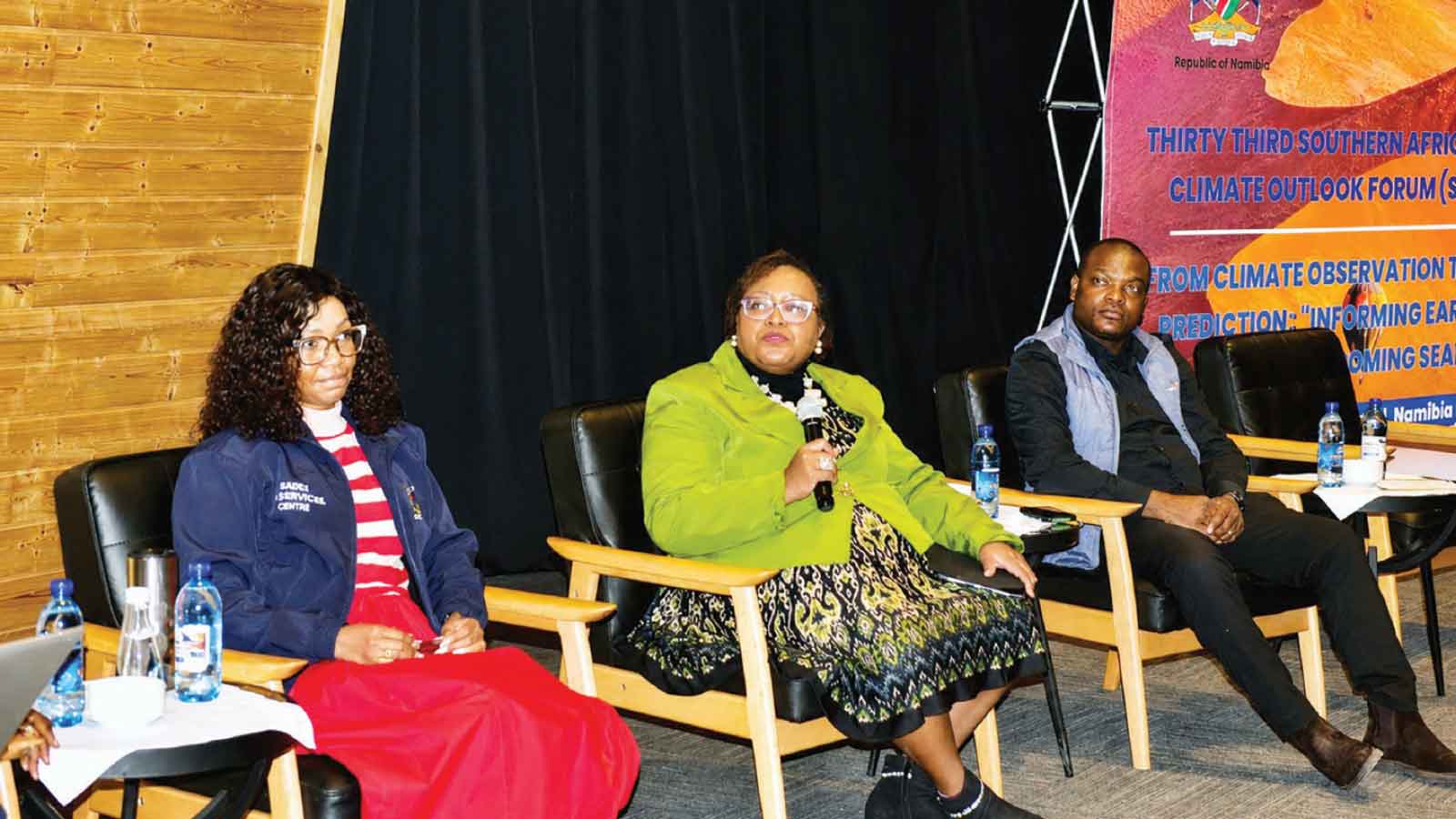
Ivan Zhakata
Herald Correspondent
THE Editor of The Herald, Victoria Ruzvidzo, has called for stronger collaboration between the media and climate experts, saying regular engagement between journalists and scientific institutions is critical to improving public understanding of climate information and strengthening disaster preparedness.
Speaking at the 33rd Southern Africa Regional Climate Outlook Forum (SARCOF-33) in Swakopmund, Namibia, yesterday, Ruzvidzo said while journalists were keen to report on climate change and early warning systems, many struggled to interpret the technical language used in seasonal forecasts.
She said this often resulted in media houses reproducing technical statements without translating them into information that ordinary Zimbabweans, particularly communal farmers, could easily understand and use.
“The biggest failure in most climate journalism is not a lack of goodwill, but a lack of translation capacity,” said Ruzvidzo.
“Our newsrooms receive seasonal forecasts, probability bands, ENSO indices and rainfall anomaly maps, and we are expected to turn that into something a communal farmer in Mudzi or a vendor in Mbare can act on.”
Ruzvidzo said scientific terminology contained in climate outlooks could be difficult for reporters without specialised training to interpret accurately.
“The tendency is for reporters to simply reproduce statements issued by experts, but that does not help the communal farmer because the technical language remains difficult to understand,” she said.
Ruzvidzo said the situation could be addressed through continuous training of journalists and stronger interaction between the media and climate institutions.
“We need more interaction between climate experts, institutions such as the Meteorological Services Department, and the media at both national and regional levels. These relationships should be continuous rather than based on once-off press statements.”
Ruzvidzo said responsible climate reporting required journalists to communicate forecasts as probabilities instead of certainties.
“A forecast is a probability. Our duty is to report the uncertainty honestly, not iron it out for a cleaner story,” she said.
Ruzvidzo urged journalists to avoid generalising forecasts across the country, noting that Zimbabwe’s different agro-ecological regions experience varying climatic conditions.
“Zimbabwe is not one climate zone. Reporting must reflect regional and district-level variations.”
Ruzvidzo said climate stories should also provide practical information to enable communities to prepare for anticipated weather conditions.
“We must pair every warning with action. Fear without action paralyses, while information that explains what households, farmers and local authorities can do helps build resilience.”
She also underscored the importance of communicating climate information in local languages through trusted platforms such as community radio, while ensuring information is accessible to people with disabilities and those with limited literacy.
Ruzvidzo said The Herald will strengthen its climate coverage by establishing regular engagements with the Meteorological Services Department and the Department of Civil Protection, introducing a standing multilingual Climate Explainer series and reviewing its reporting to ensure greater focus on district-level climate variations.
SARCOF-33 has brought together meteorological experts, climate scientists, disaster risk practitioners and policymakers from across the Southern African Development Community to develop the regional seasonal climate outlook for the forthcoming 2026/27 rainfall season and strengthen preparedness for climate-related hazards.
The effectiveness of early warning systems depends not only on the accuracy of climate and weather information, but crucially on whether that information reaches communities in a timely, trusted and actionable manner.
In this regard, the media plays an indispensable role in bridging the gap between climate information providers, disaster risk management institutions, policymakers and the public.
Across Southern Africa, communication needs vary depending on the nature of the hazard.
Slow-onset events like drought demand sustained messaging over extended periods to support preparedness and anticipatory action, while rapid-onset hazards such as tropical cyclones and floods require immediate, authoritative and frequently updated warnings.
Communication must also continue beyond the event itself, as post-impact information on response and recovery is vital for understanding vulnerability and informing future preparedness.
The rapidly evolving digital communication landscape presents both opportunities and challenges. While social media and digital platforms can dramatically extend the reach and speed of early warnings, they also risk amplifying misinformation and conflicting messages.
Effective communication must therefore function as a two-way process, with feedback from communities helping to refine services and improve situational awareness.
Frontline services such as agricultural extension officers are equally critical to last-mile delivery, translating technical climate information into locally relevant advice and supporting rural communities to act on warnings.