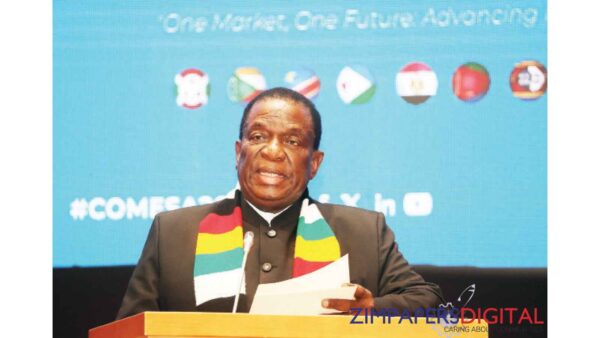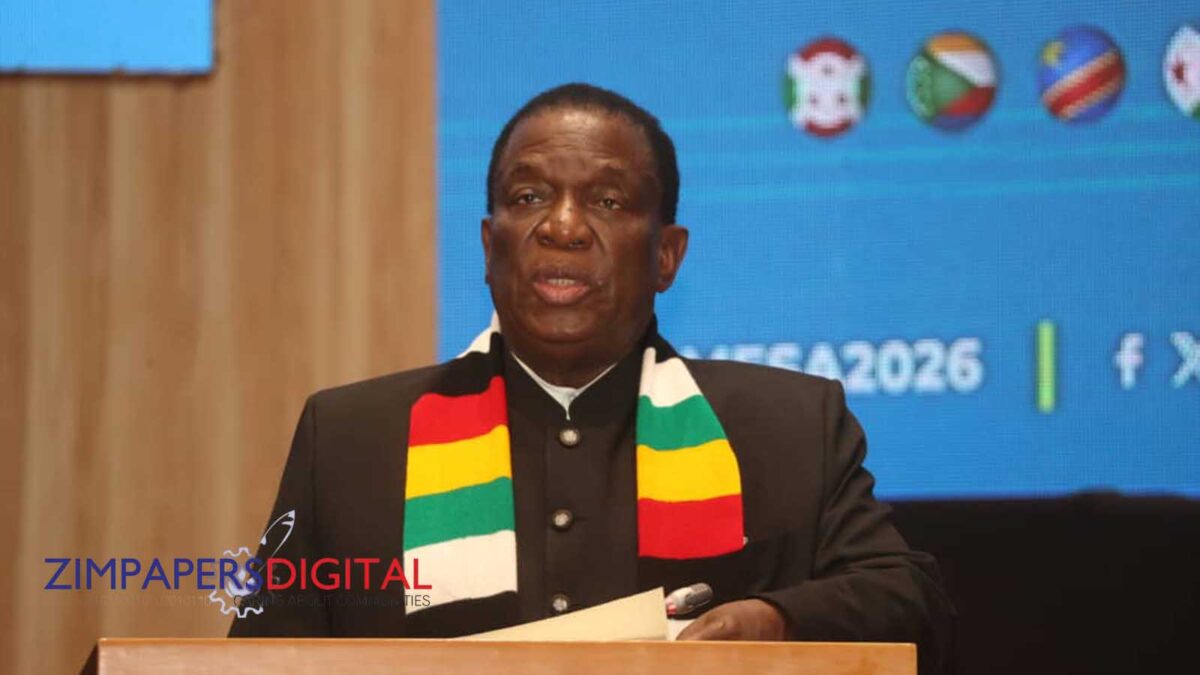
TAKING over the chair of the Authority for the Common Market of East and Southern Africa yesterday, President Mnangagwa wanted a new commitment to the prosperity of all in the region.
This requires innovative ideas although includes building on successes already achieved, and intra-Comesa trade has risen seven-fold from US$2 billion a year in 2000 when Comesa came into effect to US$14 billion, to continue creating an integrated, competitive and prosperous region.
At the same time, he wants the whole of Comesa to move forward together, with no country left behind as we move towards higher levels of prosperity.
This is not only fair, it is sound practical sense as gaps in Comesa make trade harder and limit the size of the growing market that is so critical to driving development.
So, as the President noted, every member state has to benefit from its Comesa membership and every member state has to contribute to the success of Comesa.
The 25th Summit in Harare will be considering and adopting a medium term strategic plan for the next five years, from this year to 2030. This sets the targets and the goals, and provides an outline of the detailed work required to meet those targets.
Typically he wanted practical targets, practical solutions and practical applications of practical policies.
The goal is seeing tens of millions of Africans living far more prosperous lives, and that prosperity, and the spread of that prosperity, can be measured.
One area where Government action is critical is the building up of infrastructure, especially the roads, railways, ports, electricity grids, cable networks and pipelines that regional trade requires.
Trade means moving products and data and that means those doing the trading, usually in the private sector, need efficient and inexpensive trade routes.
Customs barriers and the like are only half the story when it comes to freer trade.
President Mnangagwa noted that this infrastructure was neither free nor cheap, but was required. High interest finance is always available, but is not really a solution.
So he wanted everyone in Governments and the financial sectors to be working out how we can fund this expansion in infrastructure without imposing debilitating costs.
Innovation is required.
The practical part of a common market is making sure enterprises produce at scale, facilitate cross border movement of factors of production and reach new customers.
The US$14 billion a year in trade across Comesa is made up of a large number of businesses buying and selling what they produce and the whole point of the market is to make sure there are more products to buy and sell and that this trade is easy and efficient.
More products mean that everyone in Comesa needs to be producing more, adding value and concentrating on the range of comparative advantages.
President Mnangagwa stressed the need for investment and industrialisation, specifically for converting the many commodities and raw materials produced in Comesa nations to products that people buy and sell.
He brought up the practical gains Zimbabwe is making by insisting that mining companies, for example, do a lot of the processing of minerals in Zimbabwe before export.
Zimbabwe is ready to implement practical solutions, which can include cross border industrial parks, allowing factories to process the raw materials from more than one country to make the finished products that add so much value and are, after all, what people buy in shops.
As was stressed in the previous year when Kenyan President William Ruto was in the chair, freer trade also requires freer movement of people and skills, a factor President Mnangagwa acknowledged and wanted to also stress.
Many might consider common markets and free trade are the province of governments and major businesses, and there is a fair amount of trade between the industrial giants and large shipments of products to large supermarket chains.
But as President Mnangagwa noted, every citizen within a Comesa country can benefit if they can trade freely throughout the region.
These include the cross-border traders and the manufacturers of speciality and artisan products. Trade can be small as well as large and they all add value and so all have to be encouraged.
In any case, all African countries need to grow the micro, small and medium businesses as well as the giant concerns, and we all need to make sure women, youths and other previously disadvantaged groups share in the common prosperity.
President Mnangagwa ended his address by noting that Africans have to develop themselves, not hope for some outsider. But as we have the people, the resources and capacity we can do this, and advance ourselves in the directions we want.