admin
admin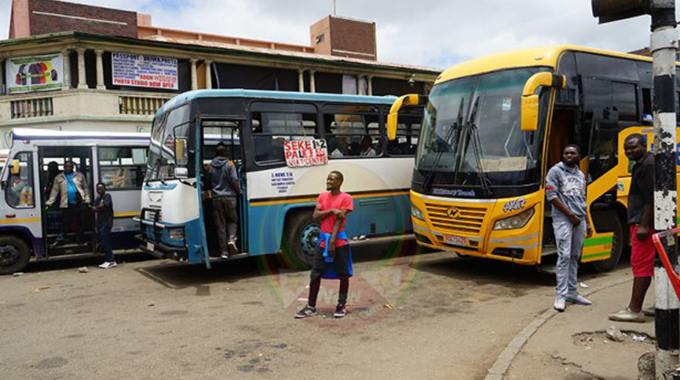
WHILE there is strong support among the travelling public for the widening of laws and regulations governing buses, kombis and other public service vehicles, and general support among the licenced and registered operators and their associations, many feel enforcement needs to be tightened up a lot.
This is fairly typical of the whole area of traffic safety in Zimbabwe. We have a lot of good laws and rules and if every driver in every capacity obeyed the lot, our roads would be a lot safer and the annual death toll would plummet from the present more than 2 000 a year, more than five a day on average.
Most drivers do not obey the rules, and a surprising number even boast how they break some, such as speed limits and the ban on driving after having a couple of drinks, or try and explain how going through a red light or a stop sign improves their personal safety.
It seems many of those on the road see the Highway Code and the whole pile of safety regulations being some sort of optional list.
So it is not surprising that many of those in the public transport sector, regardless of whether they are among the legals or are one of the pirates and mushikashika, also seem to regard many of the rules as simply a vague guide, rather than solid law enforceable in courts and basically cut in stone.
There is the special dread of unsafe public service vehicles. Passengers pay fares and generally trust these professional drivers to get them to their destination.
Drivers are moving total strangers around, for money, rather than family members, friends or fellow employees in a business. So there are grounds for insisting that bus and kombi drivers should be better and more law abiding than most, and that they come under special extra rules that can enhance safety.
While some find it a bit illogical to see 60 plus people killed in a bus crash or 18 plus killed in a kombi crash, rather than the same number killed in a dozen or more crashes of smaller vehicles, the headlines do make a difference.
And since those aboard a bus or kombi are all on the same route, many belong to the same community or school, so regarding these a special sort of disaster is not that illogical.
The deaths can easily be concentrated in the same village or suburb, with the funeral processions filling several streets.
The community support that so many rely on during a death in a family has to be spread widely and regrettably more thinly.
So there are many good reasons why buses and kombis should travel more slowly, at less than 100km/h instead of the 120km/h speed limit.
There are good reasons why their drivers should be better trained and more strictly examined.
There are good reasons why their vehicles need to be properly checked more often by the authorities. And there are good reasons why both the operators and the drivers should be held more strictly to account.
But at the same time the organisations that group or represent the operators and drivers who do co-operate and do try to follow the enhanced rules and regulations have a point when they state that there are too many pirate buses, pirate kombis and mushikashika on the roads who seem to be able to get away with running disruptive public transport with zero pressure to conform to the rules.
The illegals are not only unsafe, they are also unfair and are undercutting those who make considerable efforts to conform to the law, including the special laws for public transport operators.
The measures that the legal and respectable operators have to put in place do cost money, as the tracking systems and other measures to upgrade vehicles are not free, neither are the extra training and examination of drivers.
At the same time the legal operators have limits on their business. Just travelling at the required speed limits means that they might well make fewer trips, and using the laid-down terminals and bus stops means that they might lose passengers who prefer the more relaxed attitudes of the illegals and mushikashika.
One recent example was the trial of a mushikashika driver who was stopped when he did not give way for a motorcade outside State House in Harare.
He was charged with the non-security offence of failure to obey traffic signals, but then the arresting officers found when they wanted to record his licence details that he was not even a licenced driver.
No one should be surprised as this is par for the course. What should be surprising is that the mushikashika was only stopped when it posed an extra danger.
So the associations are correct; the new and tighter rules will not be very effective if they are not fully enforced.
At the same time the associations of bus owners and kombi operators need to be brought more into the mainstream of cleaning up the whole public transport sector. The two main kombi associations in Harare, for example, have done sterling work with their simple signage, including individual numbers for each kombi so passengers can complain easily, and the complaints number is part of the signage.
They have imposed, along with the bus associations and Zupco, a lot of self-regulation at the bus terminuses in Harare, with basically zero backing from the city council who allow vendors just to move in and take over waiting bays, and allow unregistered kombis and mushikashika to park in the spaces set aside for the legals.
Simple enforcement of even just by-laws, let alone the national traffic safety laws, would produce a lot more order and would apply a lot of pressure on those who like to flirt with the laws to become part of the solution instead of remaining part of the problem, especially if the associations of the law abiding were brought into the systems of setting and enforcing rules.
The fact there are at least two associations in each area means that the danger of a closed shop is avoided, and so long as it remains possible for others to organise an association, with perhaps just a minimum size specified so we do not get one-bus associations, we can incorporate a lot of self regulation and co-operative business practices to the advantage of everyone who values their own life and the lives of others on the roads.



 Online Reporter