

 Online Reporter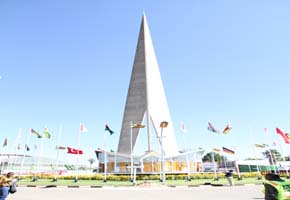
THE Zimbabwe International Trade Fair (ZITF), which started yesterday, is becoming more important as the shop window of the main Zimbabwean economy and needs to continue being upgraded to ensure it is what its title says, the international trade fair for exporters and potential exporters as well as the economic showcase of Zimbabwe.
The resurgence and revitalisation of the trade fair this year can be seen in not only all exhibition space being fully taken up, but in the need for the organisers to find temporary extra space nearby so that everyone who wanted to exhibit could exhibit.
This ending of what had been a gentle decline in Bulawayo is important, as the city, the national industrial base and the productive parts of the economy are now energetically resuming growth over wide range of activity.
The restoration of heavy industry led by the steel industry, with other mineral processing already seeing new products and with many more to come, will see a lot more products made in Zimbabwe with not just local demand being filled but a lot more exports of value-added goods rather than basic raw materials.
In addition, the serious economic conferences and seminars arranged to coincide with the trade fair, taking advantage of the fact that a lot of the top economic management of Zimbabwean firms are gathered in one place for a week, add to the importance and usefulness of the fair.
This return of so many of the main functions of a major trade fair should allow the decoupling of the trade fair and the old Bulawayo Agricultural Show, which were combined in the UDI era when so much of Zimbabwe’s economy had to be kept secret and then were kept together for convenience after independence.
But to a very large extent the ZITF was absorbed by the more traditional Bulawayo Show, similar in many ways to the Harare Show, and the purer economic trade fair was derailed, although giving its name to the combined entity.
With trade building up, and becoming ever more critical as a mainspring of economic growth as the African Continental Free Trade Area is activated, it seems that there should be a return to the separation of the trade fair and city fair, sharing the same grounds but at different times of the year.
When the trade fair was launched as the Central African Trade Fair 65 years ago in May 1960, it was designed to be a national event separate from the older Bulawayo show, which was held like other city shows in August, and to be the shop window of the rapidly growing industrial and primary economic base.
They had largely different sets of exhibitors, and different organisation with trade days, when the general public was excluded, being critical in the trade fair while the public was more than welcome through the city show.
Those who like to proclaim that so much marketing these days is done online on the internet forget that many people need to actually see and feel the physical products, and be able to talk to the designers, engineers and production experts about possible product adaptations and new products.
The expression to “look under the hood” summarises the need for this hands-on approach that is still wanted and needed in the e-marketing age. This is what a modern trade fair allows, building on the online marketing with the concentration of the physical products and the critical production staff in one place.
It is the forging of the business ties and trade relations that define a trade fair, rather than the relations between companies and services on one side the and the general public on the other. The city shows do that second function extremely well but a trade fair needs to concentrate on the former.
This is not to denigrate the city shows. They are important, at least to the general public, and do allow the public relations and social exhibitions and the entertainment and the general feeling of goodwill to predominate. They are largely funded from the entrance fees, rather than the exhibition fees, and while important are not the engines of growing production and trade.
Bulawayo has been through some bad times but that is now changing, with Government wanting to see the public and private sectors build back the city as a prime industrial base and being once again the innovator and leader in industrial expansion. This is why the ZITF was set up in Bulawayo and why it needs to return to its roots and split off from the city show.
With the sort of build-up of industry now expected in national, regional and continental economic planning we could well need specialist industrial fairs, and here is where ZITF and its grounds could be a major organiser and driver. There could even be some permanent exhibitions.
The success of this year’s trade fair, and its overflowing from its central grounds, seems a good opportunity to build on that success, split the fair from the city show, and make sure that Zimbabwean producers, including the services offered by the ITC and trade finance sectors, have a clear shop window for the growing ranges.


