Online Reporter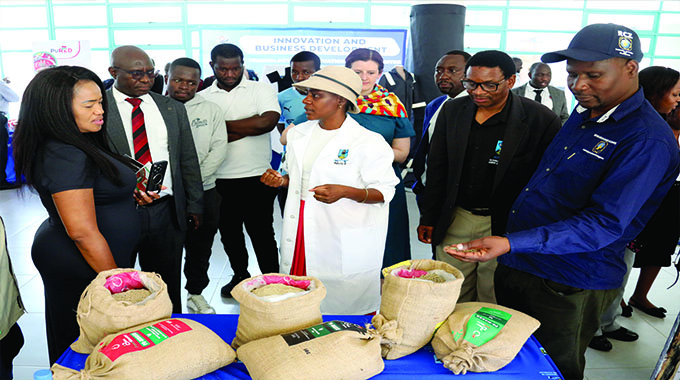
Peter Matika, [email protected]
ZIMBABWE’S bold transformation of higher and tertiary education through the Education 5.0 model has been commended by regional and international research and innovation bodies, with experts describing it as a blueprint for Africa’s knowledge-driven development.
The transformative model, anchored on teaching, research, community service, innovation and industrialisation, positions the country among the few African countries implementing an education system that directly drives industrial growth and economic transformation.
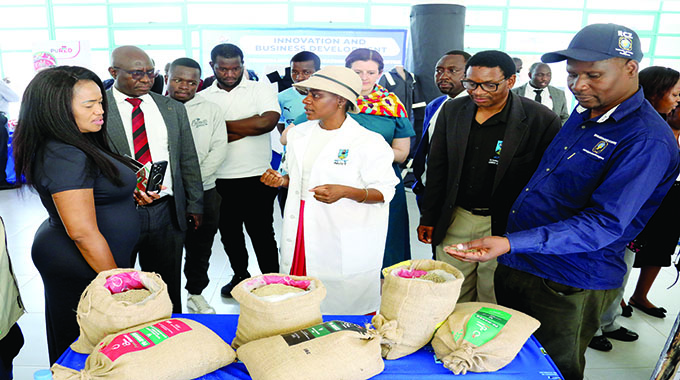
The country is hosting the 2025 Global Research Council (GRC) Sub-Saharan Africa Regional Meeting, following a successful bid by the Research Council of Zimbabwe (RCZ). Participants toured the National University of Science and Technology (Nust) yesterday, gaining first-hand insight into the Education 5.0 approach, research initiatives and various innovations at the institution.
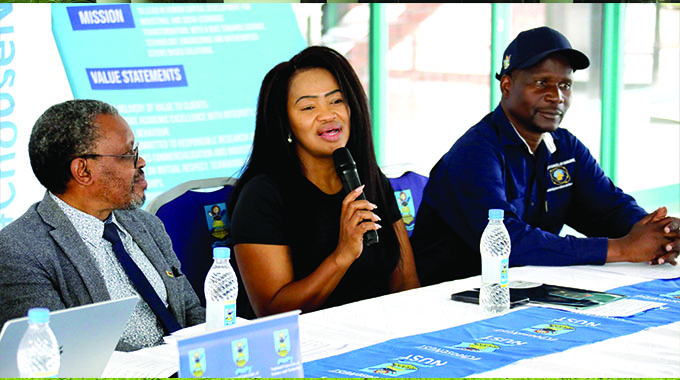
Ms Nosisa Dube, director for evaluations and impact assessment at the National Research Foundation in South Africa and co-chairperson of the GRC, hailed Zimbabwe’s approach.
“Zimbabwe’s approach has moved universities from being centres of theory to becoming hubs of industrial activity and community transformation,” she said.
Ms Dube noted that the SGCI Academic Symposium, held alongside the GRC meeting, will serve as the inception for a new cohort of bilateral research projects, focusing on research impact, ethical practice and collaboration for transformation.
“It will showcase cross-country research partnerships addressing shared priorities, from sustainable agriculture and renewable energy to AI and health innovation, while also linking research outcomes to policy and community needs,” said Ms Dube.
A highlight of the event is the interactive bridge session on Curiosity-Driven Research (CDR), connecting the GRC meeting with the SGCI symposium.
Ms Dube explained that this session explores how African perspectives on curiosity and fundamental inquiry can shape global narratives and influence future research systems.
“This session will explore how African perspectives on curiosity, creativity and fundamental inquiry can shape global narratives and influence the design of future research systems. By linking the deliberations of research councils with the lived experiences of scientists, the session underscores the role of curiosity as a unifying force across disciplines and geographies,” she said.
The high-level meeting, which began yesterday, is expected to conclude on November 14.
RCZ executive director Dr Partson Chikudza said the event would position Zimbabwe as a hub for international scientific dialogue.
“This combined meeting brings together research funders, policymakers and scholars across Africa and beyond under a single convening platform in Bulawayo that combines the GRC Sub-Saharan Africa Regional Meeting and the SGCI Academic Symposium,” he said.
“The event, co-hosted by Research Council of Zimbabwe (RCZ) and the National Research Foundation (NRF) of South Africa, affords a unique opportunity to progress the strategic objectives of the Global Research Council while also launching a new cohort of SGCI-funded bilateral research projects in the region.”
Dr Chikudza said the GRC meeting provides a forum for heads of national and regional research funding organisations to exchange policy insights, deepen cooperation and share best practices.
“While the SGCI academic symposium provides the researcher-level engagement that translates such policy deliberations into active research collaborations. By aligning both processes, the event ensures stronger linkages between funding policy and research practice and fosters the cross-fertilisation of ideas and partnerships across funders and researchers alike,” he said.
Dr Chikudza said the GRC regional meeting will centre on the two discussion papers, Reimagining Inclusive Open Science for Equity, Justice and Sustainability and Research for Sustainable Communities, developed by the co-hosts of the 2026 GRC annual meeting, the Natural Sciences and Engineering Research Council of Canada (NSERC) and Thailand Science Research and Innovation (TSRI).
“These papers serve as anchors for critical reflection on how funders across the continent can strengthen their policies and practices to ensure that science serves people and the planet equitably,” he said.
“Through moderated dialogues, leadership roundtables, and synthesis discussions, participants will shape Africa’s regional contribution to the GRC’s global agenda and influence the collective direction toward the 2027 GRC Annual Meeting, co-hosted by the NRF and the German Research Foundation (DFG).
Hosting the meeting, which precedes the 13th GRC Annual Meeting in 2026, demonstrates Zimbabwe’s commitment to regional integration and global research collaboration. The event is expected to produce a communiqué outlining shared priorities and frameworks for research funding and governance.