

 Online Reporter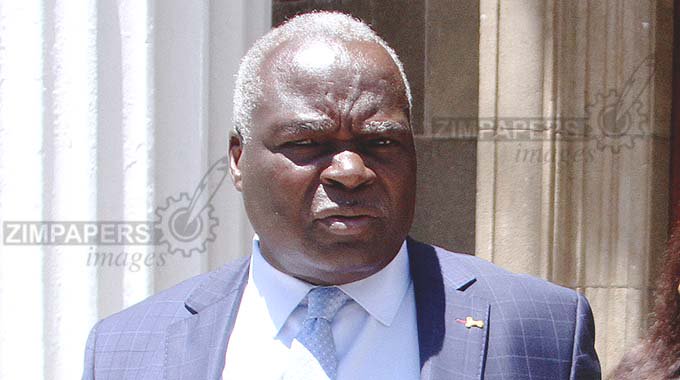
Sikhumbuzo Moyo in Insiza
ENERGY and Power Development Minister July Moyo said most rural primary and secondary schools across Zimbabwe will be electrified by the end of next year as the Government accelerates efforts to close the gap between rural and urban learners.
Speaking during the commissioning of the Leanwood–Alpha–Montrose electrification project in Insiza District on Friday, Minister Moyo said the initiative is part of the Second Republic’s commitment to improving access to quality education and modern services in remote communities.
The project which covers Alpha Primary School, Montrose Clinic and Leanwood Business Centre, began on August 7 last year and was completed in November.
“In the case of schools, we are not going to wait for electrification until 2030. We are going to do it by the end of 2026. Every secondary school, every primary school will be electrified,” said Minister Moyo.
He said the move aligns with President Mnangagwa’s vision of ensuring rural learners are not left behind in the digital era, noting that access to electricity will directly improve academic performance.
“If we give electricity to all the schools, we expect public examinations results to improve,” he said.
Minister Moyo also urged parents and guardians to take advantage of the electrification programme to support their children’s education.
“Now that the clinic has been electrified, we expect that the boreholes will also be electrified so that the clinic and nurses’ houses have piped water,” he said.
Turning to development priorities, Minister Moyo challenged rural district councils to channel devolution funds towards key sectors.
“It doesn’t matter whether it’s late. If those devolution funds come, the RDCs should make sure that education is number one, health number two, provision of electricity number three, construction of roads number four, provision of safe drinking water number five and provision of social amenities number six,” he said.
Minister Moyo added that communities must hold officials accountable and report non-performance to traditional leaders.
Providing an update on progress, Rural Electrification Fund (REF) acting chief executive officer Ms Felistas Makumbinde said Insiza District alone has seen significant expansion of electricity infrastructure.
She said REF has electrified 195 institutions in the district as at September 30, including 93 schools, 21 clinics, 27 business centres, 12 small-scale farms, 21 village group schemes and all four homesteads of local chiefs.
On a national scale, Ms Makumbinde said they completed 294 projects with 170 being work in progress.
For learners such as Alpha Primary School Grade Seven pupil Njabulo Chiwapura, yesterday’s commissioning marked the beginning of new opportunities.
“I am so excited and want to thank the Government for bringing power to us. I have never used a computer in my life, largely as a result of lack of electricity but this is now a thing of the past,” he said.
Alpha Primary School also received a computer from the Zimbabwe Energy Regulatory Authority (Zera), enabling learners to begin ICT lessons.



![The scope of domestic violence [part 1]](https://www.heraldonline.co.zw/wp-content/uploads/sites/2/2022/03/Violence.jpg)